Saigon and the “American War in Vietnam”

IMG_5760.jpg

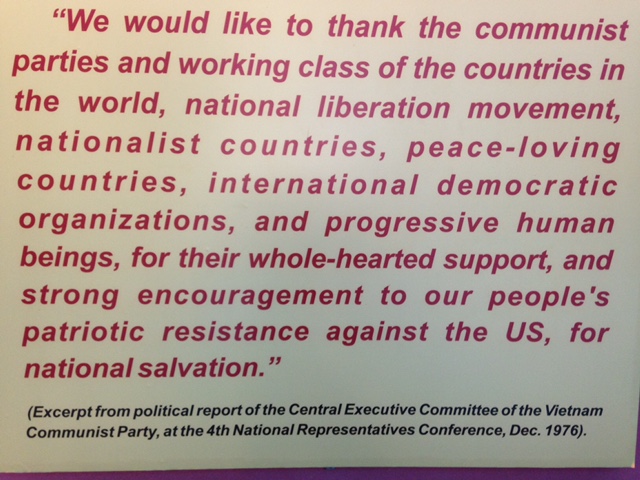
Written in 1946

D49EF11D-42A1-4F2A-8579-573DA0E3ACA2

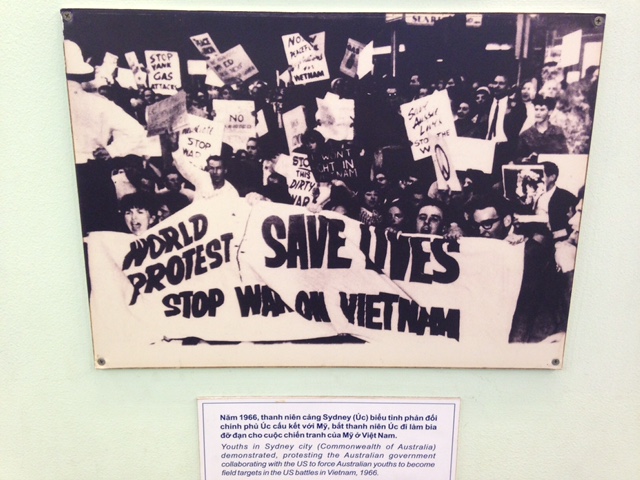
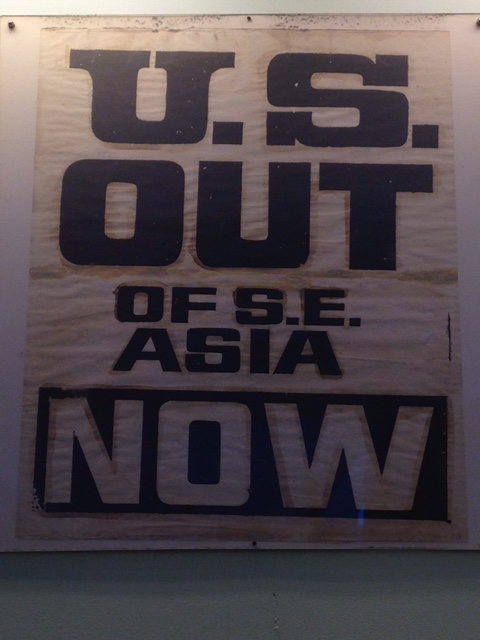
Protests around the world were against the USA aggression in Vietnam

7C21637B-9C4B-44ED-B1CD-F0844981182F

A hero on the losing side of the peace war.

15C0BFDB-57A8-4781-A452-D9E38A96CF4F

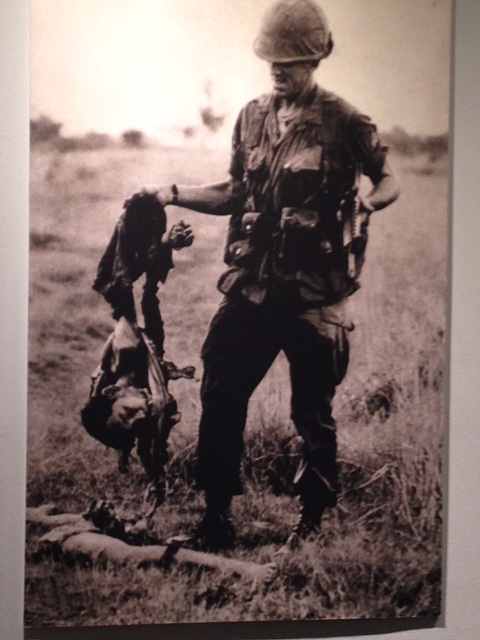
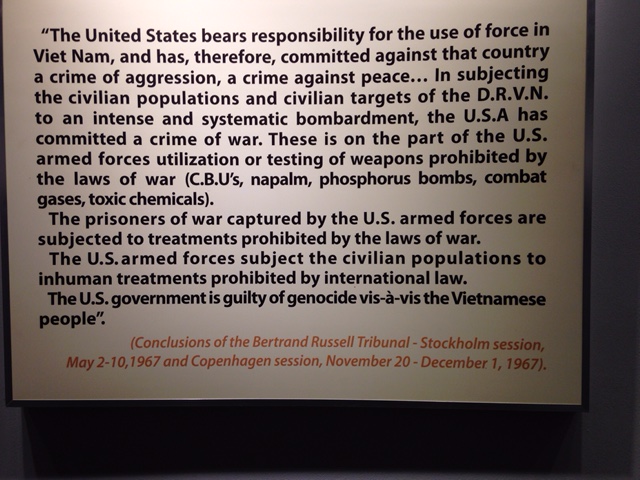
The Americans were unaware of the extent of the war crimes against the vietnamese.

41FEDBF3-0B28-44E7-8095-21B4D918BAD3

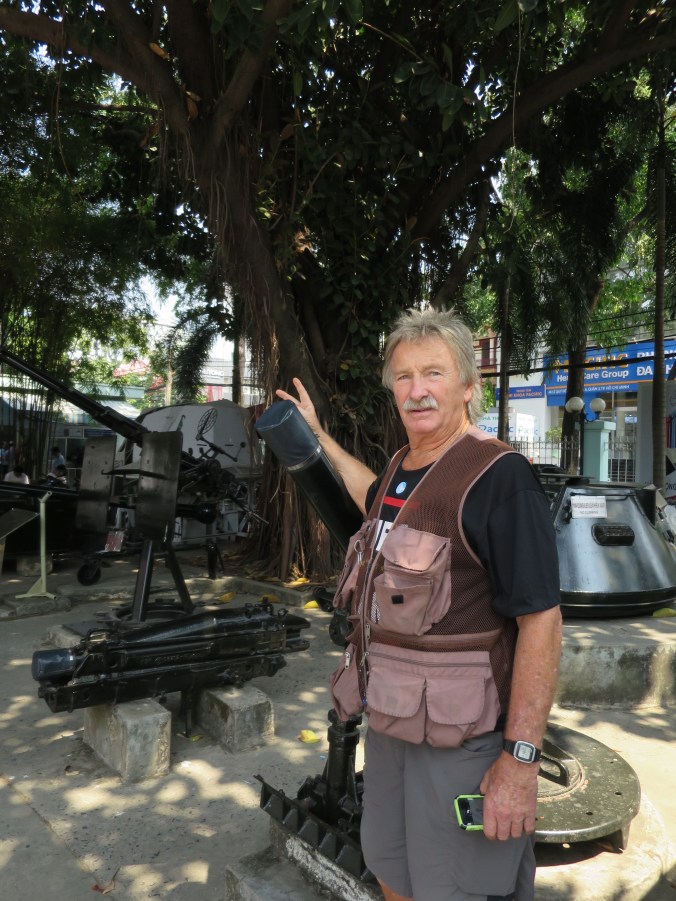
One solder’s war trophy.

923EBFBE-067B-43CC-90C1-F4FE190CF5A3

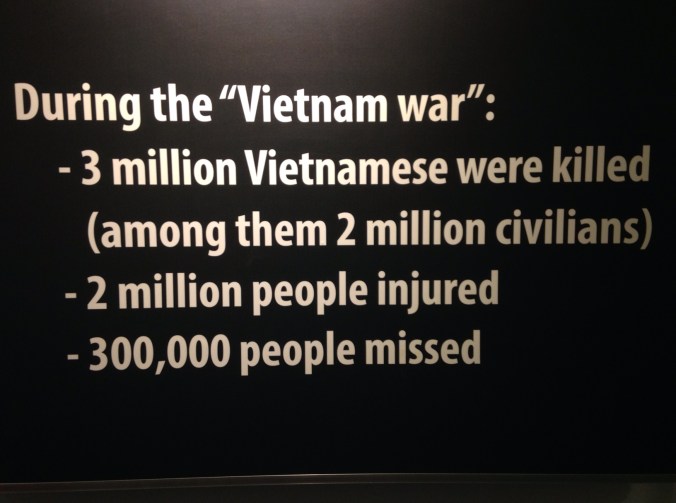
A lot more than the number of americans killed. Those B-52’s make a difference.

22D4EBED-9956-48A8-BF90-F006DBDA038B

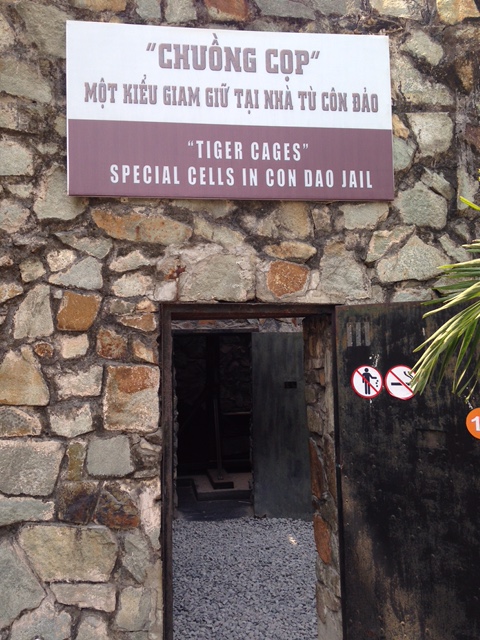
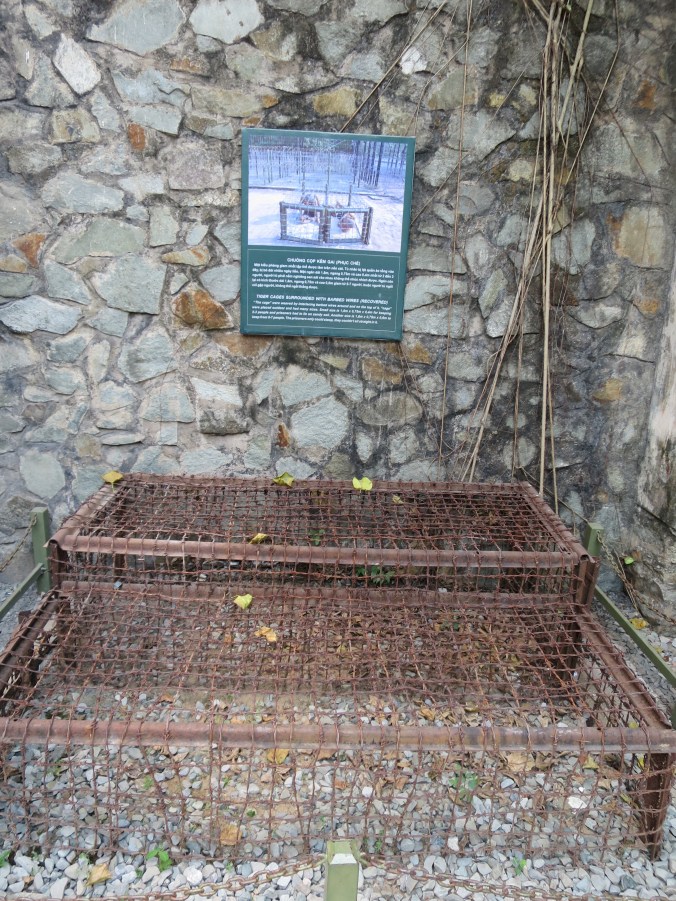
The French then the americans used these unique torture pits.

143AC860-DAC7-435C-98E4-A85A8BA04C6A

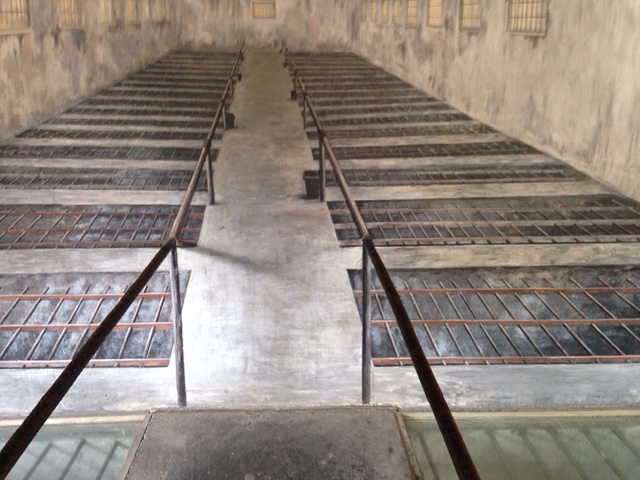
A row of tiger cages with a walkway that the guards could use to torture the prisoners from above.  They threw lime and hot water, boiling oil etc anything to make there lives miserable.

4DF04F62-C9A1-4BC1-804E-F419E35219D1

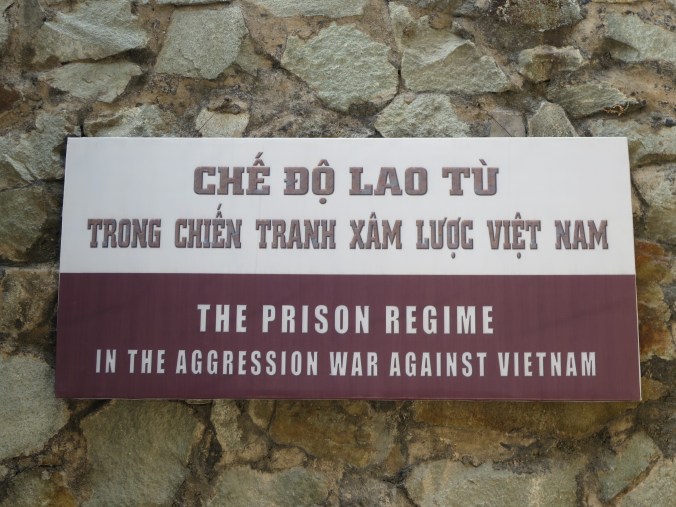
Was this printed on the front pages of the USA newspapers? It should have been

IMG_5540.jpg

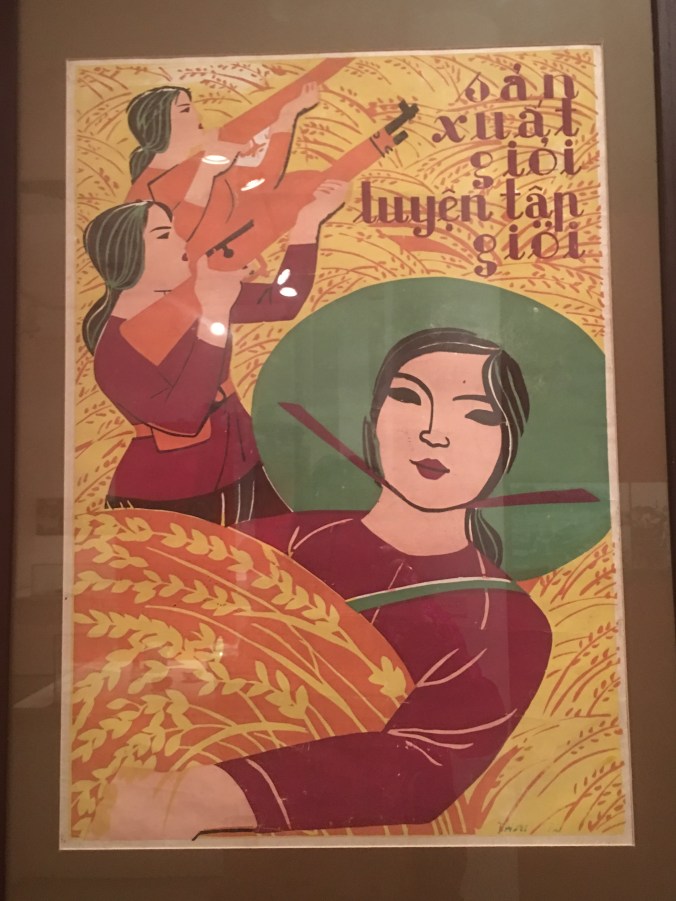
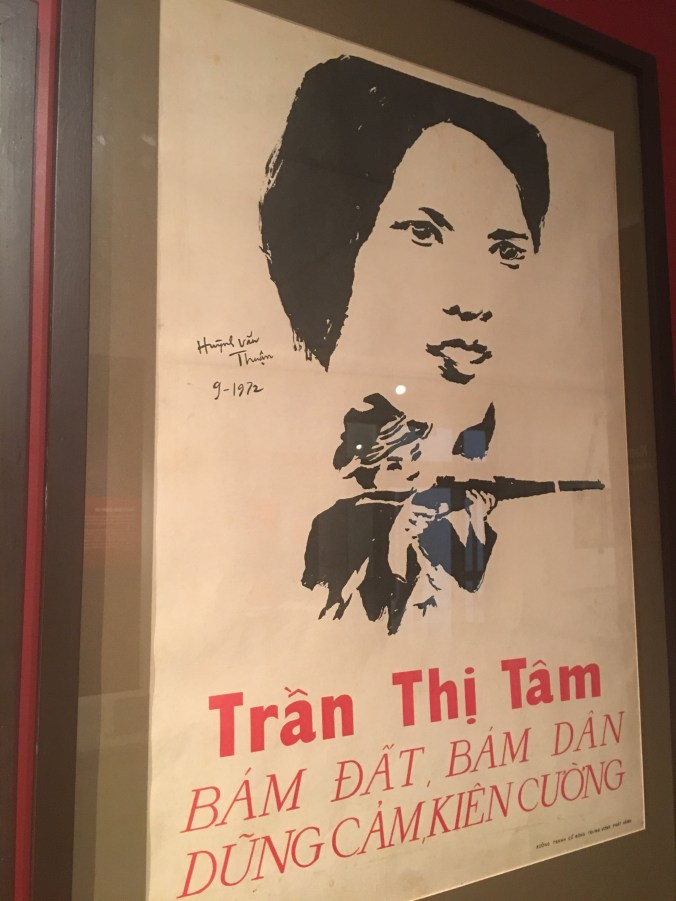
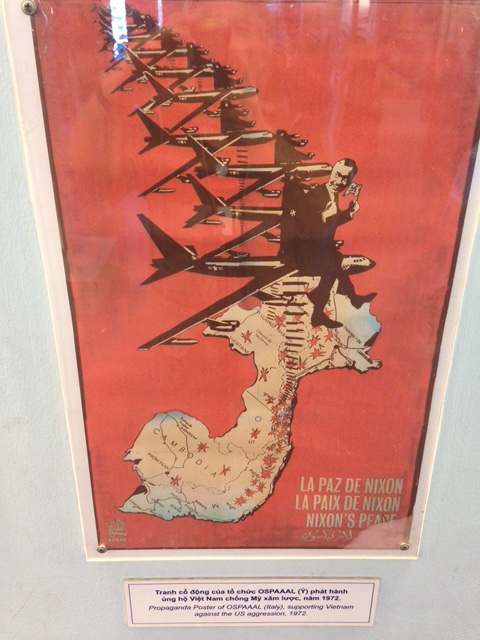
These posters inspired North Vietnam to fight for their freedom.

IMG_5541.jpgIMG_5539.jpg

untitled__20180226_367

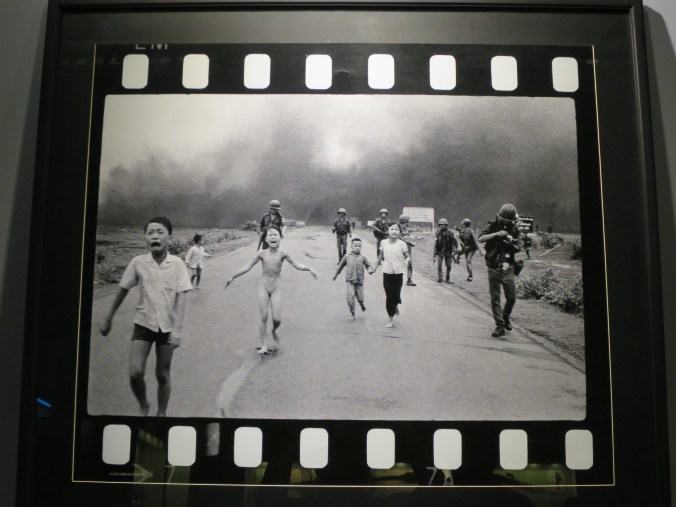
Remember the “Girl in the Photo” ?  Her biography is riveting!

untitled__20180226_364

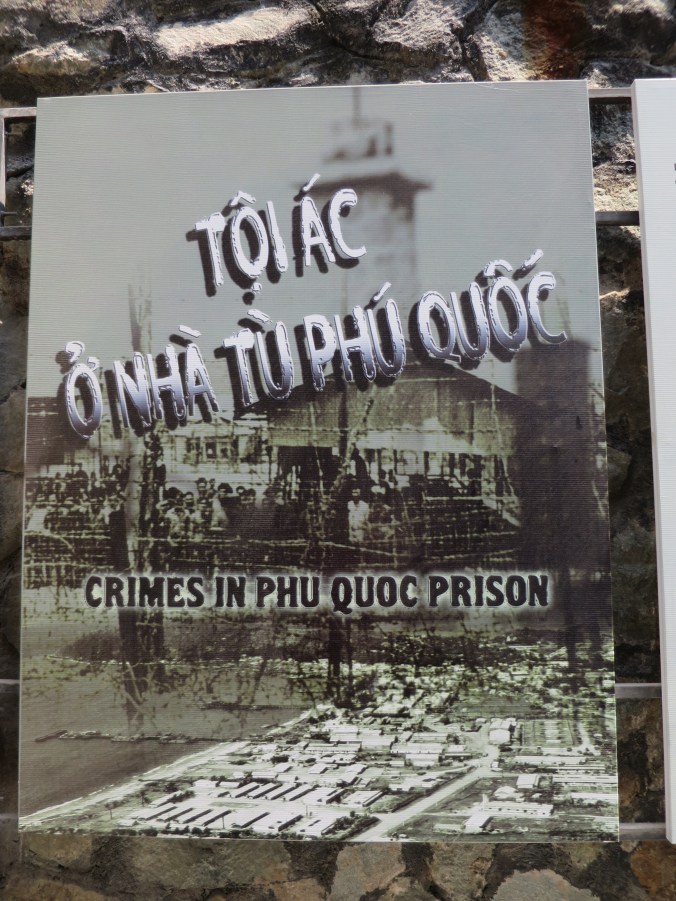
This prison was on an island and was the largest and most brutal.  The americans were aware of and complicit in its use for political prisoners.

untitled__20180226_362

untitled__20180226_360

Unbelievable!

untitled__20180131_061

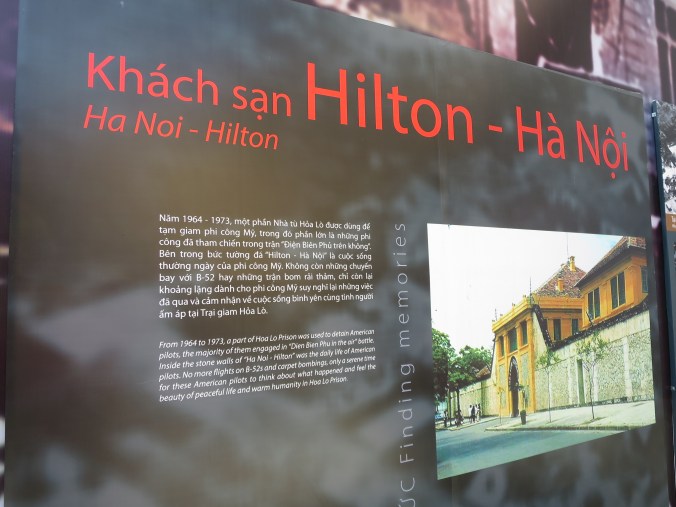
The American prison pilots held here got preferred treatment.   But the French who built this prison for political agitators  unremittingly tortured them.  And used the guillotine  a lot.

untitled__20180226_358

This was at the ‘War Remnants Museum in Saigon”

0948B740-B63D-4ED7-AF6E-193175E4AB8E

Who the phuk would invent agent orange, to have people exposed.  The birth defect trail can be traces 4 generations. And extremely harm the whole environment and people. 

15912B5E-6A8B-4BBE-BF59-1E70F470664F

A444BA23-B149-4E1A-B372-0161F592CC5B

The Vietnamese blame him for starting the latest aggression here.

CCB29104-D4A3-47DD-9AE8-BF188B539513

South Vietnam: Mui Ne, Dalat and Nha Trang

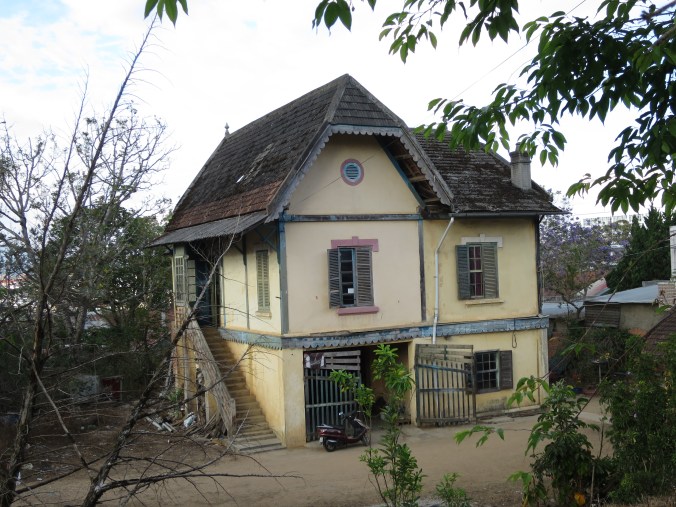
French countryhouse

An old french countryhouse (built 1920) in Dalat (5000 ft) The french occupied Vietnam 1840-1953. They were brutal colonials.

untitled__20180221_304

Lovely gardens in Dalat

untitled__20180221_313

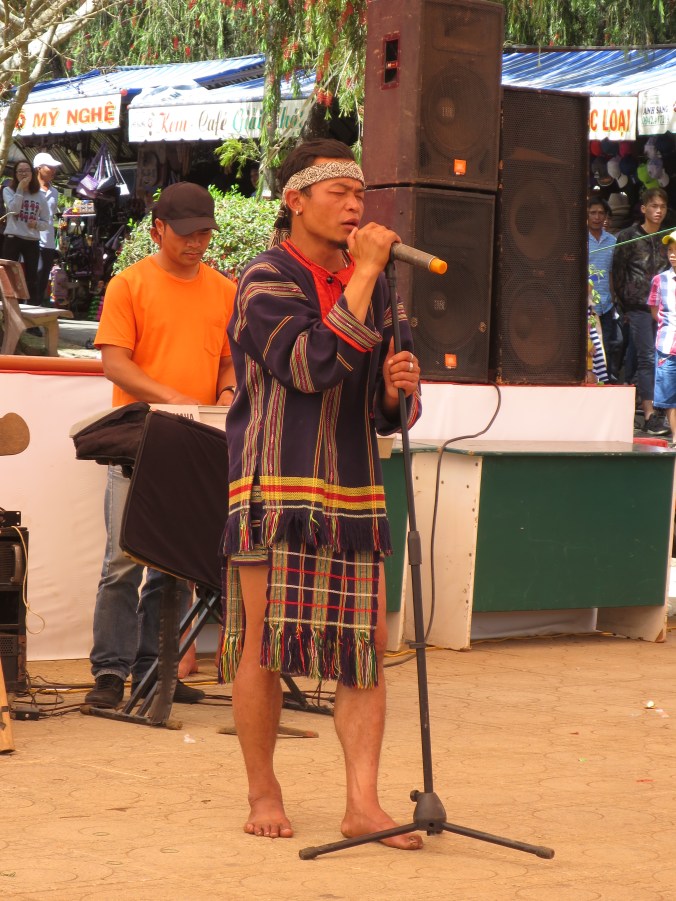
A central hill tribe show at the Dalat gardens.

untitled__20180223_329

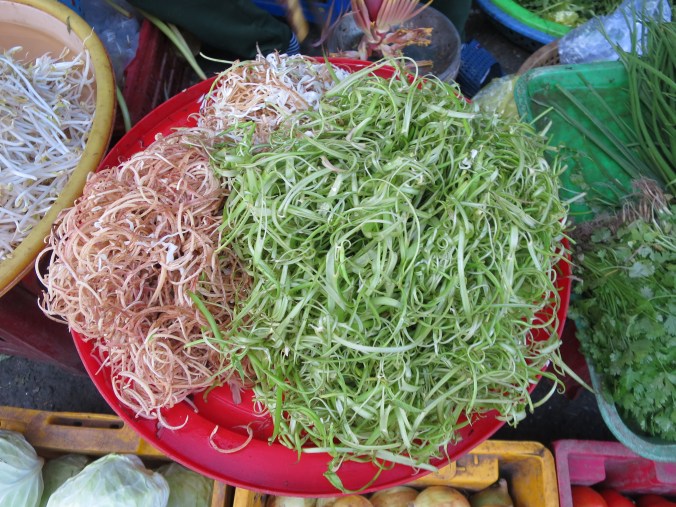
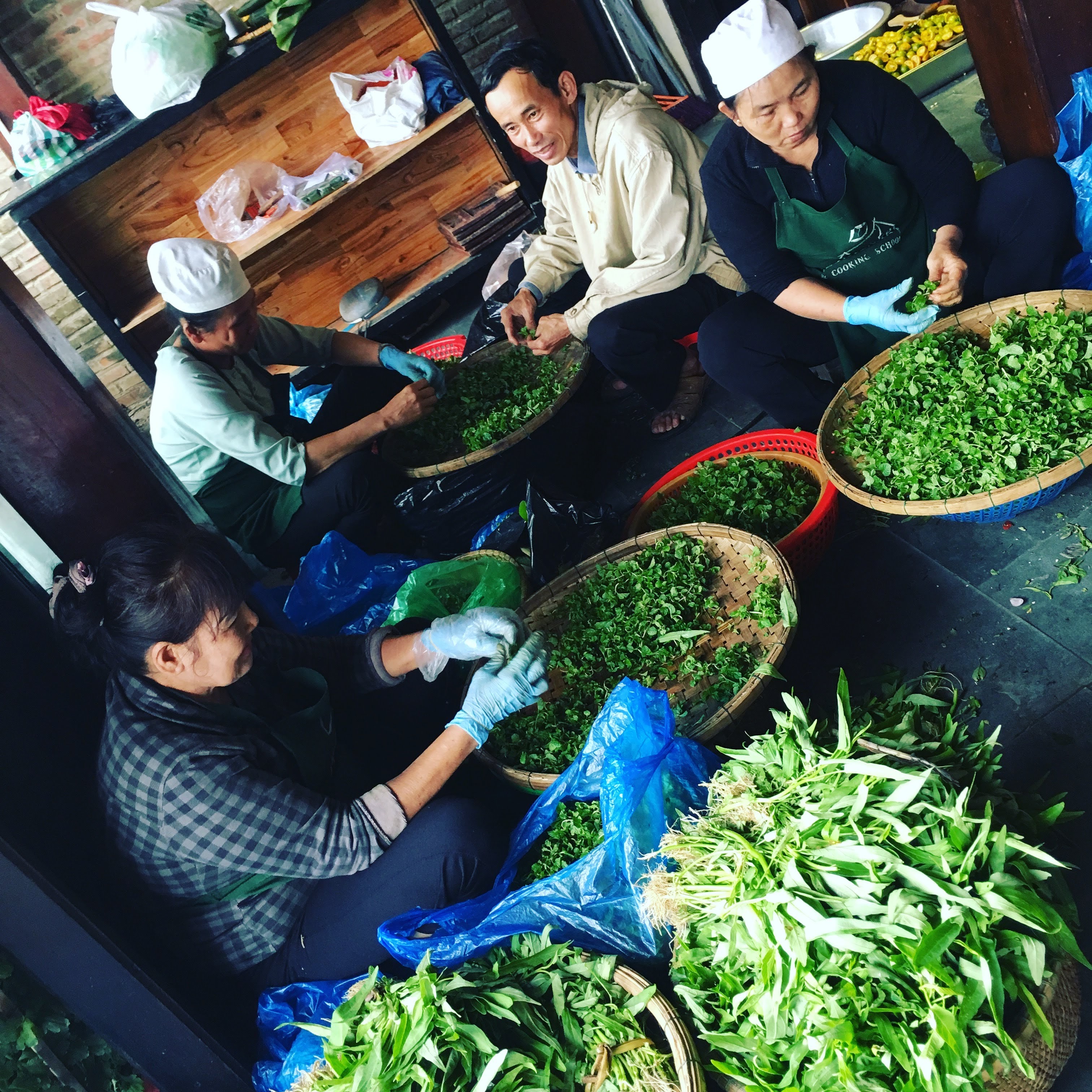
Great greens to add to a soup or salad.

untitled__20180223_333

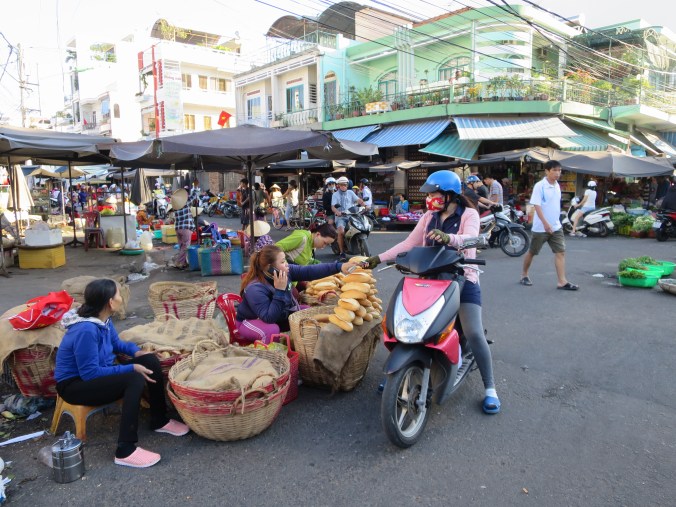
The “new” vietnam, widespread use of scooters, baguettes are very popular.

untitled__20180223_342

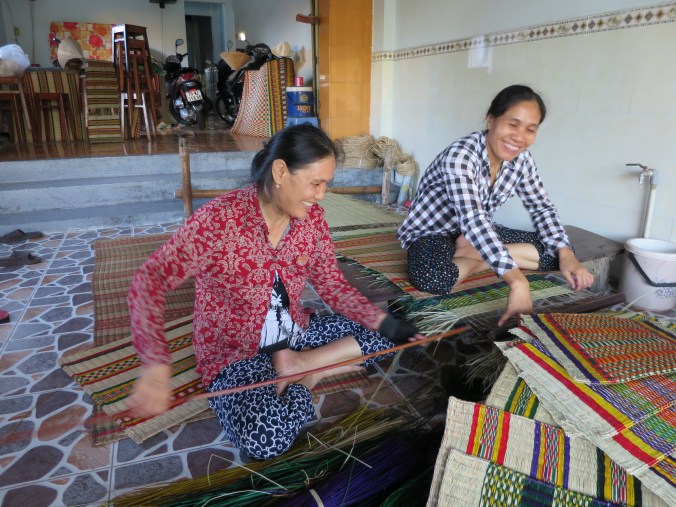
Weaving mats is becoming a lost art.  This family has been weaving for 200 years.

untitled__20180223_350

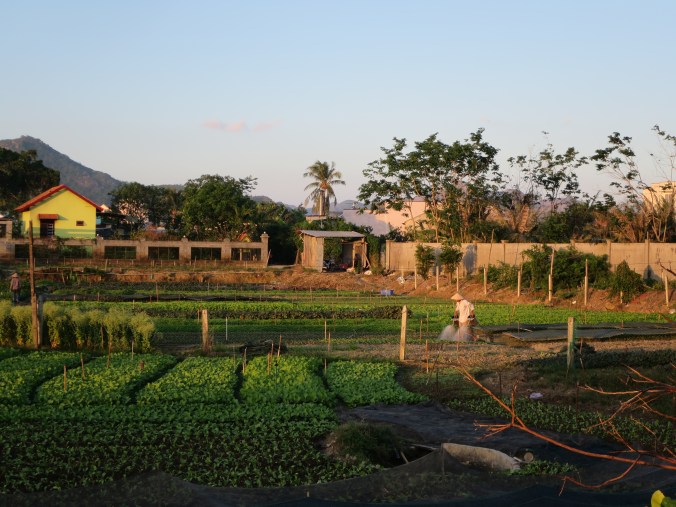
Fresh herbs are grown in large areas, a very important ingredient in Vietnamese food.

vietnam 2018 (10 of 18)

A local Dalat gal, I took a book binding class from her one afternoon.  Lots of fun!!

vietnam 2018 (15 of 18)

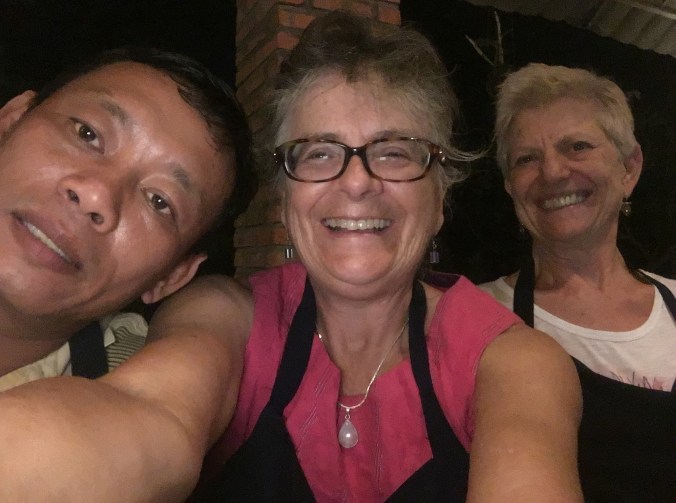
Liz and I took a cooking class in Nha Trang one evening.  Just the 2 of us we made 3 wonderful dishes.

untitled__20180220_273

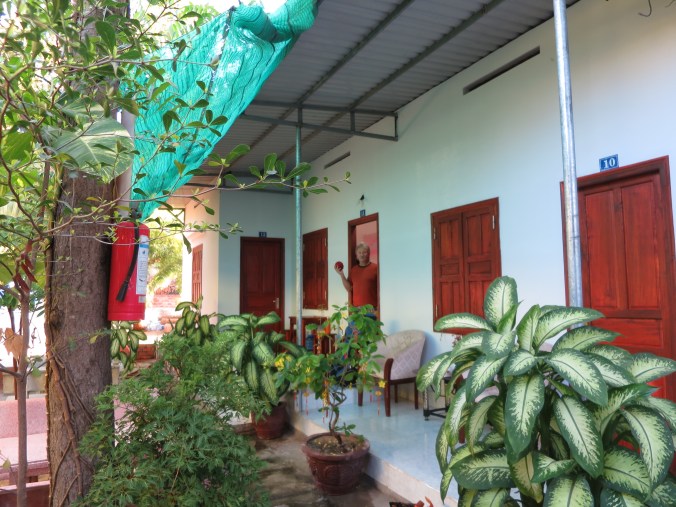
Our home away from home in Mui Ne, at the foot of a sand dune, 200 yds from the beach.

untitled__20180216_262

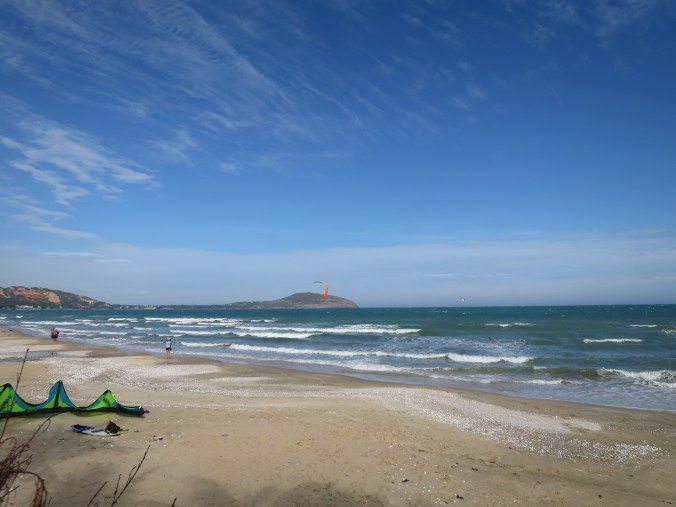
Mui Ne is a wonderful spot to kite board, perfect wind and waves.

untitled__20180215_255

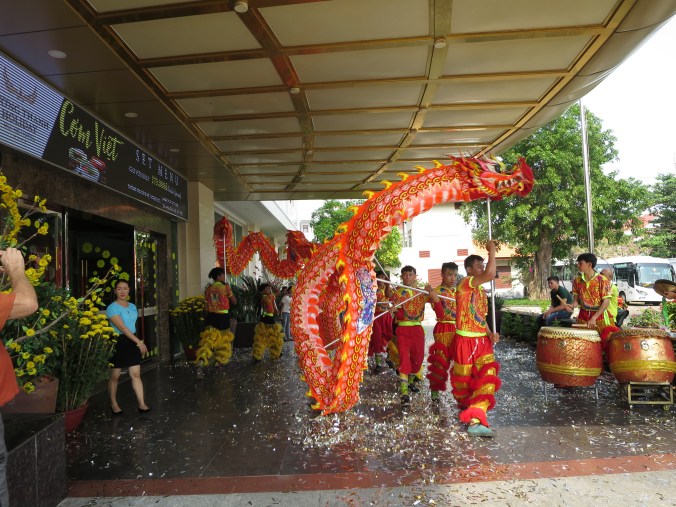
The dragon dance for TET (Chinese New Year) at a Chinese/Russian hotel in Mui Ne.

untitled__20180215_243

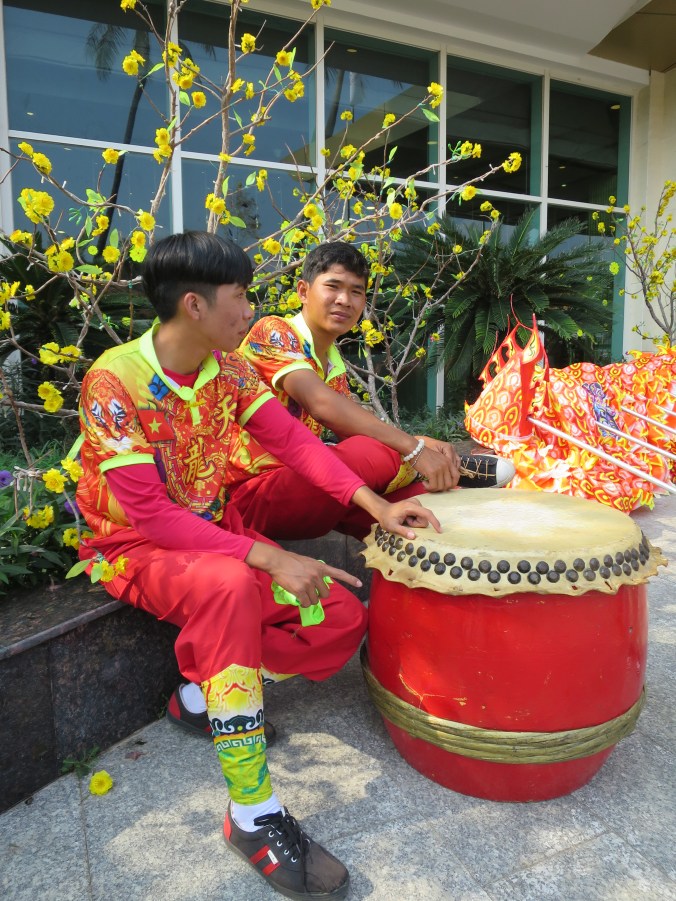
These drummers were fantastic.

untitled__20180210_238

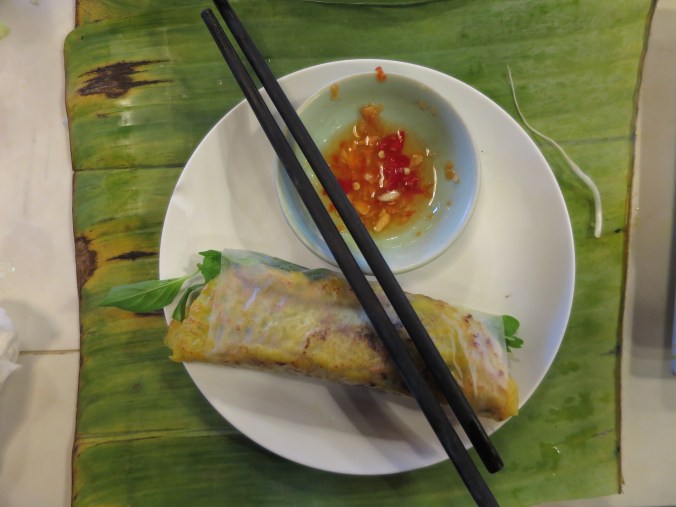
This is one of my favorite foods, Banh Xeo.  At one of my cooking classes we created this one.

untitled__20180210_199

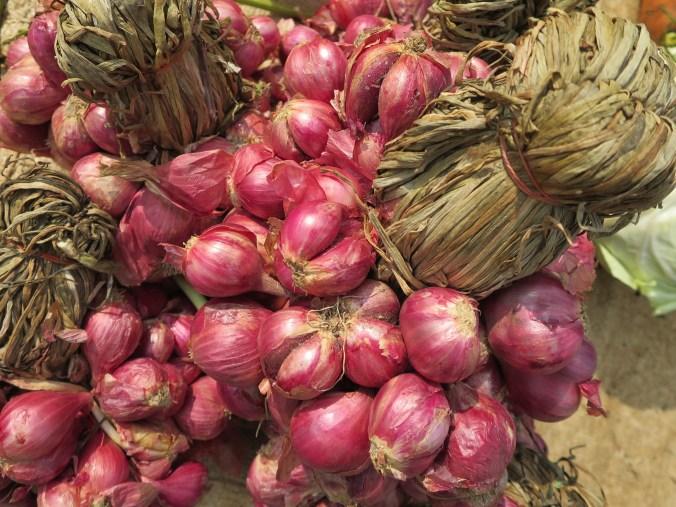
Shallots and garlic are mainstays in Vietnamese cooking.

untitled__20180210_201

Crabs are are on the menu everywhere.

IMG_5758.jpg

Liz and I enjoyed a local draft beer (.75) on our last night together.

IMG_5740.jpg

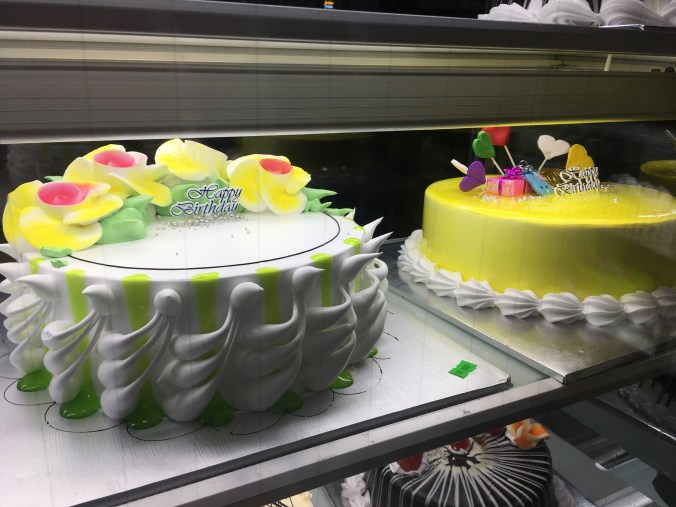
Want to eat a cake that has this much color?

IMG_5724.jpg

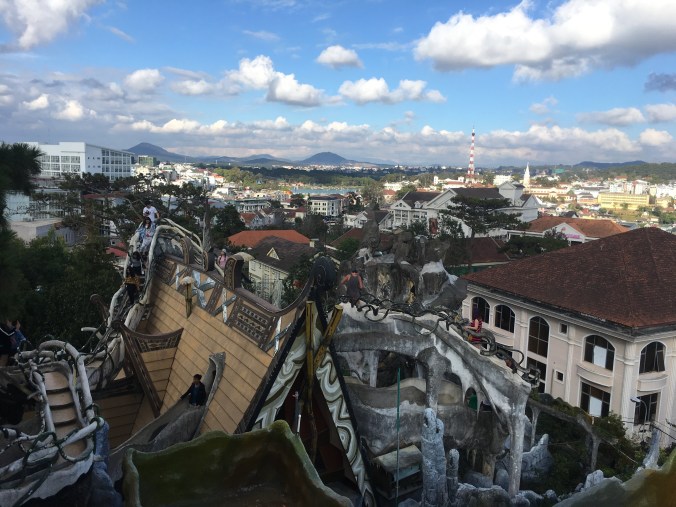
“Crazy house” project in Dalat, an ongoing practical work of art.

IMG_5686.jpg

A local fishing boat heading out for an evening on the ocean in Mui Ne.

IMG_5663.jpg

Working on the side of the river.

IMG_5738.jpg

Pat in his new dragonfruit shirt buying a croissant at 11;30pm, after a night of listening to a blues band in Dalat.

Central Vietnam: DMZ zone, Hue, and Hoi An

E289B001-DCCE-4B1A-AAD9-FCC4B9A99B3E

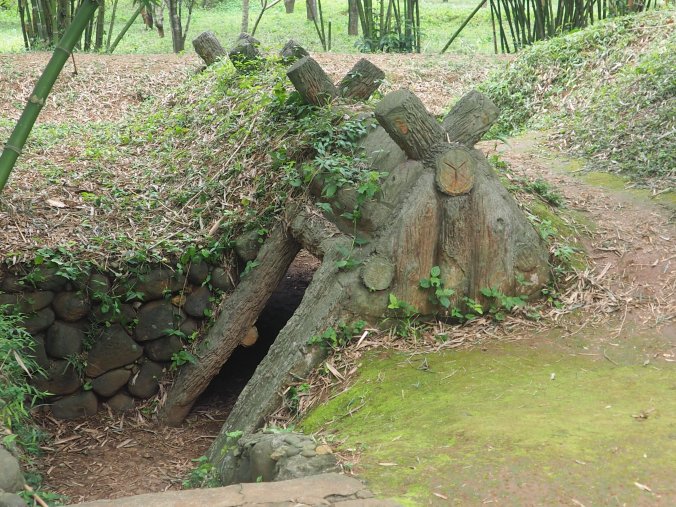
tunnel entrance

One of the tunnel entrances at Vinh Moc tunnels just north of the 17th parallel.

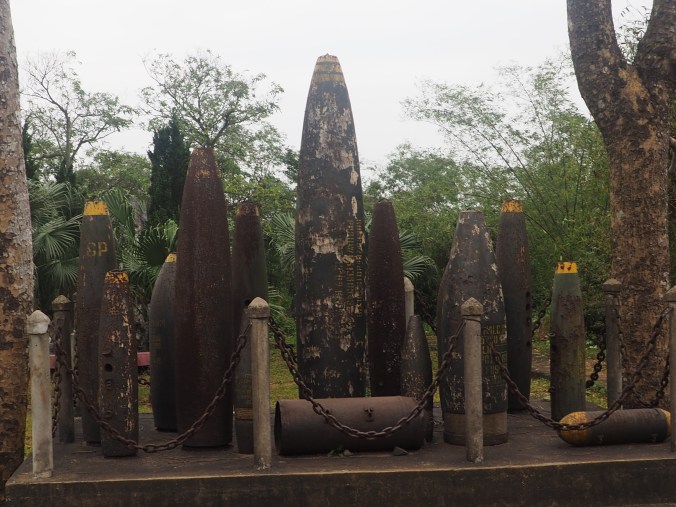
Ordnance dropped in the DMZ zone

Bombs dropped in the most militarized zone in the world. Here at the 17th parallel 90 families lived in 2km of tunnels for years

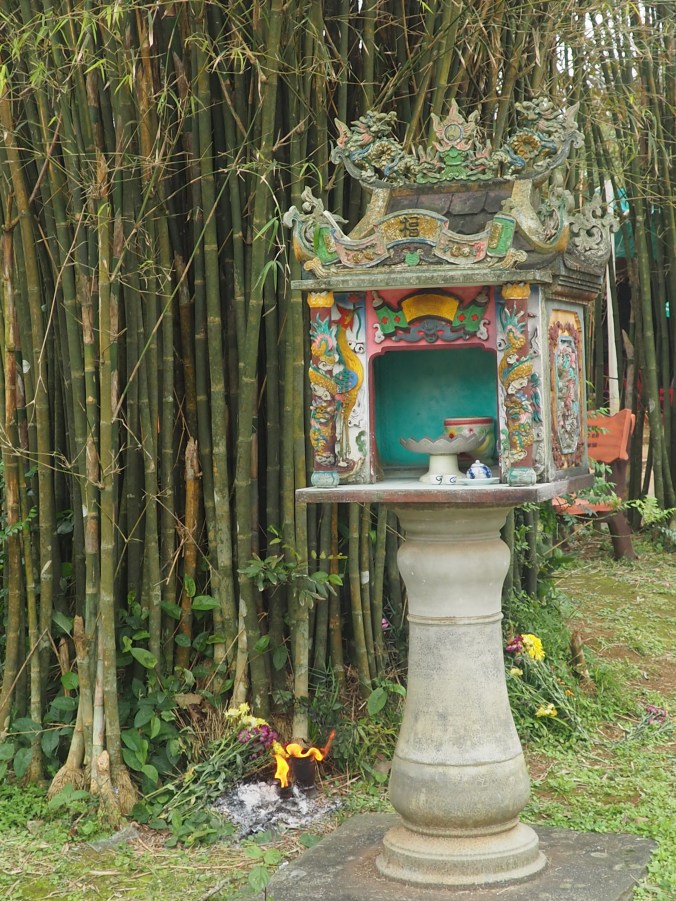
OLYMPUS DIGITAL CAMERA

A small buddhist altar for rememberances in the DMZ zone

IMG_5634.jpg

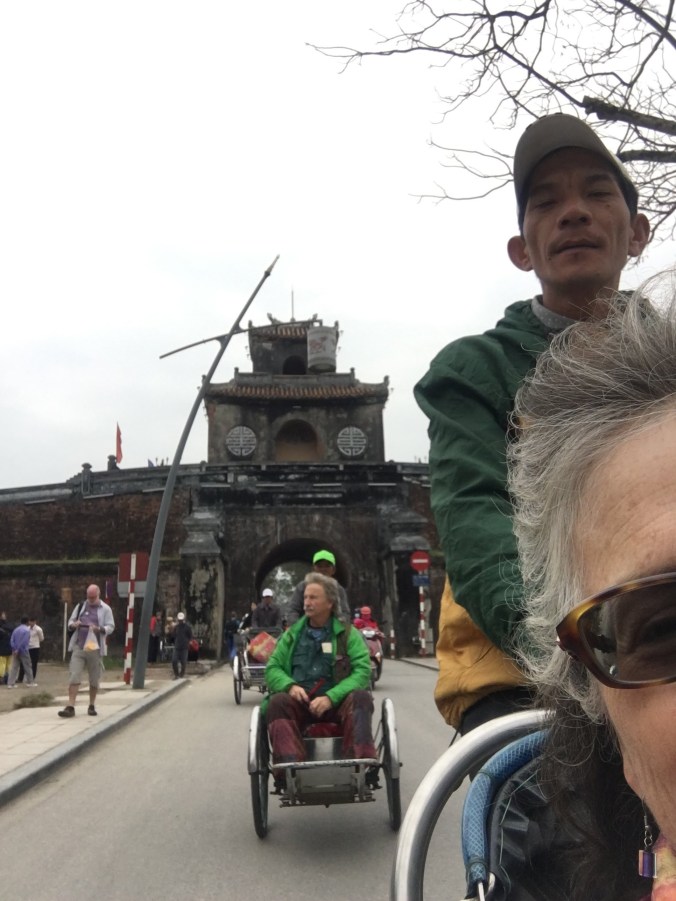
In Hue we entered the Imperial city through the Citadel (built 1804 6ft walls surrounded by a moat.

IMG_5676.jpg

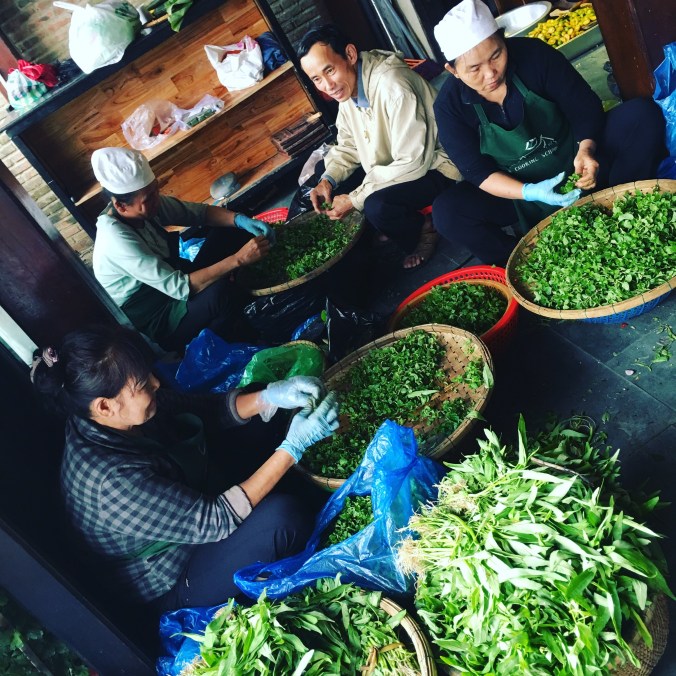
Lots of different kinds of greens are added to the many types of noodle soups in Vietnam.  Basil, watercress, lettuces, cilantro, mints, and bean sprouts.

OLYMPUS DIGITAL CAMERA

Dragons are seen as motifs everywhere.  This one is carved in stone.

untitled__20180130_039

Even though its winter some grass is still alive in the Imperial palace grounds.

OLYMPUS DIGITAL CAMERA

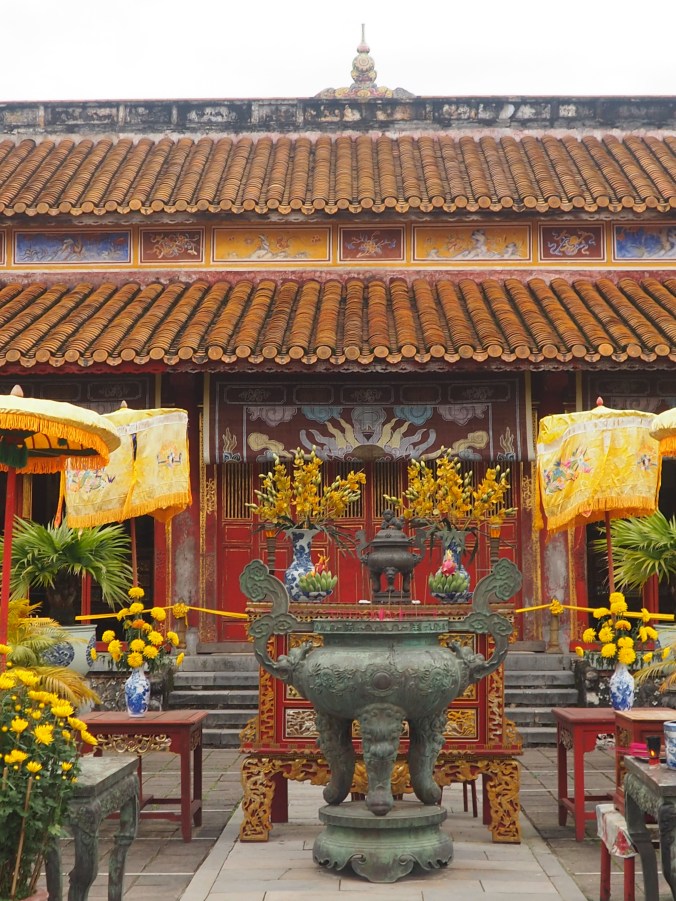
Offering altars are everywhere in the Imperial city.

untitled__20180130_050

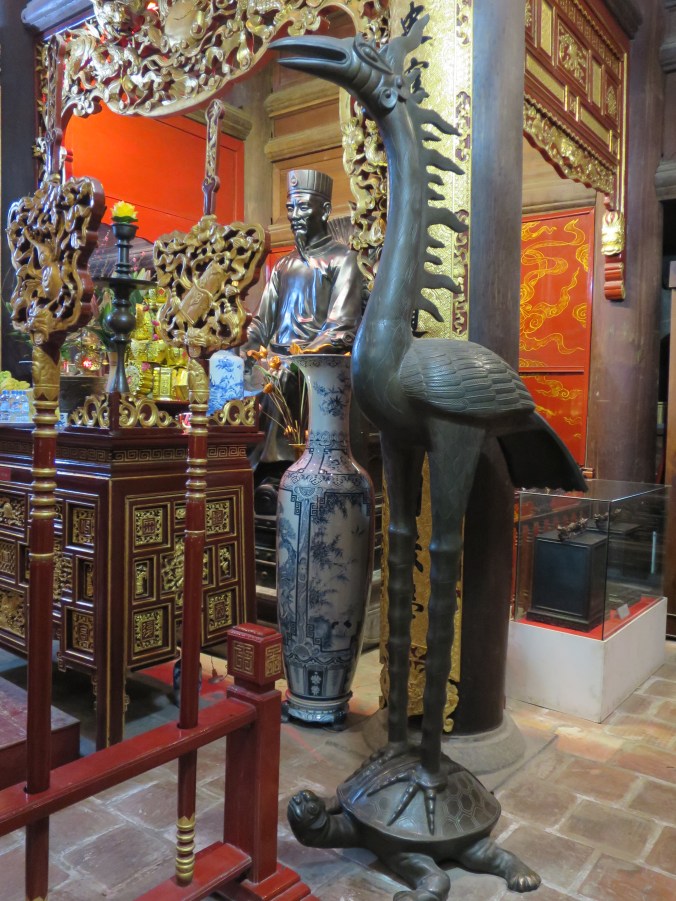
Confucianism is more a philosophy than an organized religion.  His code of a persons obligations to family, society, and state form the Vietamanese code still today.

untitled__20180130_055

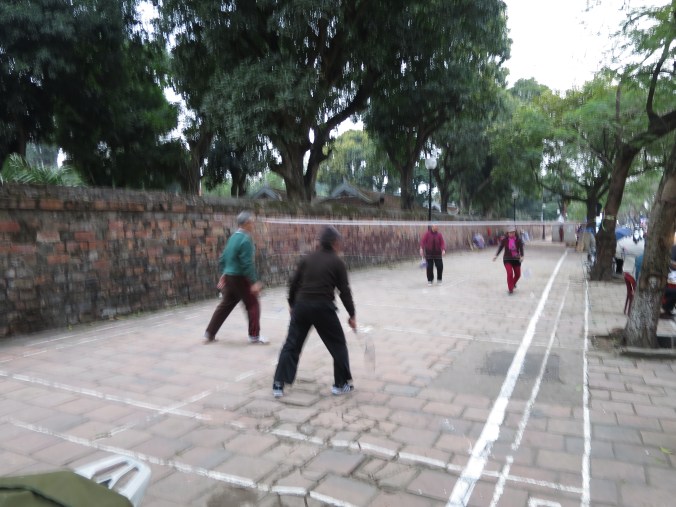
People spend time on the streets and sidewalks playing badminton and other net sports.

untitled__20180210_217

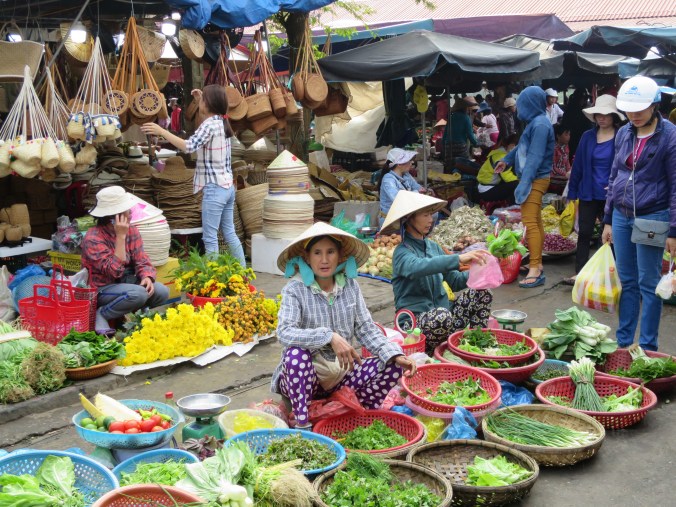
The markets are filled with fresh produce, flowers, and everything one needs for life.

untitled__20180210_219

untitled__20180210_212

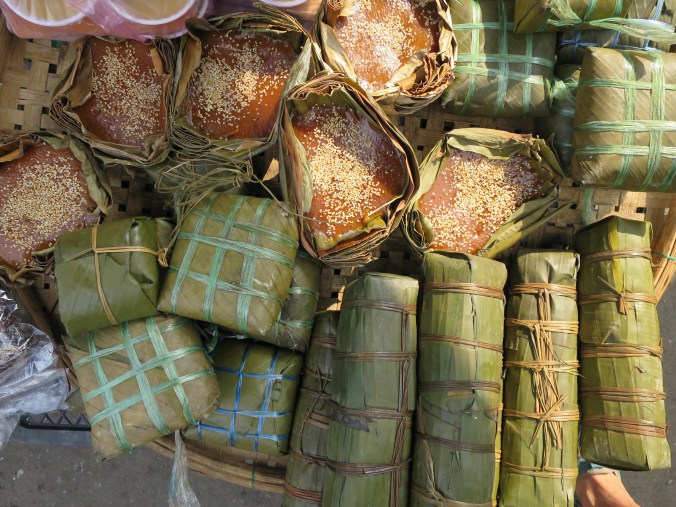
Different types of rice dishes are wrapped up in banana leaves for sale.

untitled__20180210_224

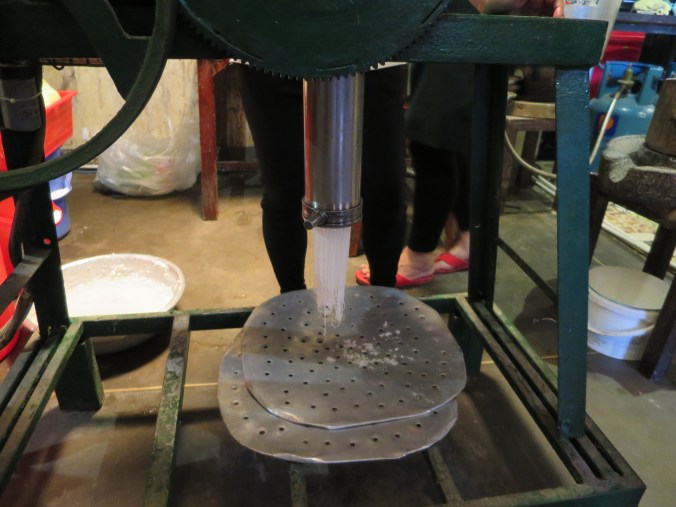
This machine makes noodles from rice, after which they are hung to dry.

untitled__20180210_219

Vietnam is the land of noodles, all made fresh each day are the best.  Market in Hoi An.

untitled__20180209_185

An enterprising fellow creating flowers out of bamboo. On the street in Hoi An.

untitled__20180209_184

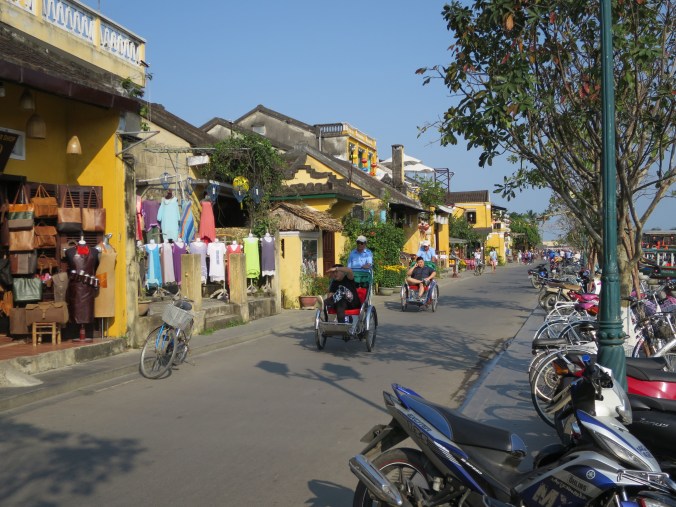
The 2 streets closest to the river in Hoi An are closed to vehicular traffic.

untitled__20180208_179

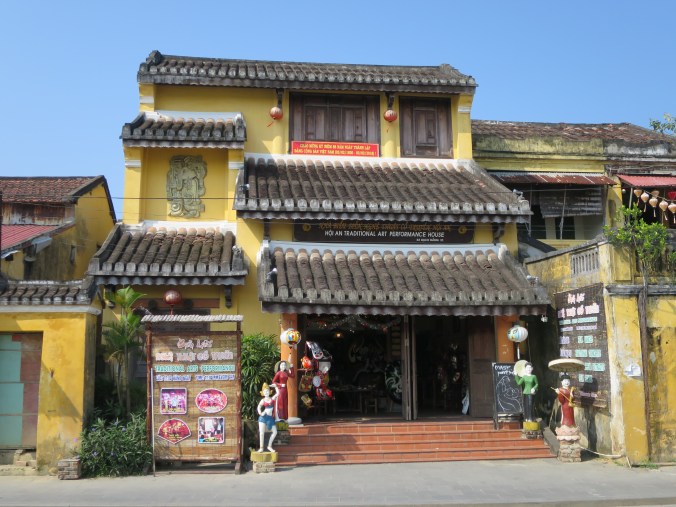
An old Hoi An shophouse (built around 1830) has been turned into a theater for dance troupes.

untitled__20180210_229

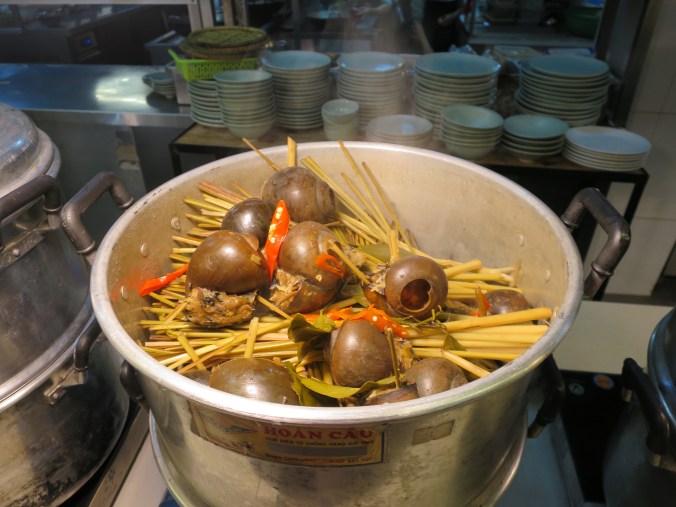
So much sea food in Vietnam. The coast line is about 2000 miles long.  This dish is giant stuffed snails.

untitled__20180210_190

Everywhere was decorated with yellows, golds, and red for TET (Chinese new year)

Mamallapuram, Tamil Nadu India

Mamallapuram India

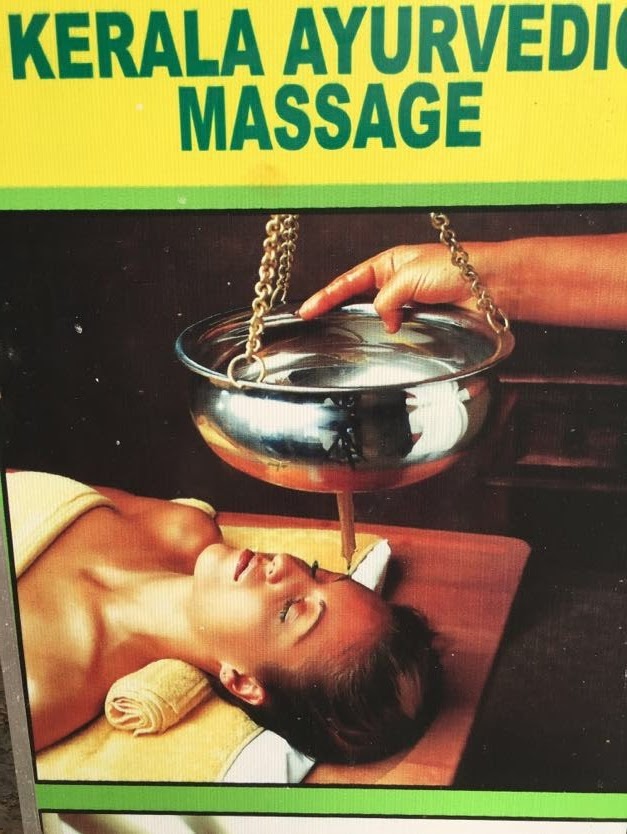
Kerala massage is everywhere I had 2 different treatments here
Mamallapuram India

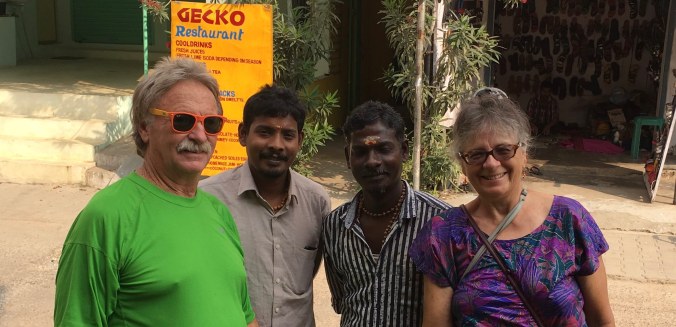
Our cook and helper from the Gecko Restaurant
India 2017-190

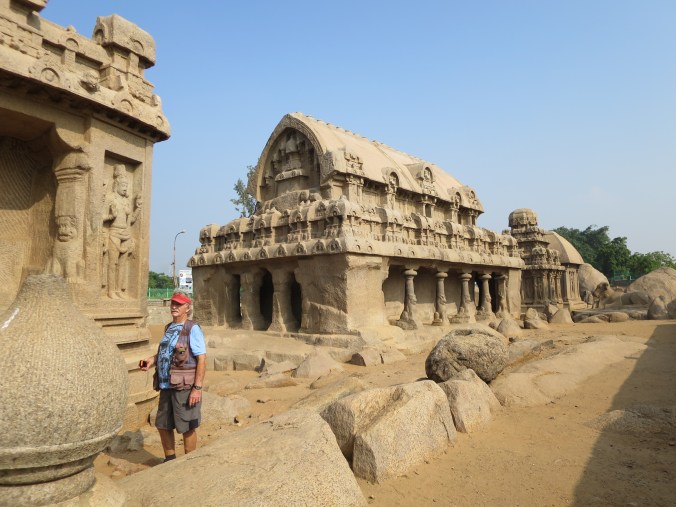
Pat and the 5 Rathas

India 2017-188

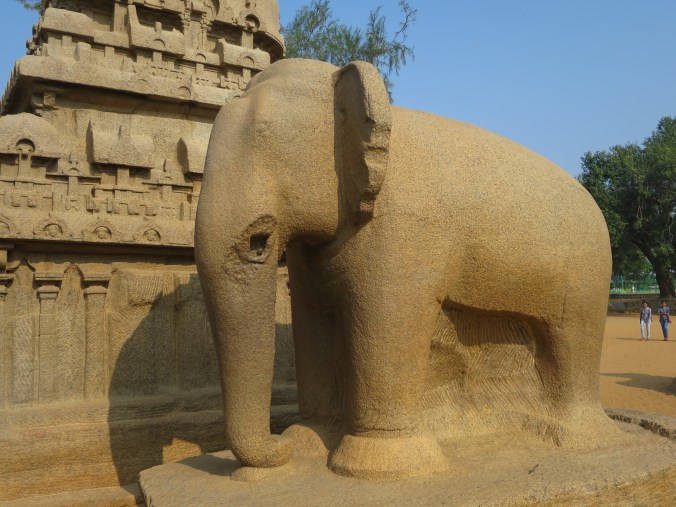
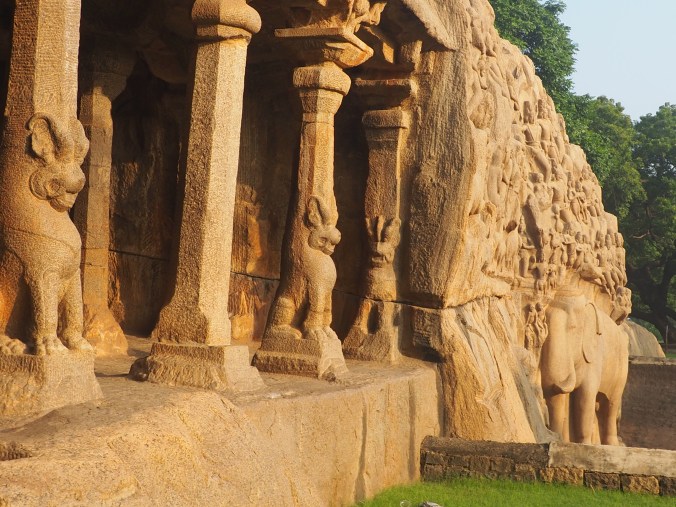
An elephant at the 5 Rathas

India 2017-195

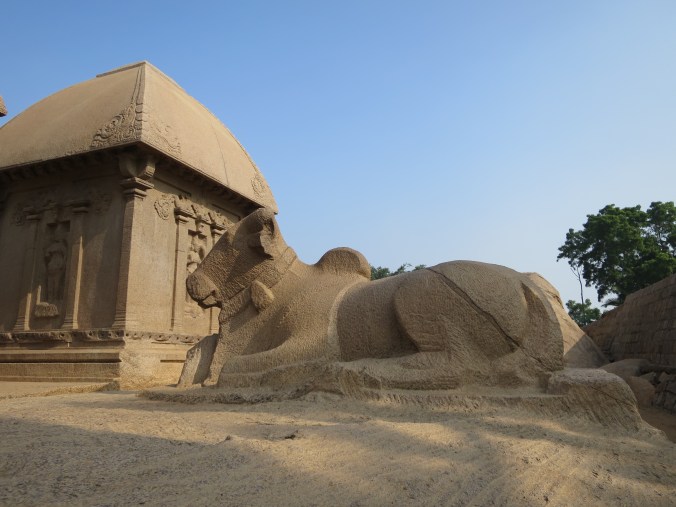
At the 5 Rathas

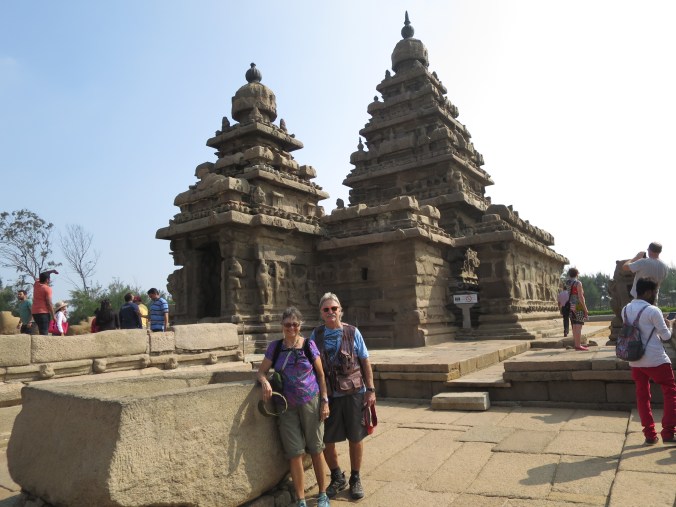
India 2017-200I had heard that Mamallapuram was a must visit for the ruins and it did not disappoint.  We arrived directly from the Chenni airport via uber.  Yes uber and other like taxi services are available all over India.  Lots of people here have new cars and this is how they pay for them. Of course the 1st order of business is to learn how to pronounce the name of where we wanted to go.  World Heritage-listed temples and carving dominate the town.  Its a small town so we rented bicycles for the week.  A favorite cafe “Gecko” served us morning & night with surprise dishes, we never looked at a menu here.  Such a refreshing change from always looking at a menu and asking if they in fact had the dish that you had painstakingly identified as fulfilling your every taste desire. It was fun to experience Tamil Nadu food at its finest from a cafe who had their own boat and went fishing for what we would eat at night.  Our 1st time at the ruins we took a guide who had been guiding for 40 years. What fun to visit sites where there were very few other people except some pilgrim groups touring the holy Hindu sites from India.

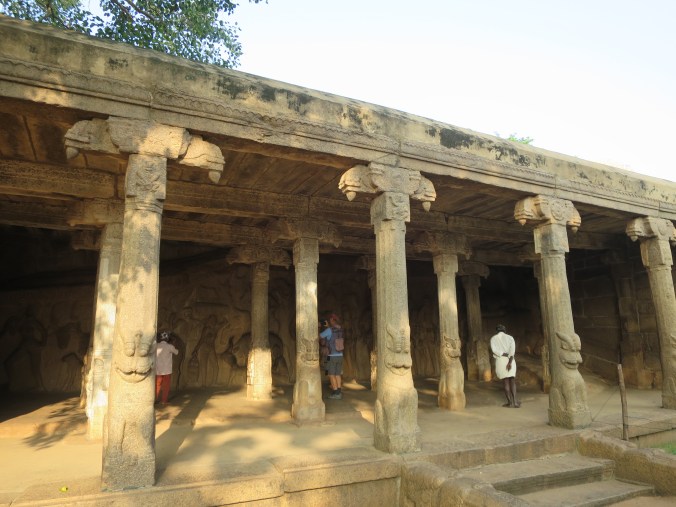
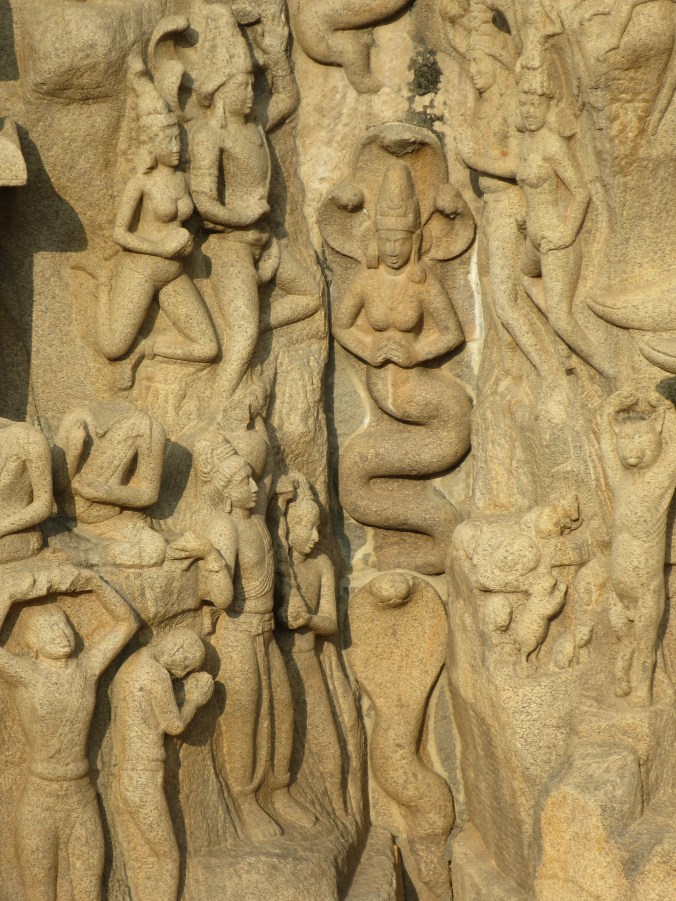
Most of the temples, caves, and rock carvings were completed during the 7th-century reign of Pallava king Narasimhaverman I.  This town was a major seaport during the Pallava kings occupation.  5 Rathas were carved from existing rocks on the site, each ratha (chariot-a vehicle for the gods) was named after the 5 hero-brothers of the epic Mahabbharata  The rathas were hidden in the sand until the British excavated them 200 years ago. The rooms in the carved temple caves were huge and just the volume of rock removed to create these caves was very impressive.
India 2017-146

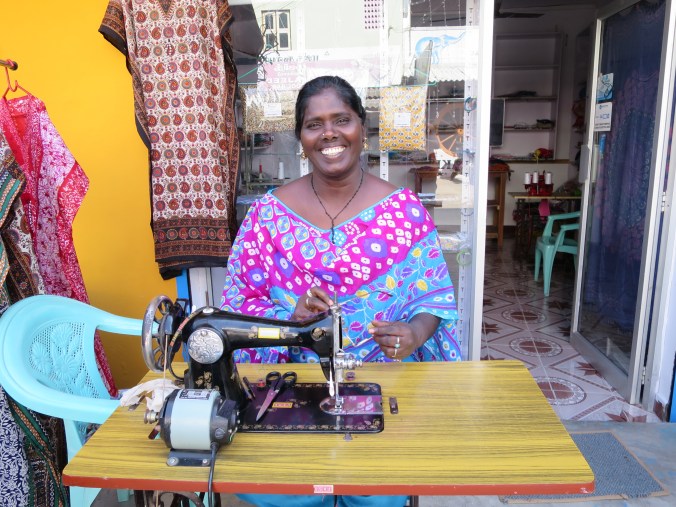
A tamil woman tailor

India 2017-148

Carved rock temple

India 2017-152

Carving in the rock temple

India 2017-155

Carved rock temple

India 2017-163

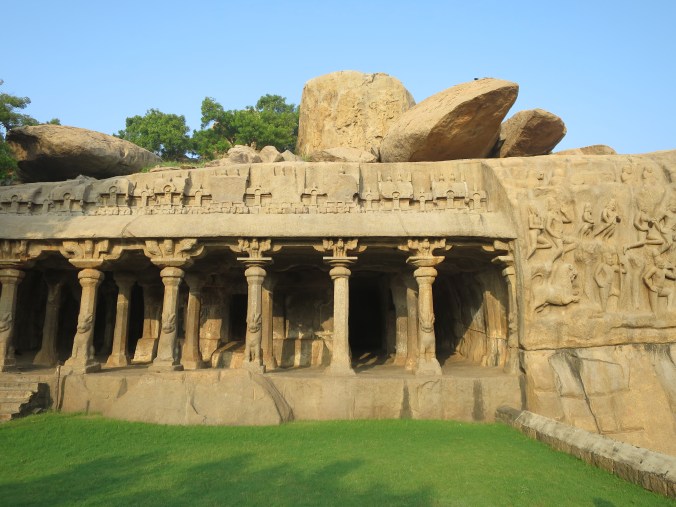
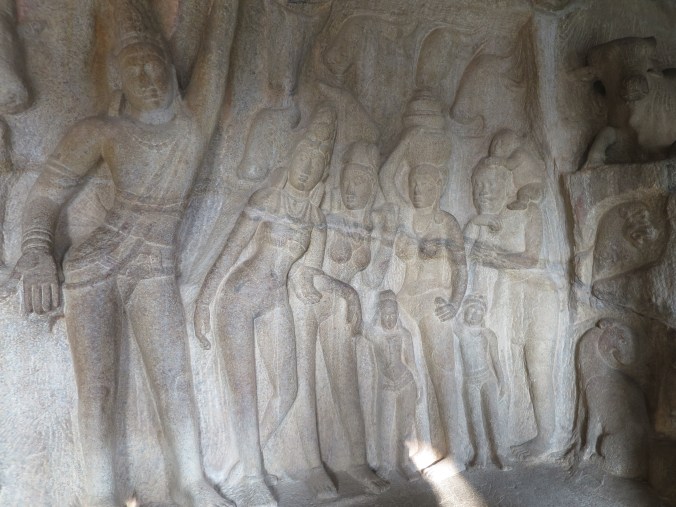
Arjuna’s Penance

India 2017-184

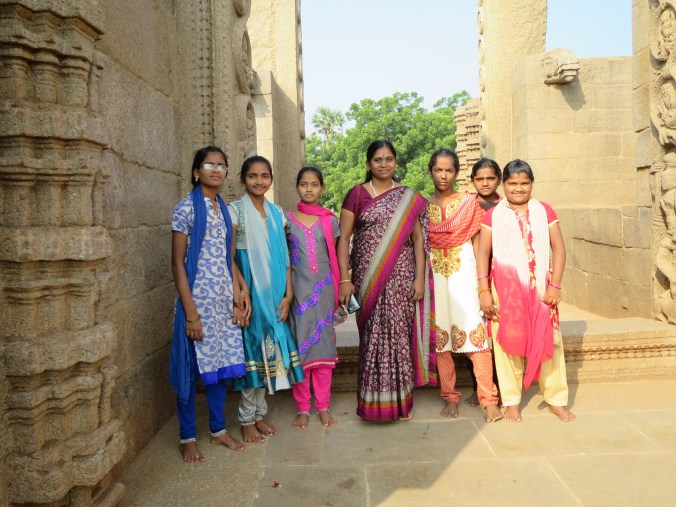
Visiting students

India 2017-205

Shore Temple

India 2017-235

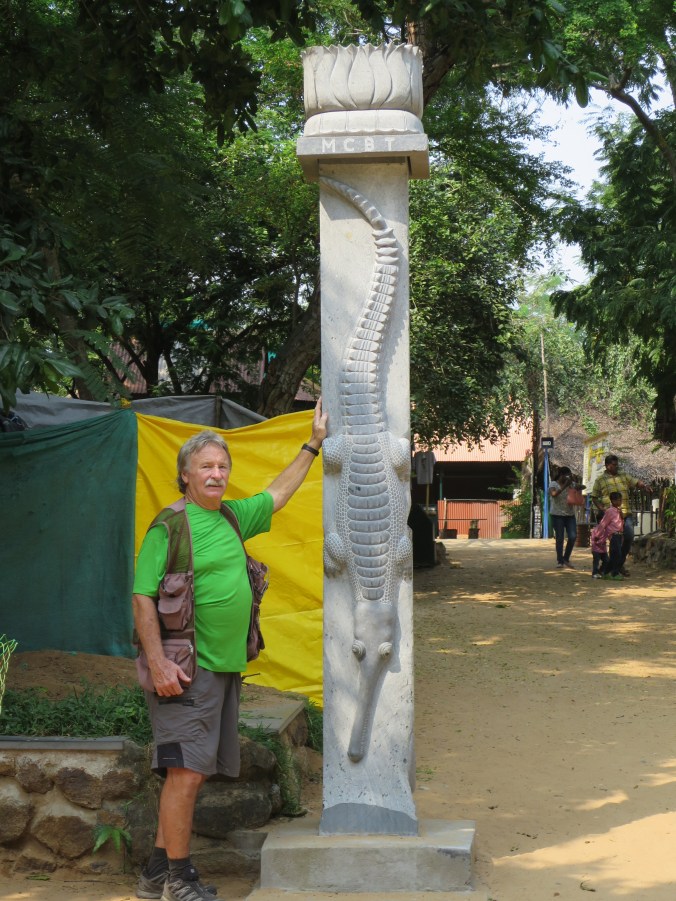
At the Croc farm

OLYMPUS DIGITAL CAMERA

Carved temple and Arjuna’s wall

OLYMPUS DIGITAL CAMERA

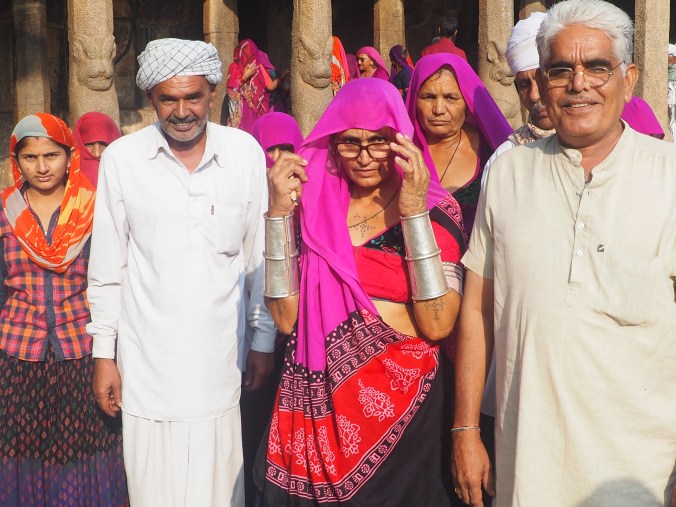
Visiting gujarat pilgrims

OLYMPUS DIGITAL CAMERA

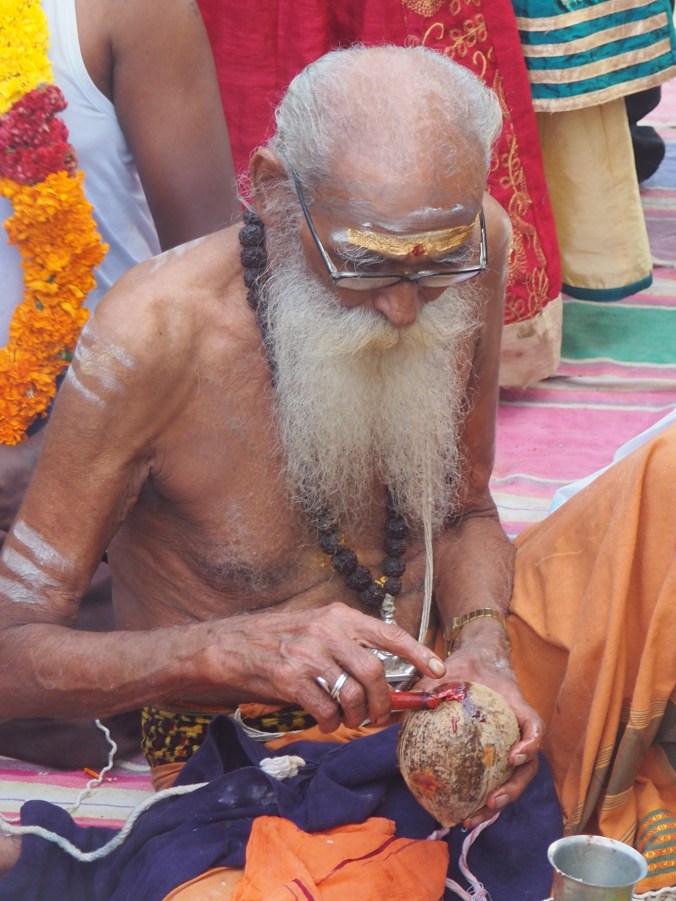
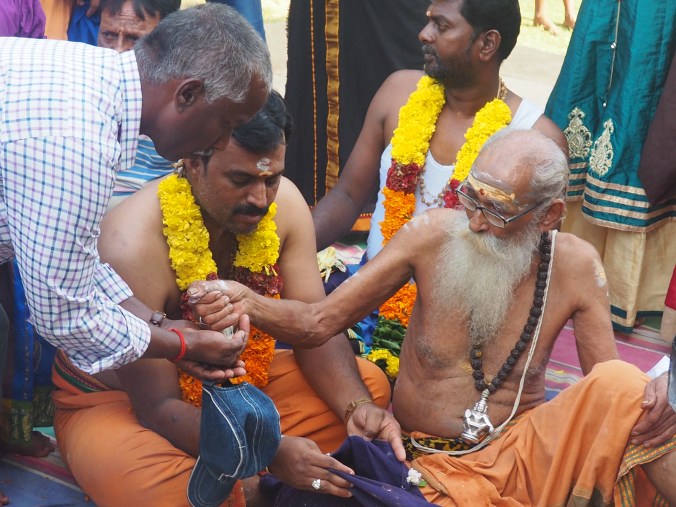
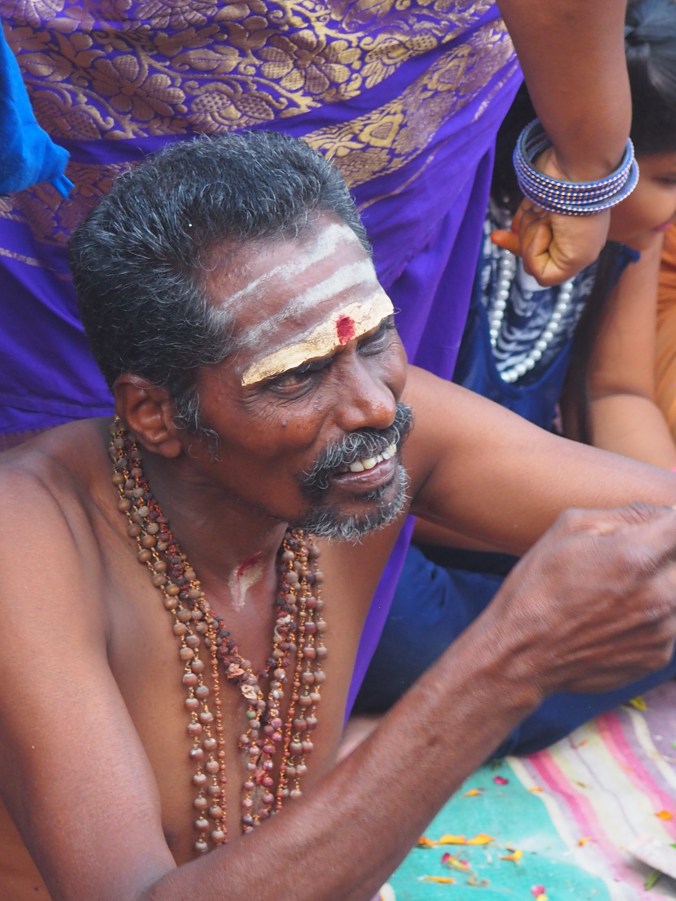
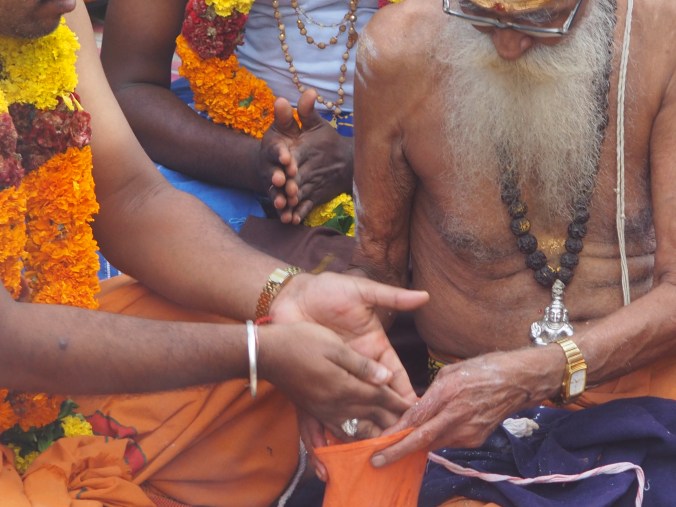
Hindu priest creating good luck charms
OLYMPUS DIGITAL CAMERA

Priest making offering packets

OLYMPUS DIGITAL CAMERA

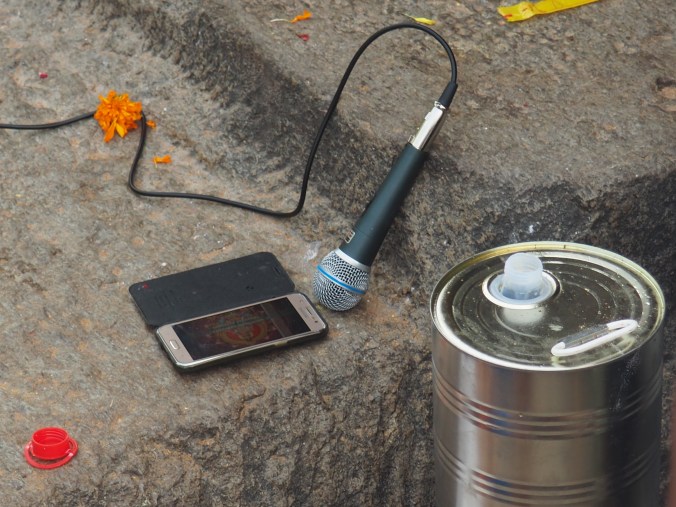
using a cell phone in its best use

OLYMPUS DIGITAL CAMERA

Offerings

OLYMPUS DIGITAL CAMERA

A devotee helping with offerings

OLYMPUS DIGITAL CAMERA

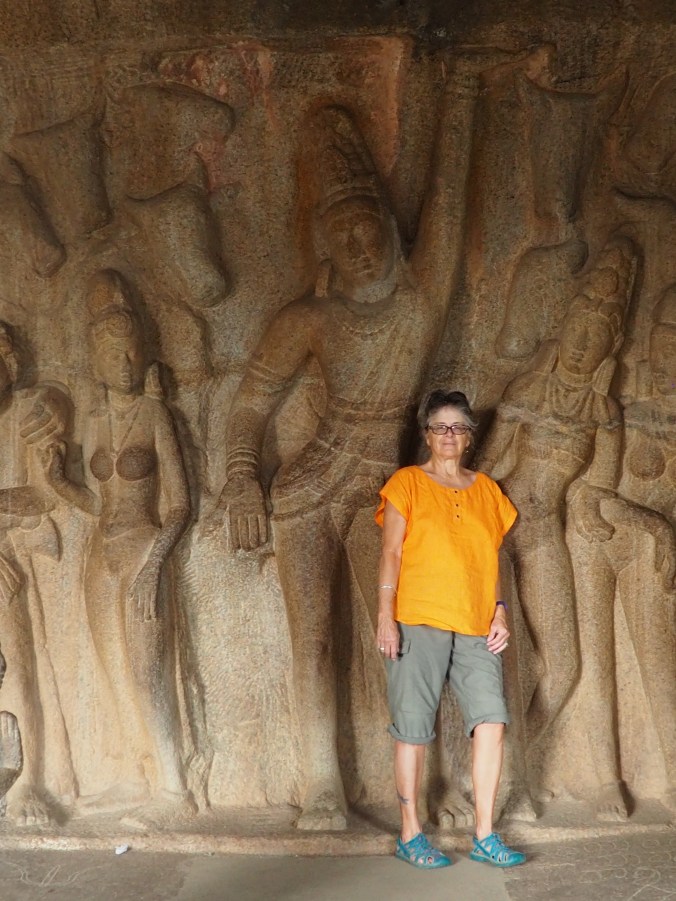
Janet in the carved temple cave

OLYMPUS DIGITAL CAMERA

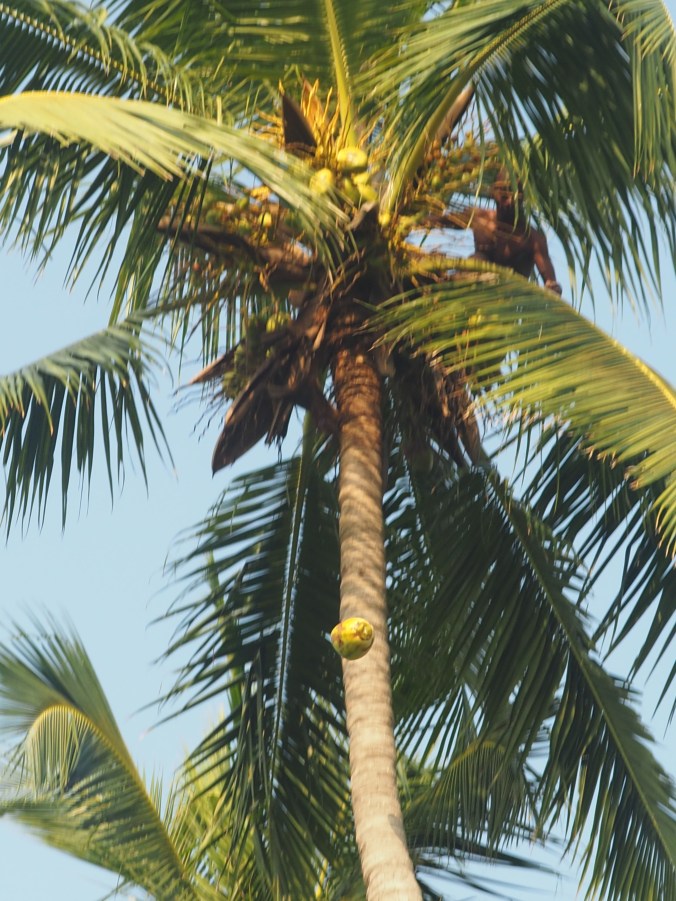
A coconut harvester

OLYMPUS DIGITAL CAMERA

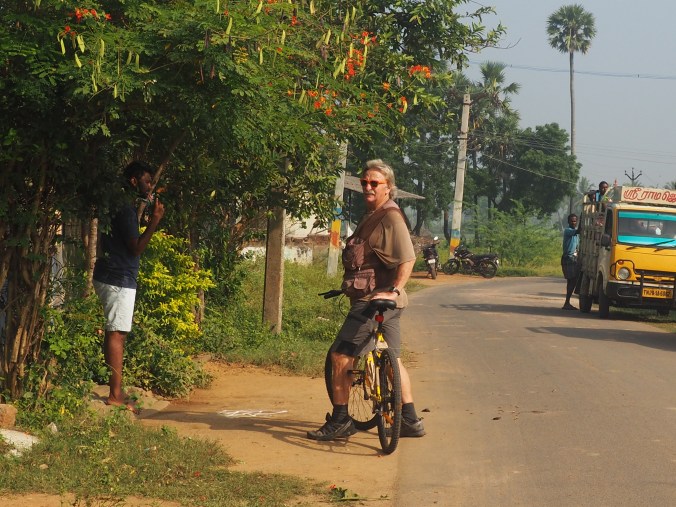
Pat touring with his bike

OLYMPUS DIGITAL CAMERA

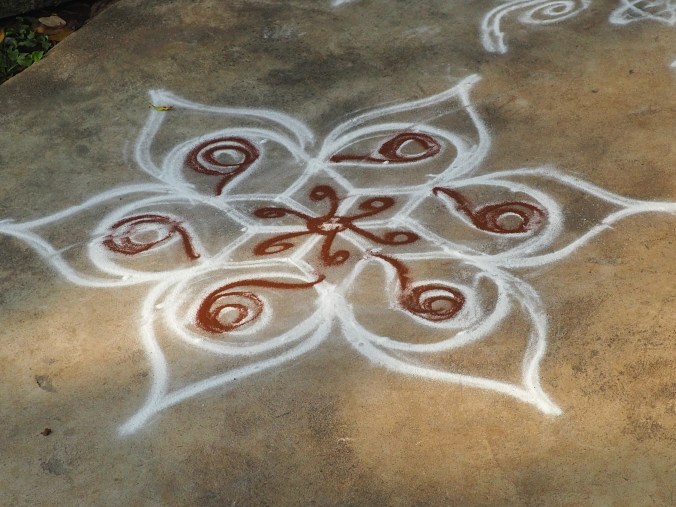
Kolam-chalk, rice-paste designs in front of houses
OLYMPUS DIGITAL CAMERA

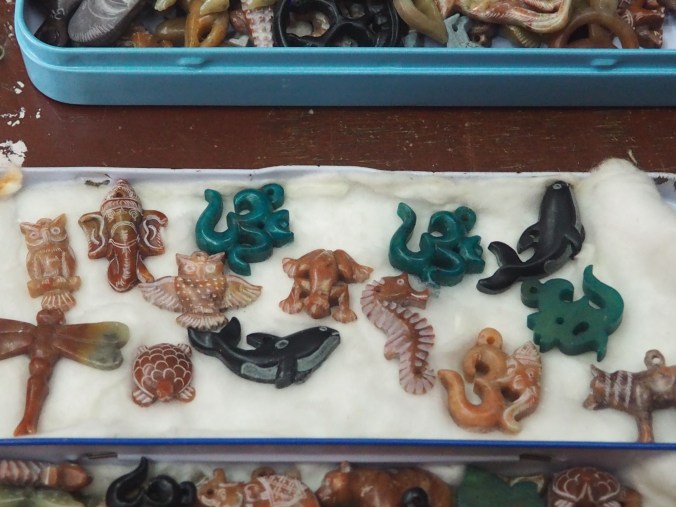
Small stone carvings for jewelry

OLYMPUS DIGITAL CAMERA

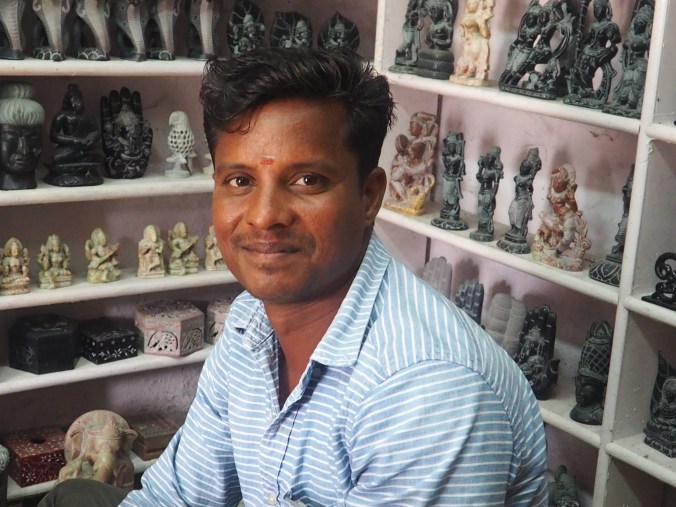
Arjuna the stone carver

We went to the carved caves every morning at 6:30 and would photograph in great light and talk to who ever was around.  Of course what would people be selling in a place where carving in rock was a religion? stone carving!! And yes we did buy a few small pieces.  One morning our new stone carving friend took us on a tour of the countryside we rode our bicycles and he led us on his scooter.  What fun, of course its 85 degrees at 9am with 75% humidity so you get the picture. This young man Arjuna wasn’t married because he didn’t have enough money and he had to take care of disabled parents.  Work is hard to come by here in India.  So he decided to go to the local trade school for stone carving.  Of course now the rock is getting expensive because so many people are trying to make a living with carving (only 1.4 billion people in India and growing)  We did meet lots of 25-35 year olds who either weren’t going to marry or only had or wanted no kids or 1-2 children.  Since so many people speak english well its fun to just hangout and wander around.  There are a lot of Kashmiri traders with shops in town, they told me that business was really down.

So India is in the midst of big change in many ways, from women demanding more rights to Dalits marching in the streets to demand equal treatment by the police.  The political scene is full of convicted criminals (in the “cow belt”) especially.  To lots of start ups promoting solar in the slums (a big project in Kolkata) to organic farming in pockets around the country.  Of course the conflict with Pakistan on the Kashmiri border continues and the N part of West Bengal want autonomy from Kolkata.
Nagaland, NE India

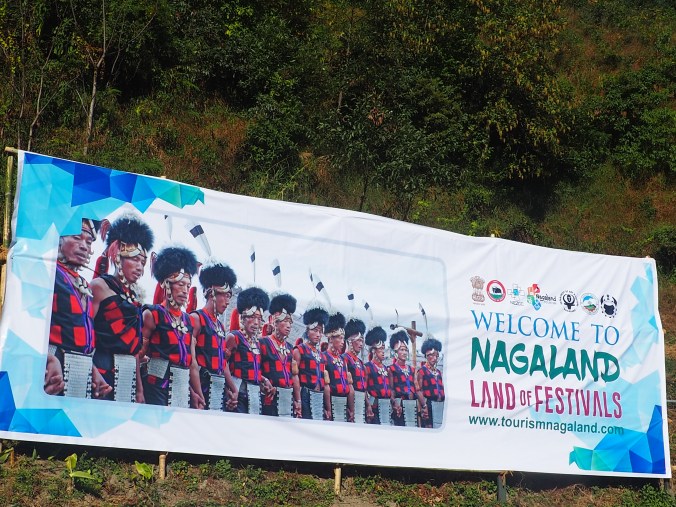
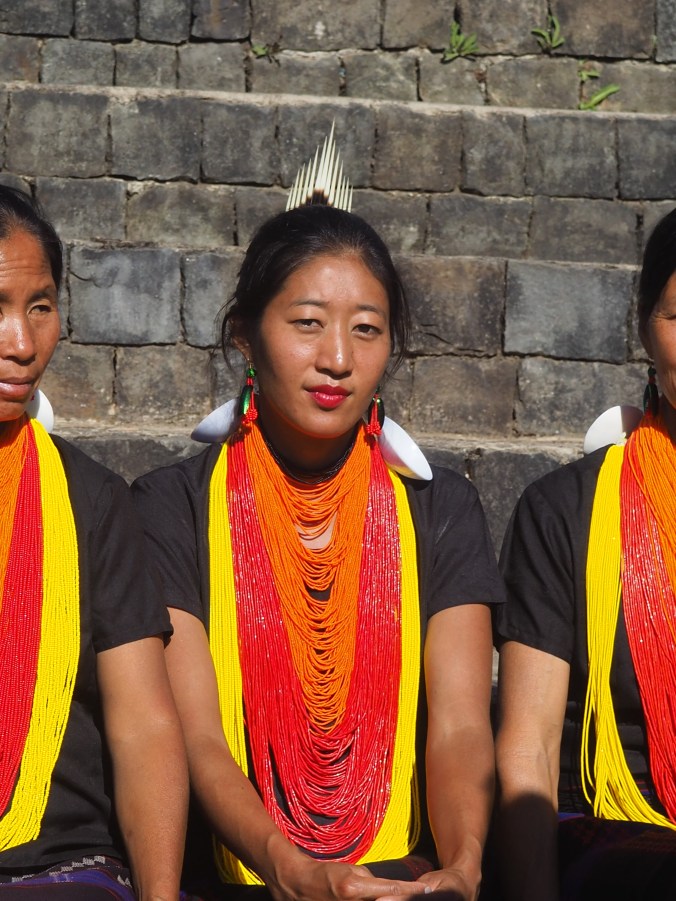
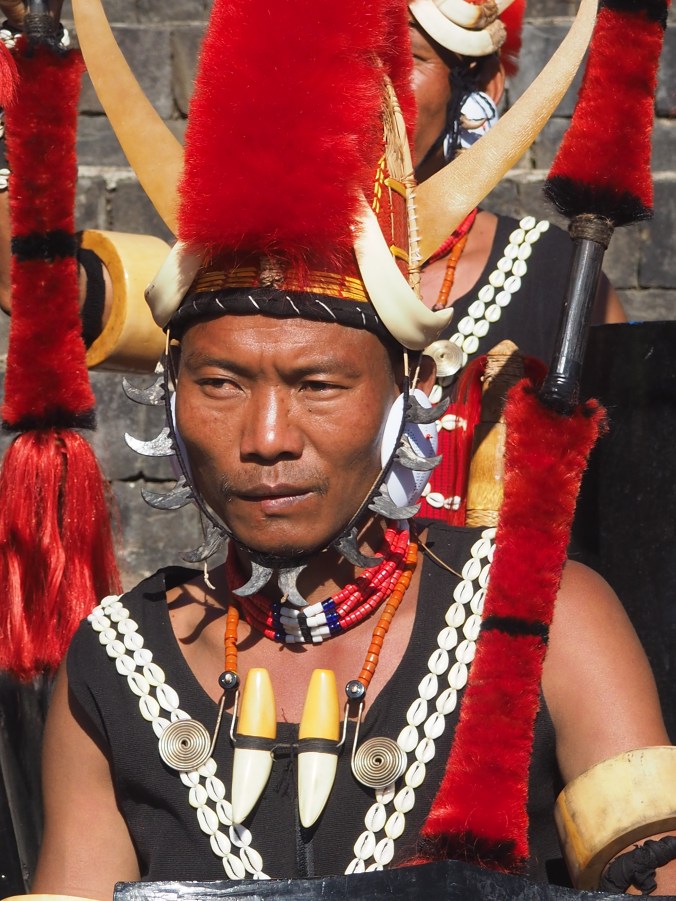
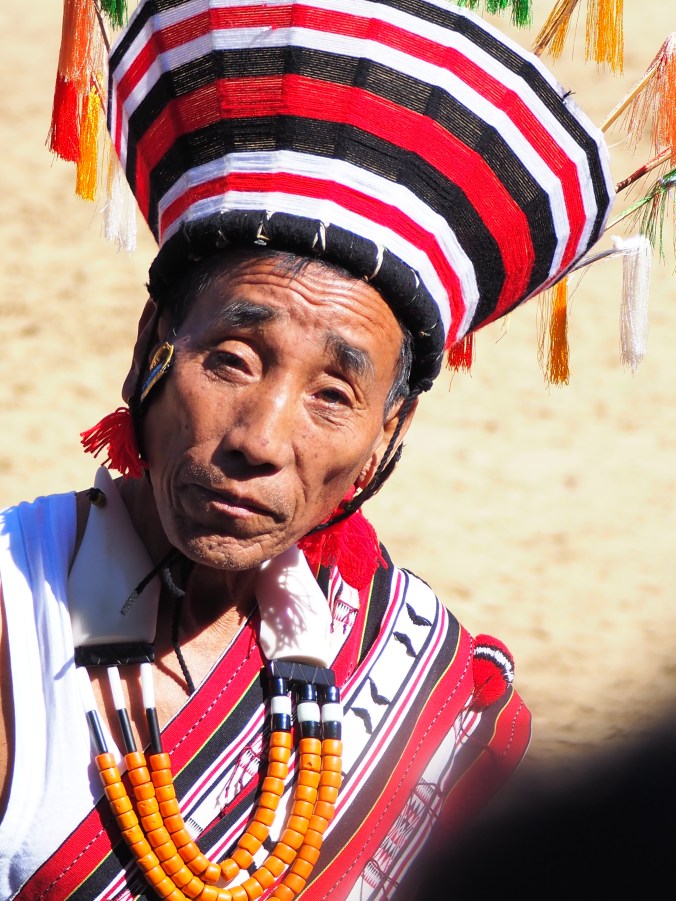
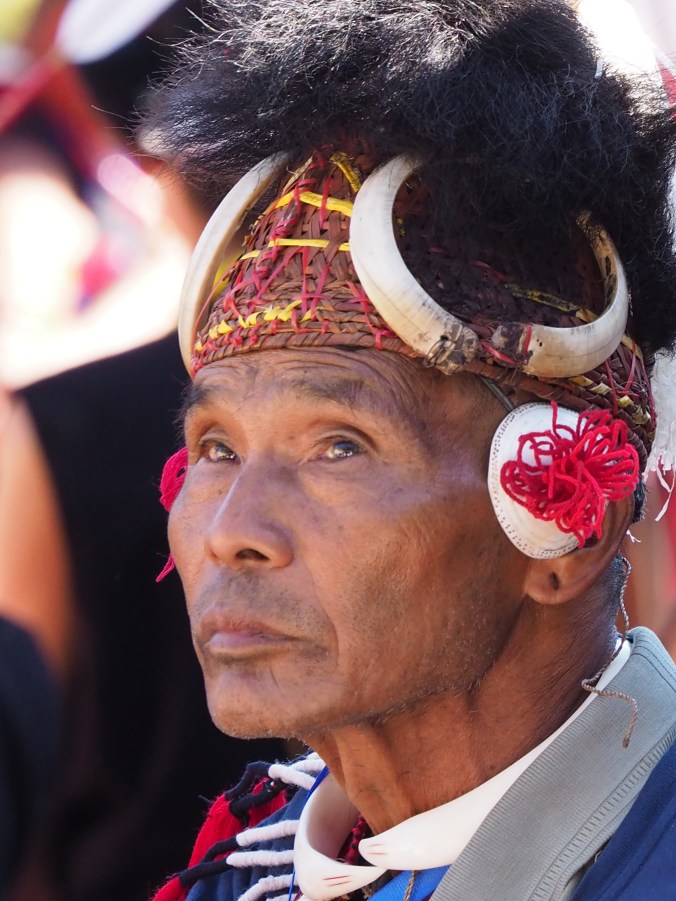
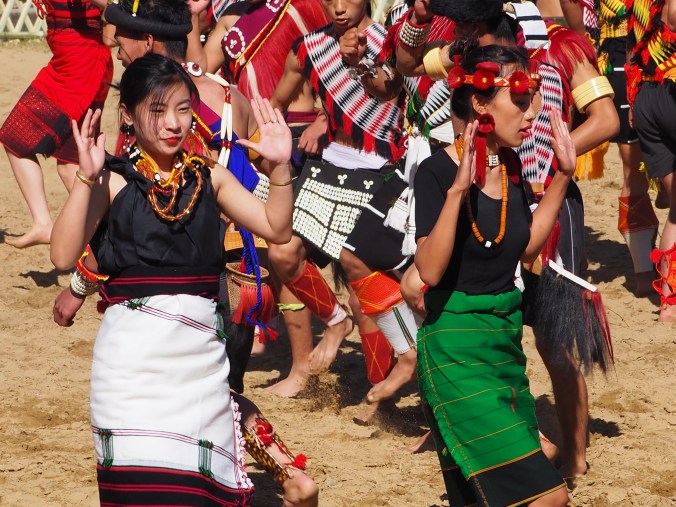
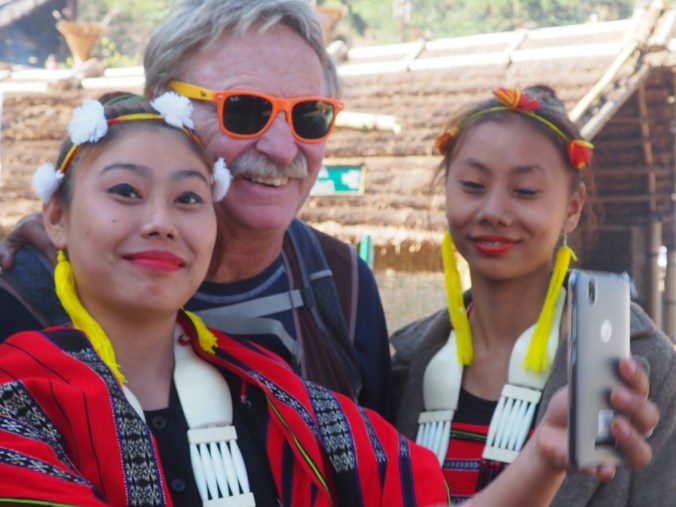
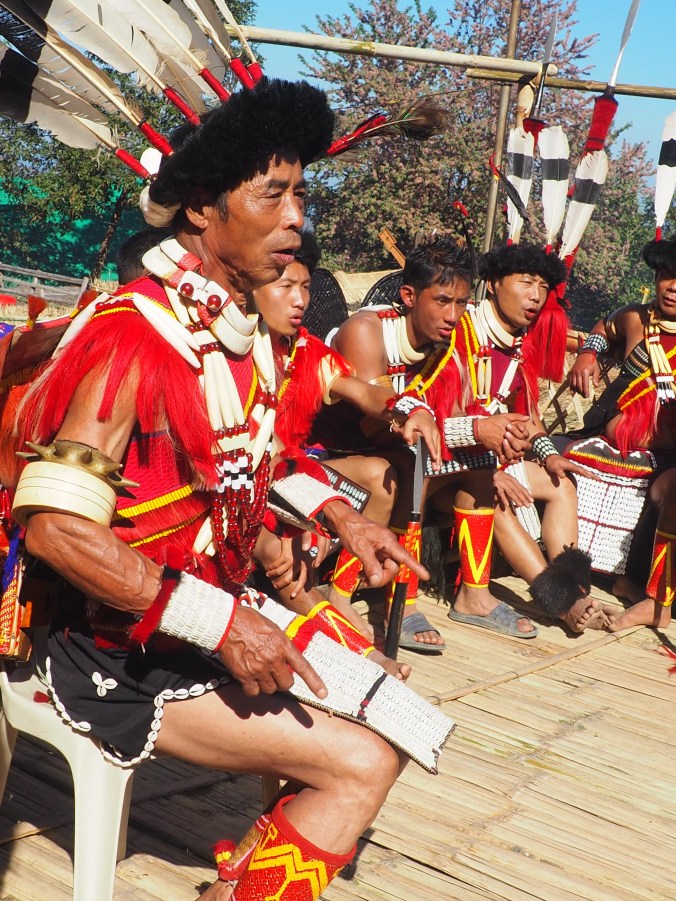
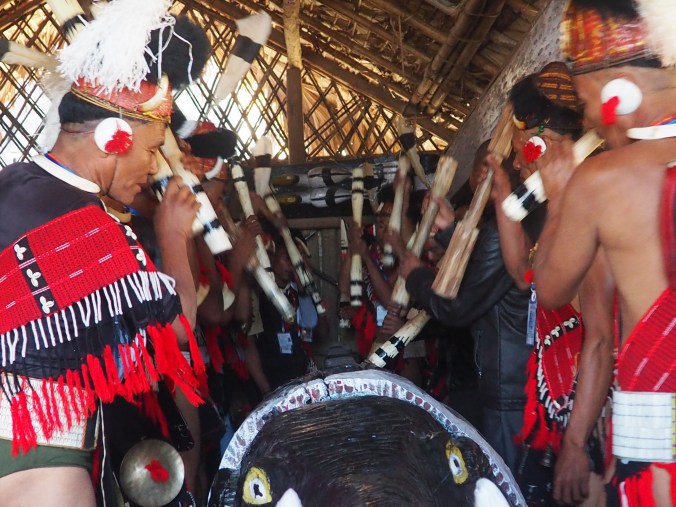
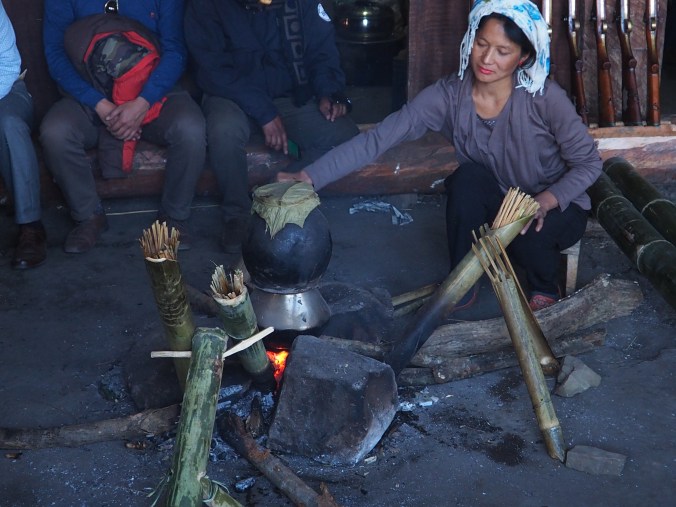
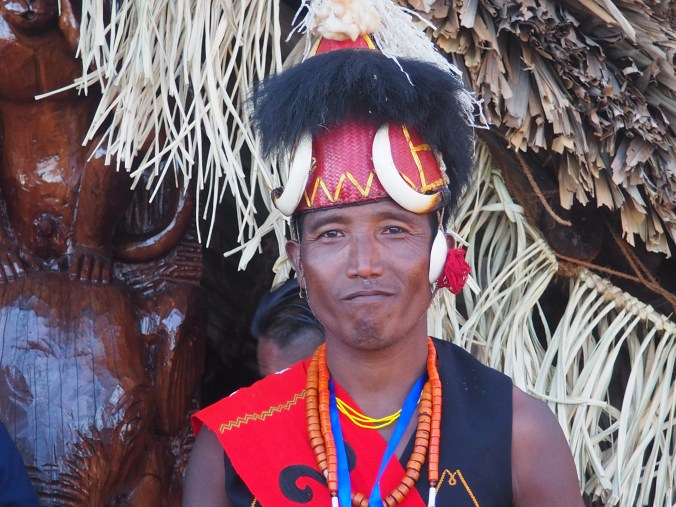
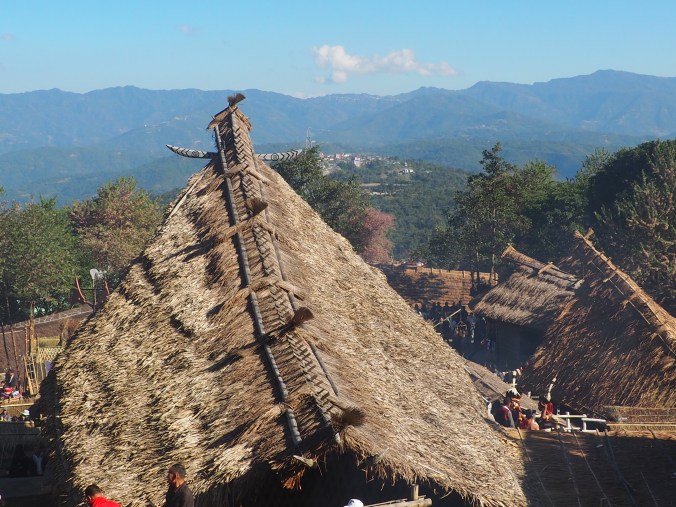
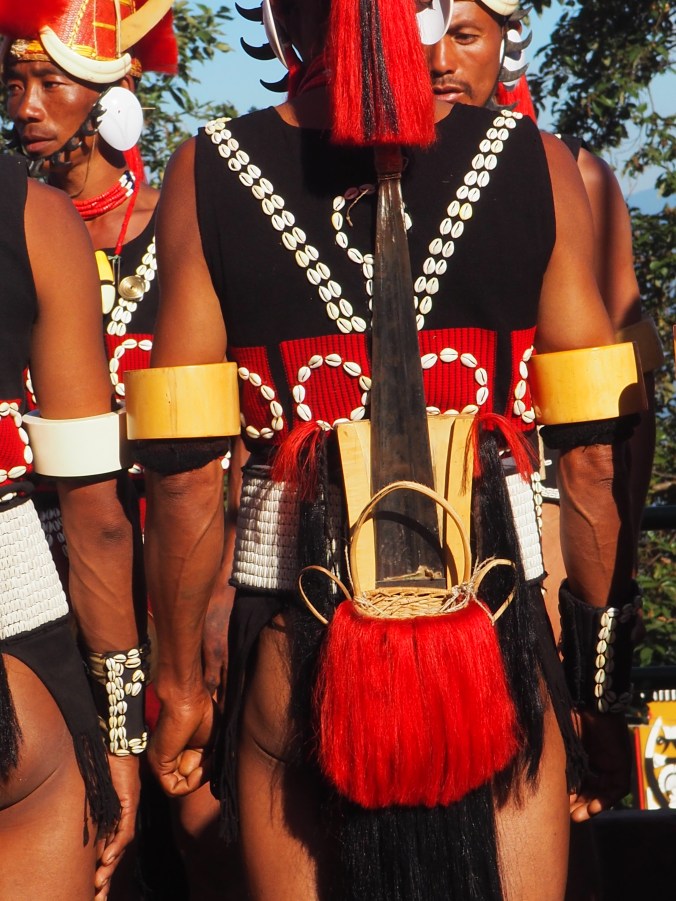
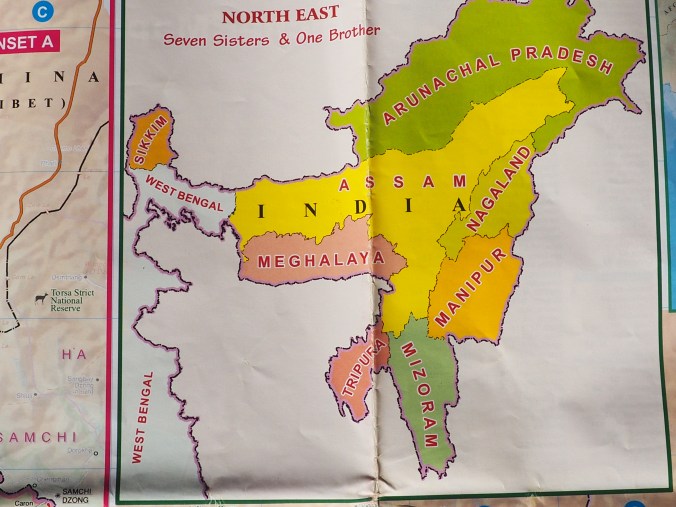
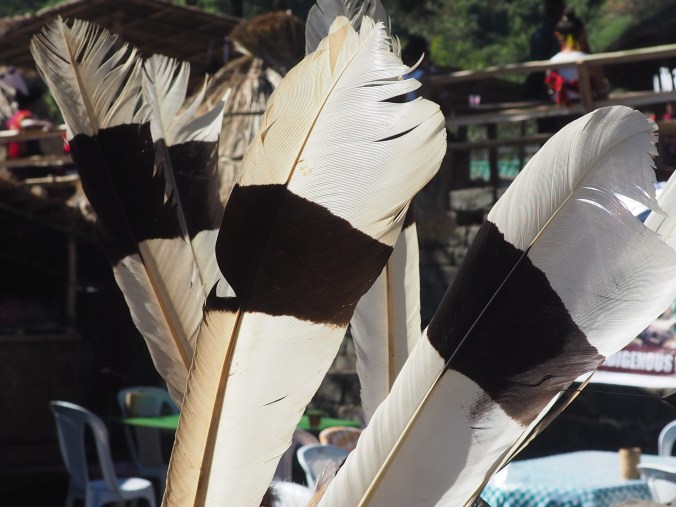
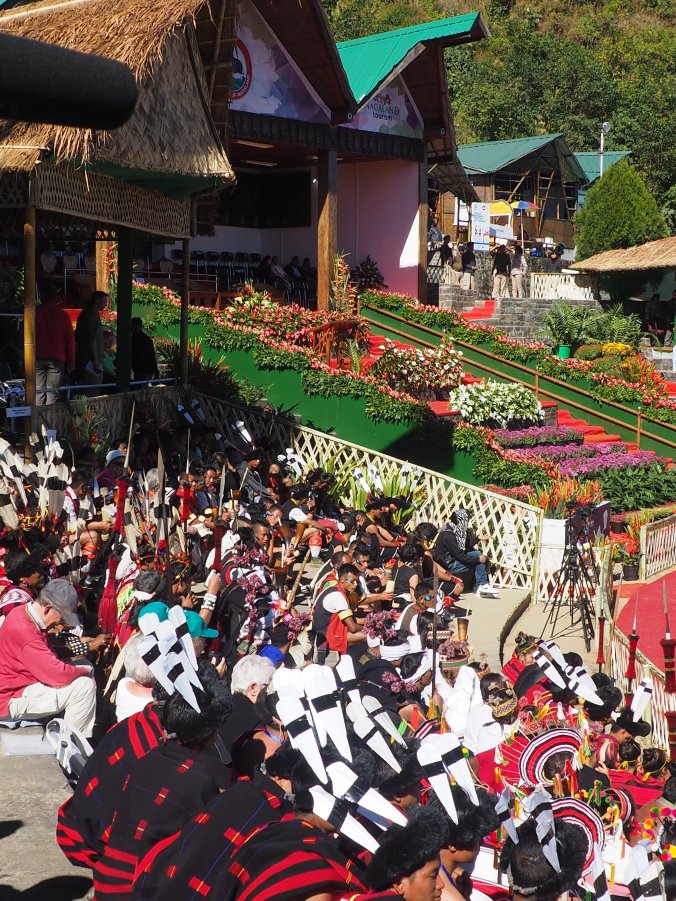
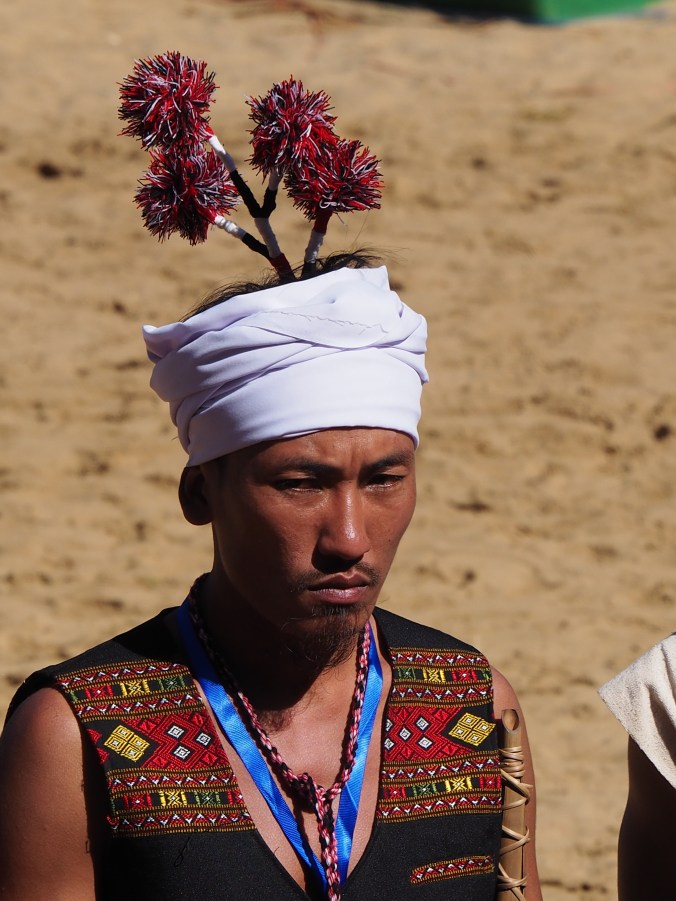
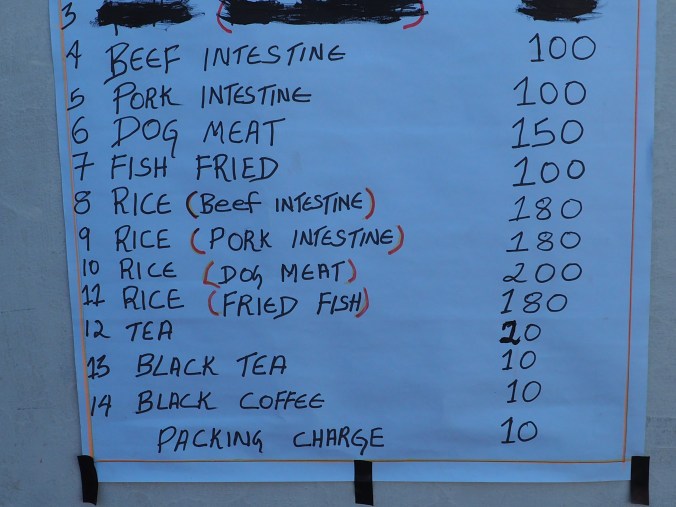
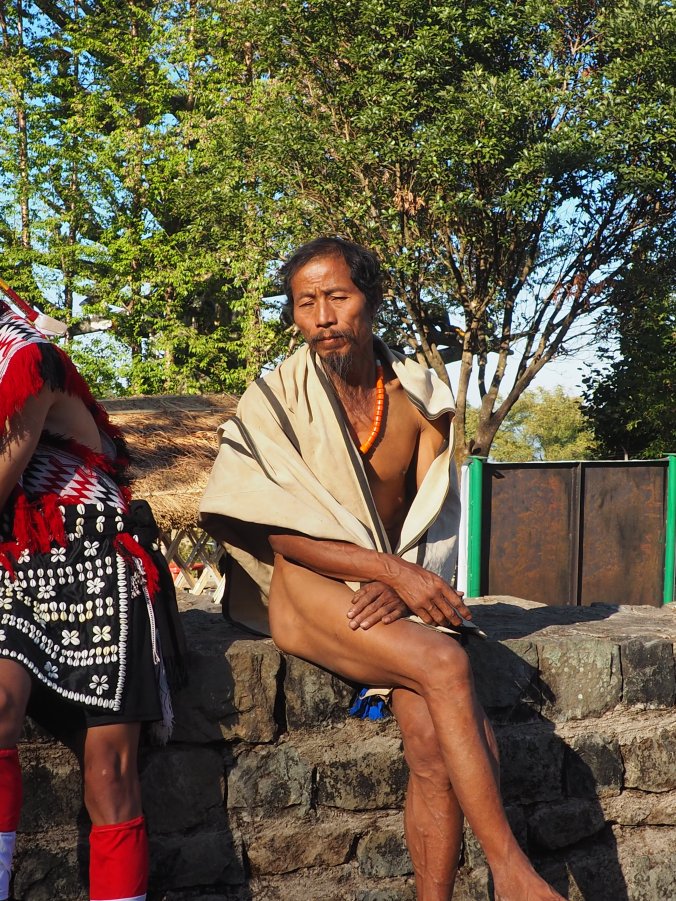
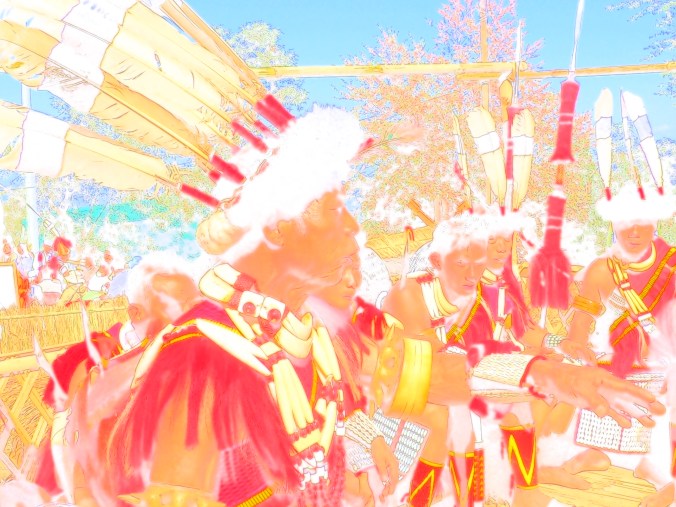
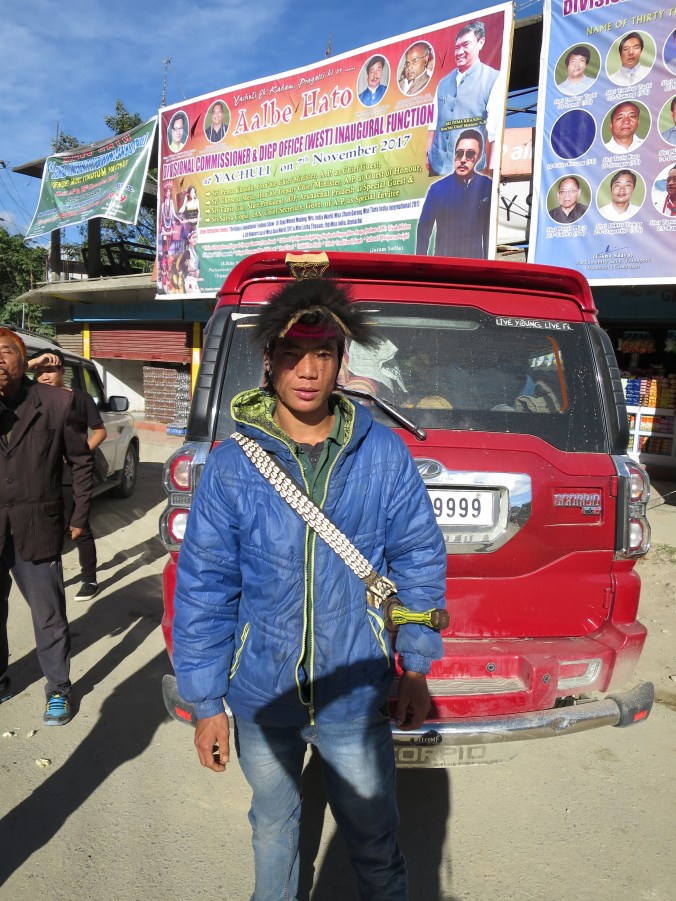
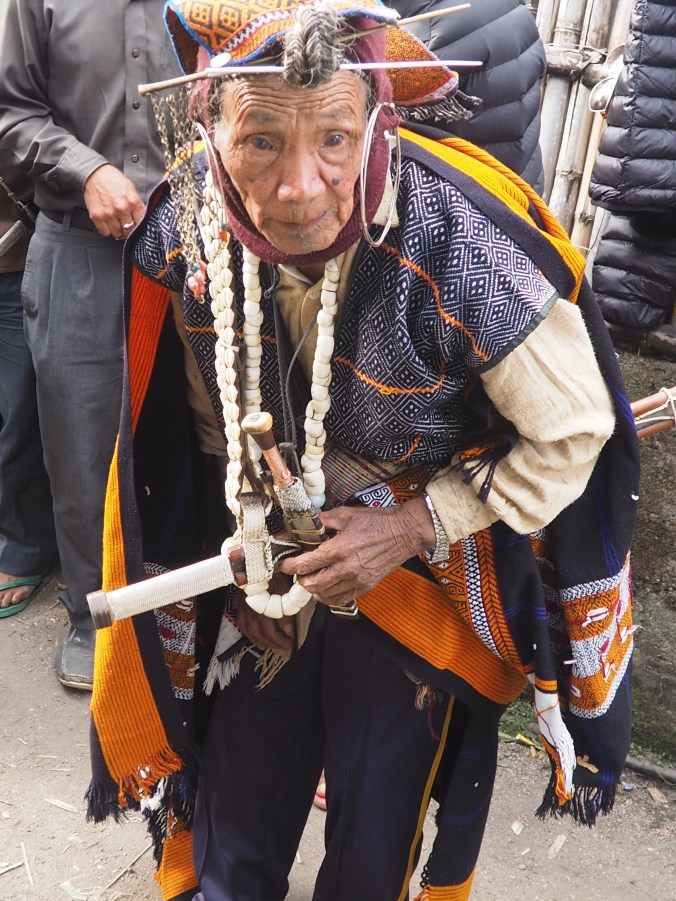
The reason we decided to visit northeast India was to attend the Hornbill Festival  in Nagaland (Dec 1-10th).  I remembered seeing some very colorful people in someones photos in Los Angeles years ago and so we arrived in Kohima for the festival.  The festival was started 16 years ago so all the 17 Nagaland tribes could get together and exchange stories and ideas.  Before 1965 these people were headhunters and constantly in conflict with each other.  When the Christian missionaries arrived they worked very hard to get them to stop taking heads. Some were converted and stopped the practice. But it was about 30 years later when the Indian government made it a law to stop the practice that Nagaland abandoned it.  So now at the hornbill festival they can show case their skills at dancing and drumming.  There are games and contests too.  So the visitors can enjoy seeing whats up with the Naga people.   The roads are really bad here so there isn’t a lot of travel in Nagaland yet (the roads are coming)  It was really fun to experience their enthusiasm about their culture.  The elders are there coaching the younger ones on the music and dancing.  In the Naga culture they always had time for festivals, just now there are no head taking cerebrations.  This has left some people at loose ends and there should be more jobs available for them. A lot of the kids speak english so after a 3 hr show we would cruise around to the various tribal houses and eat,OLYMPUS DIGITAL CAMERAOLYMPUS DIGITAL CAMERAOLYMPUS DIGITAL CAMERAOLYMPUS DIGITAL CAMERAOLYMPUS DIGITAL CAMERAOLYMPUS DIGITAL CAMERAOLYMPUS DIGITAL CAMERAOLYMPUS DIGITAL CAMERAOLYMPUS DIGITAL CAMERAOLYMPUS DIGITAL CAMERAOLYMPUS DIGITAL CAMERAOLYMPUS DIGITAL CAMERAOLYMPUS DIGITAL CAMERAOLYMPUS DIGITAL CAMERAOLYMPUS DIGITAL CAMERAOLYMPUS DIGITAL CAMERAOLYMPUS DIGITAL CAMERAOLYMPUS DIGITAL CAMERAOLYMPUS DIGITAL CAMERAOLYMPUS DIGITAL CAMERAOLYMPUS DIGITAL CAMERAOLYMPUS DIGITAL CAMERAOLYMPUS DIGITAL CAMERAOLYMPUS DIGITAL CAMERA drink and talk with them (the kids translating.  This is a culture in transition I want to go back and hike around to some villages. The Nagas are bright and engaging folks. An event worth attending in a remote part of NE India.  There were only 1200 people there for opening day and most were Indians.

Arunachal Pradesh, India(NE)

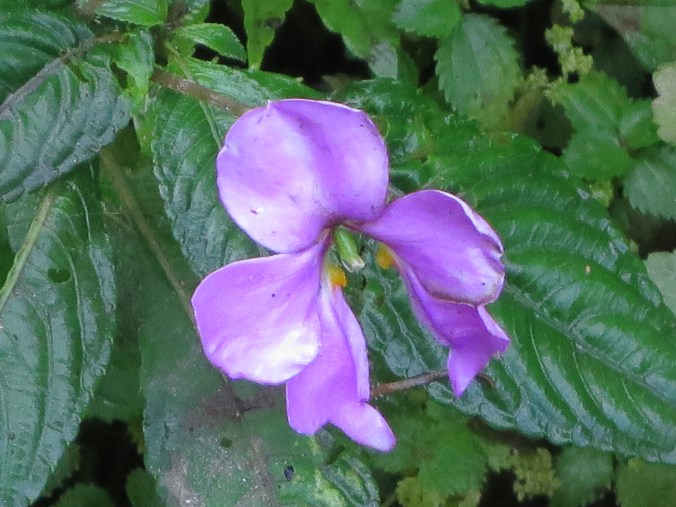
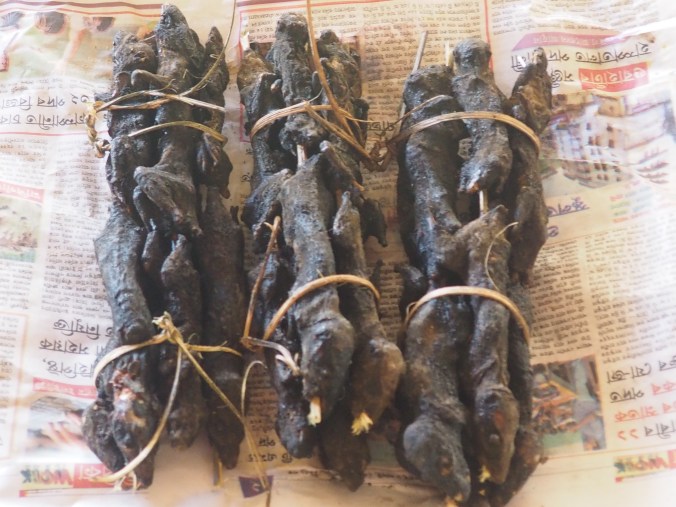
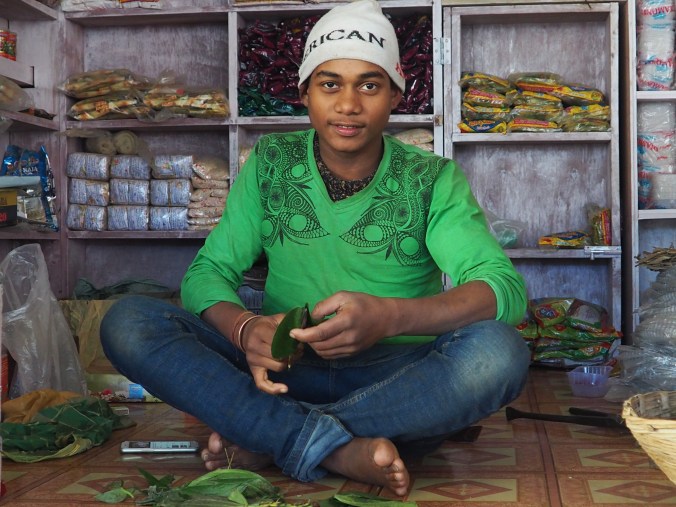
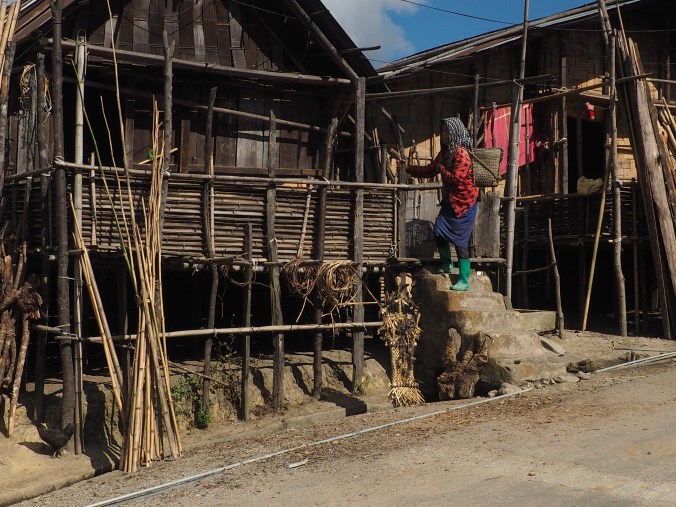
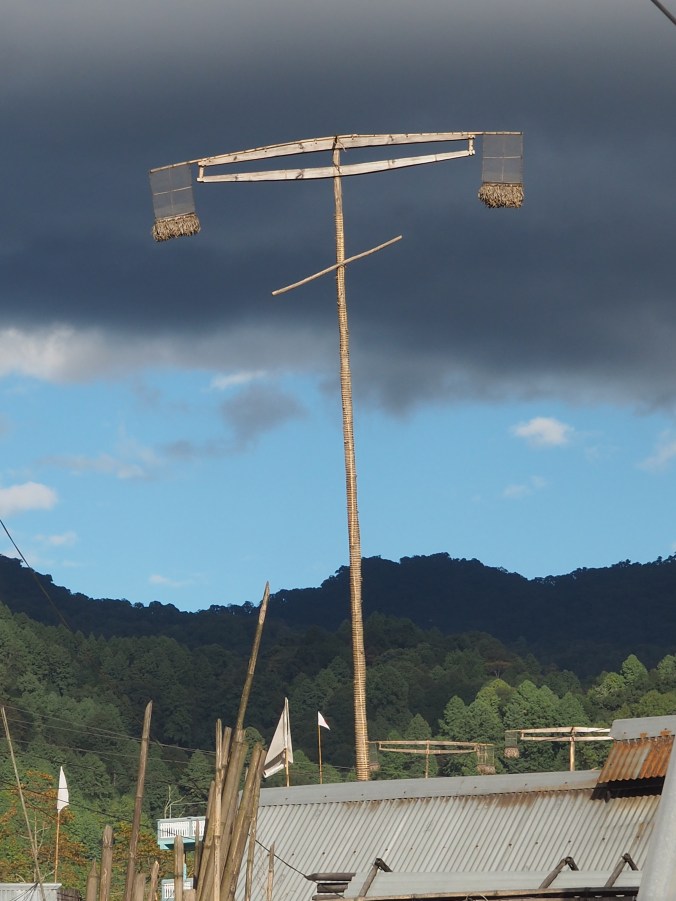
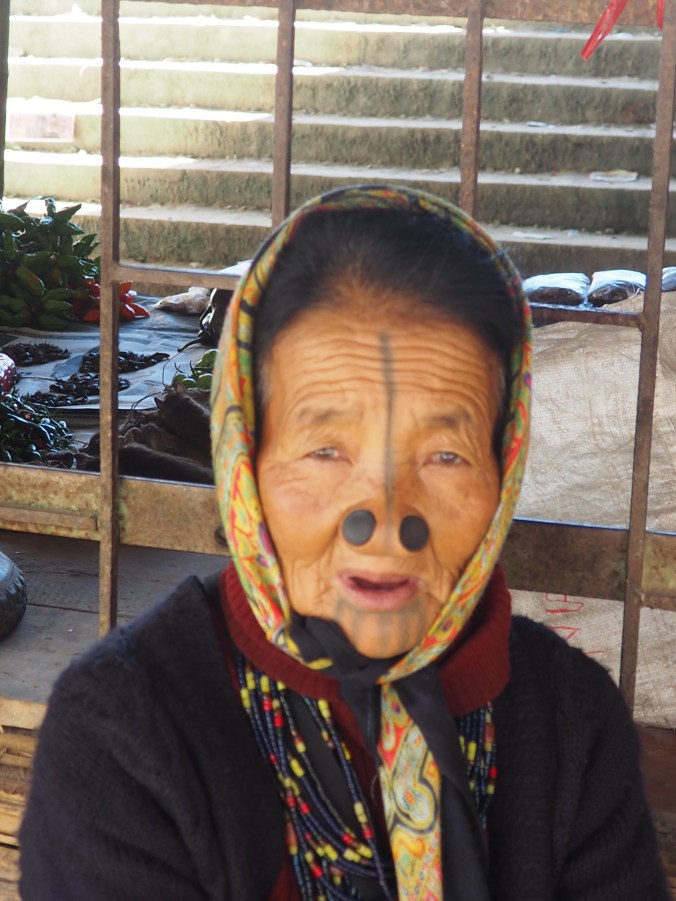
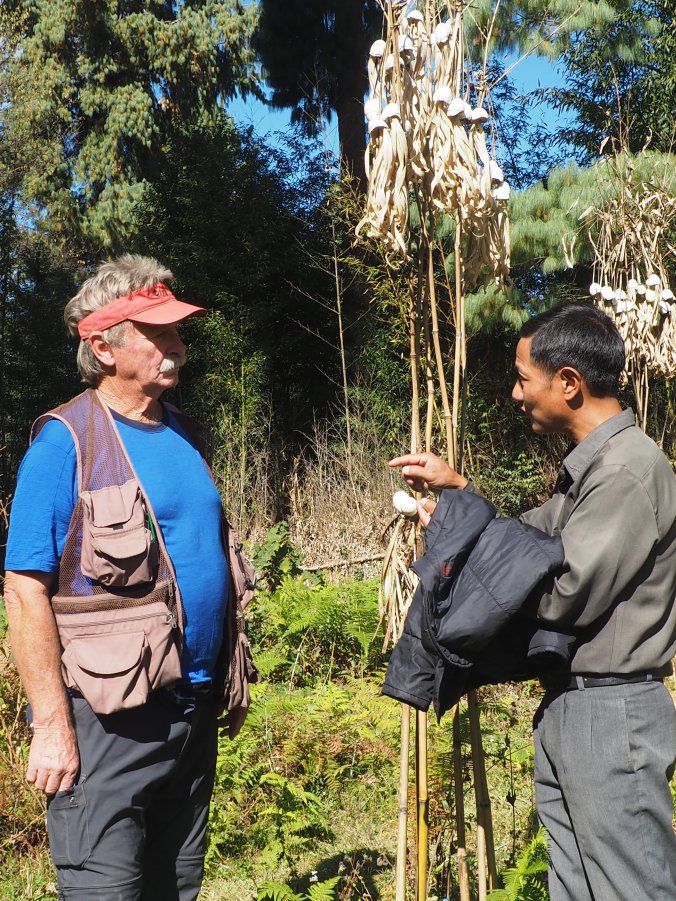
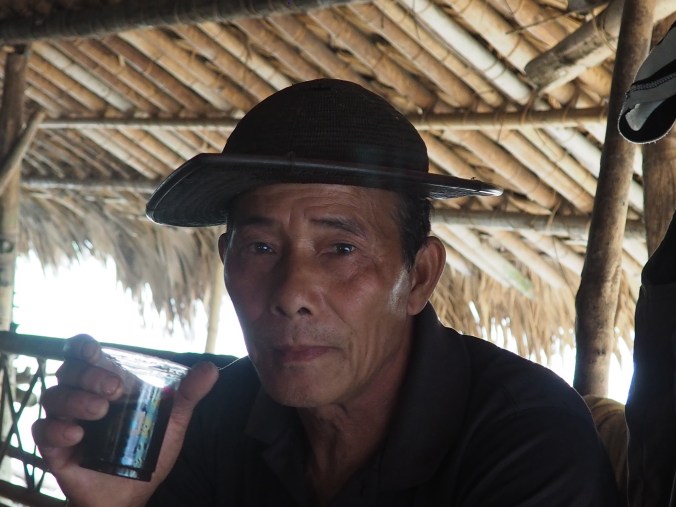
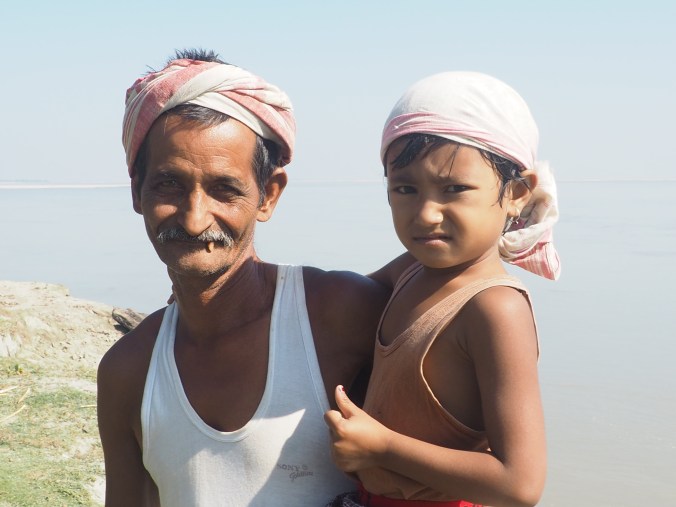
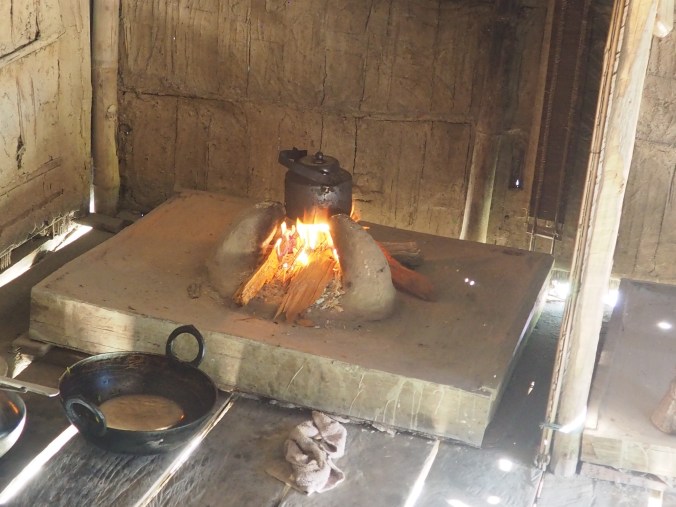
  • We decided to hire a car and driver to tour (implying a nice smooth road) to see some tribal areas of Arunachal Pradesh.  This wasn’t true the roads in AP were brutal to say the least, wet, muddy, one lane with traffic, land slides and no traffic rules.  Did I say so heavily pot holed it was unbelievable.  The bluest sky we had seen in india for some years too.  Our driver was so on (and he had to be)  it was a real pleasure to ride with him.  When we arrived in Ziro, the main town for the Apatani tribe it was dark and cold at 4:30 in the afternoon what a surprise.  For the next 3 days we wandered around the countryside with a guide and learned about what the Apatani believe and how they live.  Only Apatani’s are allowed to buy land in this area so it keeps the tribe more intact.  Our guide was a affable young man who had learned english in school and was guiding because there weren’t many jobs in the area.  Most of the people live in the old way, in small villages with a lot of the village related.  They grow 2 crops of rice a year and veggies.  They are meat eaters who raise there own chickens, and pigs.  Very little spice is used in their food,   chilies are served along side the food.  Fermented foods are for sale in the market along with rats, wasps and larva.  Most people are believers in an animist religion Donyi-polo (sun and moon worship).  In villages one can see who has converted to christianity and who hasn’t by the type of pole suspended over the house.   The poorer people are usually the converts because they don’t have the money to pay the shaman to perform the rituals that are required in cases of sickness and problems.  Just buying a mitun  (cow from the forest) can run $2000  Usually the shaman will break an egg and see what the egg yoke says and then tell the family what needs to be done to make peace or heal someone.  We went to a huge ceramony that required a cow, a mitun, 4 chickens, and 3 puppies to be slaughtered.    This was expensive but they did feed about 100 people that day.  Plus the shaman has to stay up for 24 hr and pray before hand.  Interesting to say the least. All the tribes in AP use bamboo in every which way possible.  Weaving and wickerwork still play a big role in their lives.  In agriculture they flood the rice fields and farm fish in the rice paddies as well.  As we traveled along we would stop and visit a village and see what was going on.  Everyone cooks on open fires inside and above the fire meat drys and homemade rice wine ferments. Plus they hang their clothes high and the constant fire drys them.
    India 2017-25

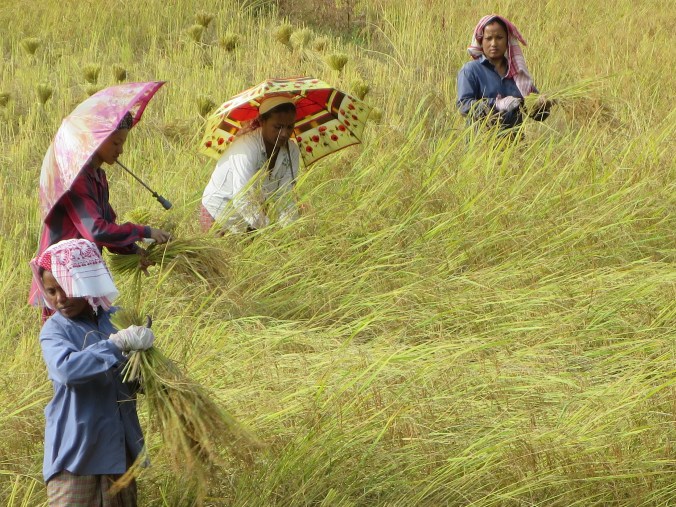
    Working in the a dry rice field

    India 2017-41

    A tribal coming back from a gathering

    India 2017-69

    OLYMPUS DIGITAL CAMERA

    Rats for sale

    OLYMPUS DIGITAL CAMERA

    Larva for sale

    OLYMPUS DIGITAL CAMERA

    Making pann to chew

    India 2017-97

    We followed this river to Ziro

    OLYMPUS DIGITAL CAMERA

    Apatani village

    OLYMPUS DIGITAL CAMERA

    “Babohs” donyi-polo symbol

    AP India

    Apatani shaman conducting a ceramony

    OLYMPUS DIGITAL CAMERA

    Appertain woman with a nose plug

    OLYMPUS DIGITAL CAMERA

    Our guide explaining the Doni-polo sacrifice yard.

    OLYMPUS DIGITAL CAMERA

    Bringing the pole for a celebration from the forest as a party

    OLYMPUS DIGITAL CAMERA

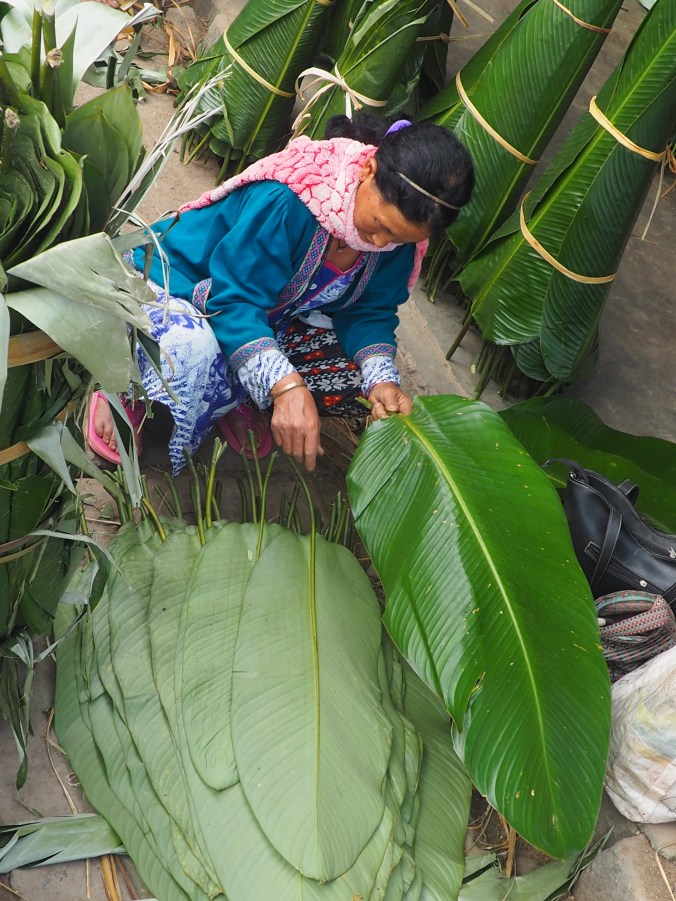
    Selling the leaves that are used as plates all over AP

    OLYMPUS DIGITAL CAMERA

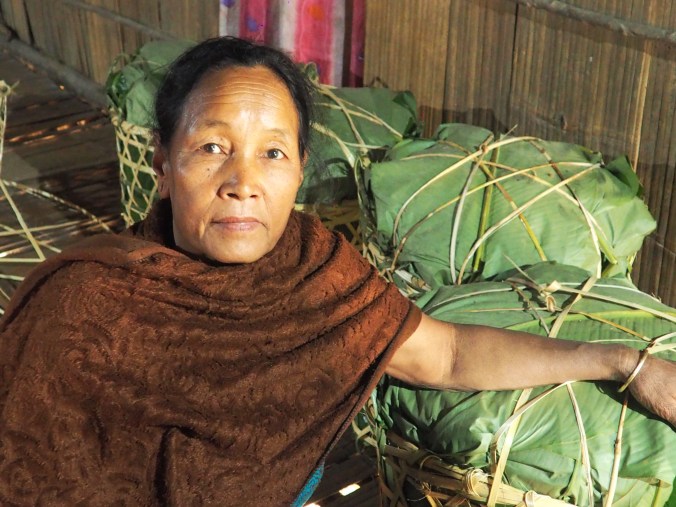
    Galo woman

    OLYMPUS DIGITAL CAMERA

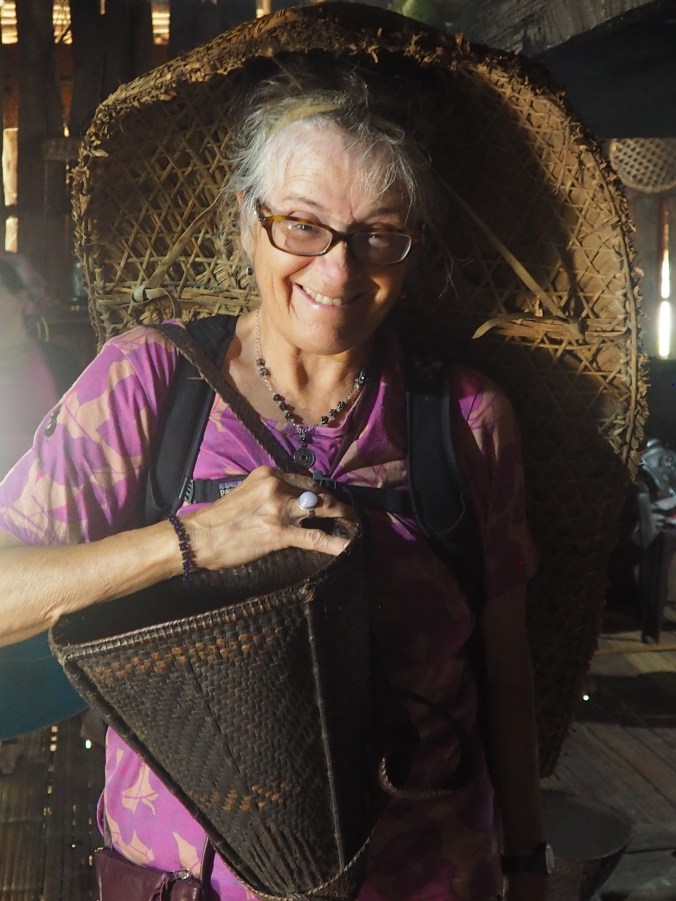
    Janet trying a basket carry

    India 2017-85

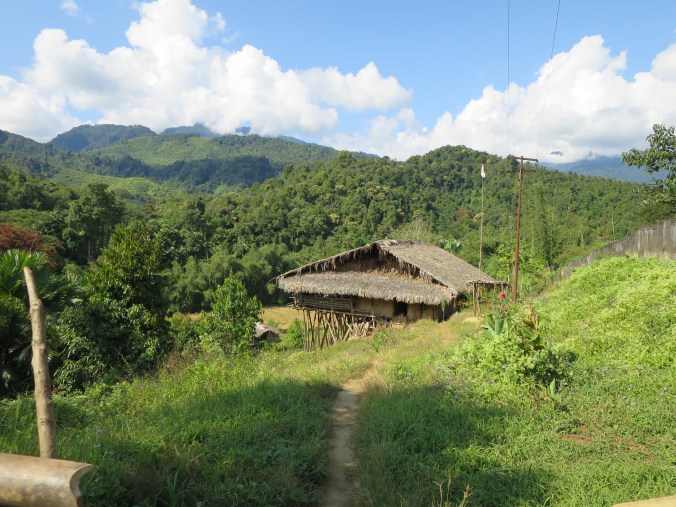
    A Galo traditional house

    India 2017-83

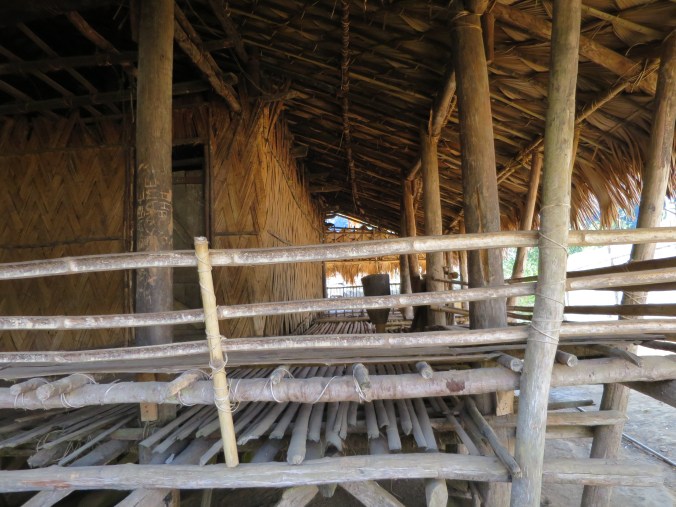
    the porch of a Galo house.

    OLYMPUS DIGITAL CAMERA

    Pot used for bathing on back porch

    OLYMPUS DIGITAL CAMERA

    Halo women making rice wine

    OLYMPUS DIGITAL CAMERA

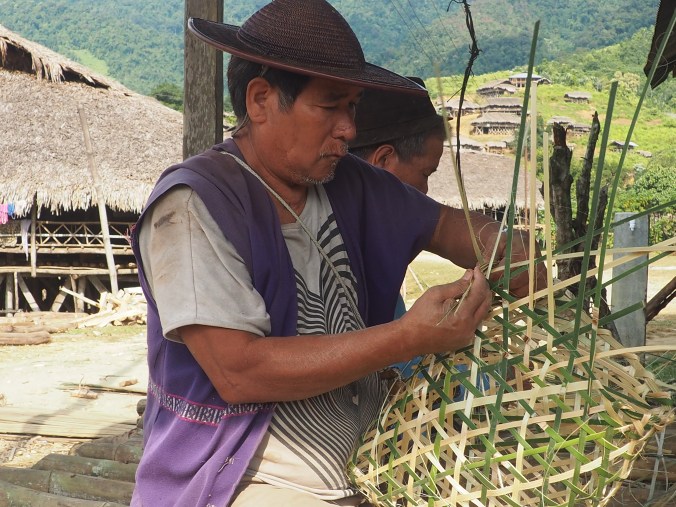
    Galo man weaving a basket

    OLYMPUS DIGITAL CAMERA

    Drinking rice wine with our new friend

    OLYMPUS DIGITAL CAMERA

    Galo tools

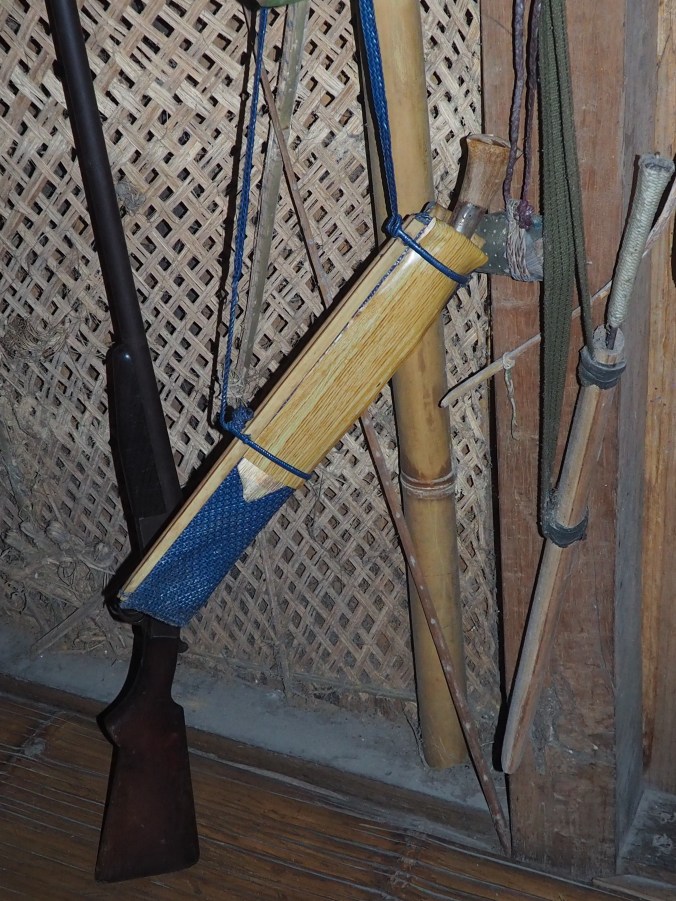
    the Galo houses were scattered around the countryside with about 10-30 houses per village.  The rice is stored in separate barns set away from the houses in case of fire.  Which does happen when the entire house is made of bamboo.  There is a folk medicine school in the area and so some of the herbal medicine will be passed on.  We really enjoyed our time (8 days) in AP and would love to go back and see more.

Majuli Island, Assam India

OLYMPUS DIGITAL CAMERA

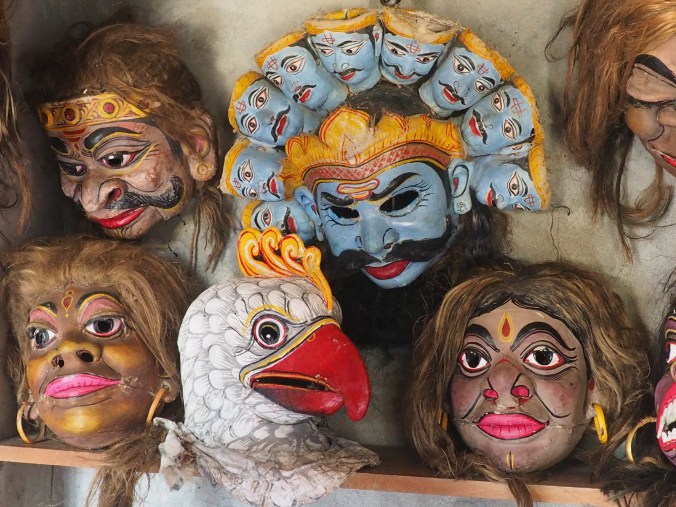
New masks ready for sale

OLYMPUS DIGITAL CAMERA

OLYMPUS DIGITAL CAMERA

Paper mache

OLYMPUS DIGITAL CAMERA

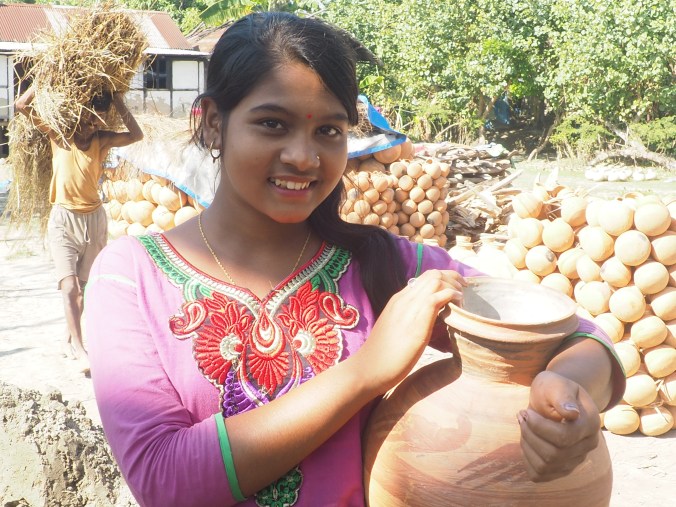
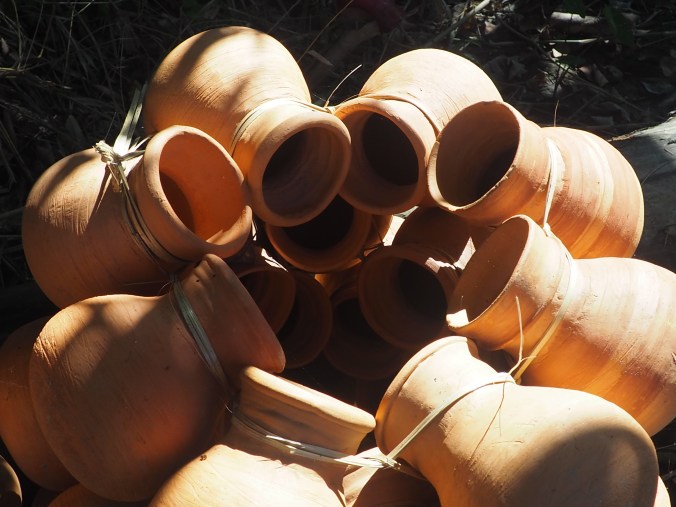
Pots tied up and ready for market

OLYMPUS DIGITAL CAMERA

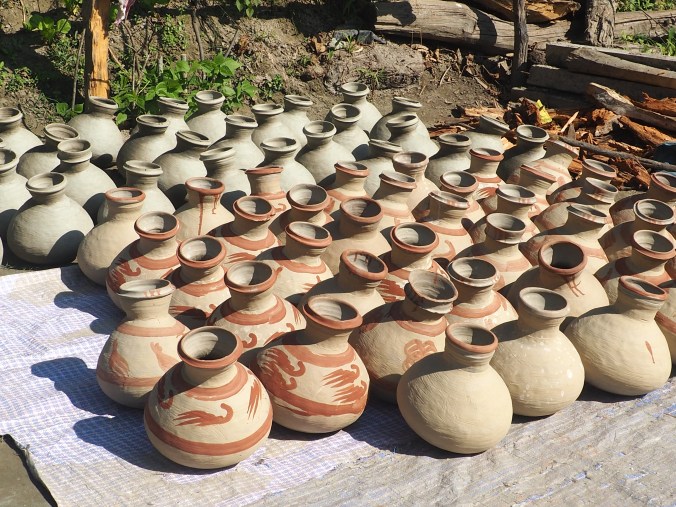
new pots

OLYMPUS DIGITAL CAMERA

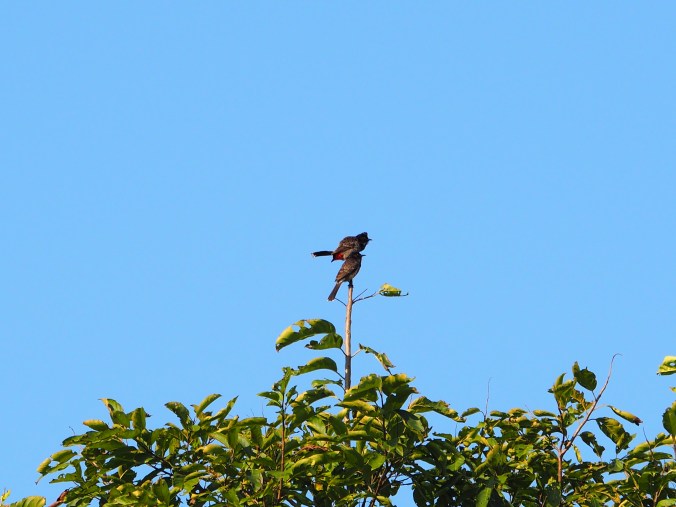
Bul buls

OLYMPUS DIGITAL CAMERAOLYMPUS DIGITAL CAMERA

OLYMPUS DIGITAL CAMERA

An Indoor hearth for cooking

India 2017-136

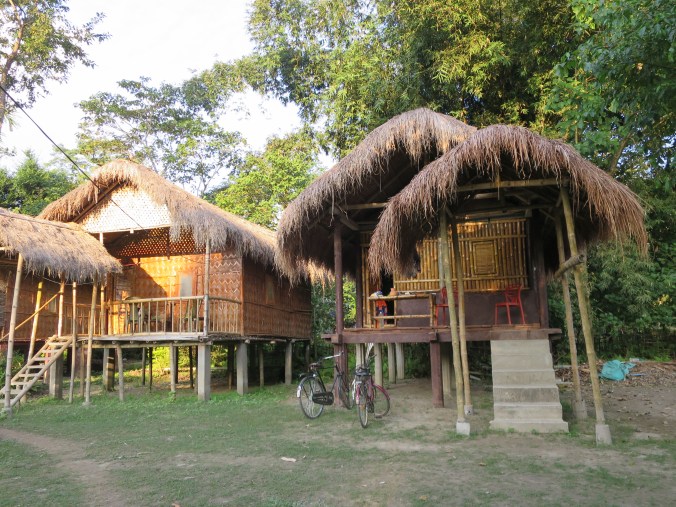
Ygdrasill Bamboo Cottages

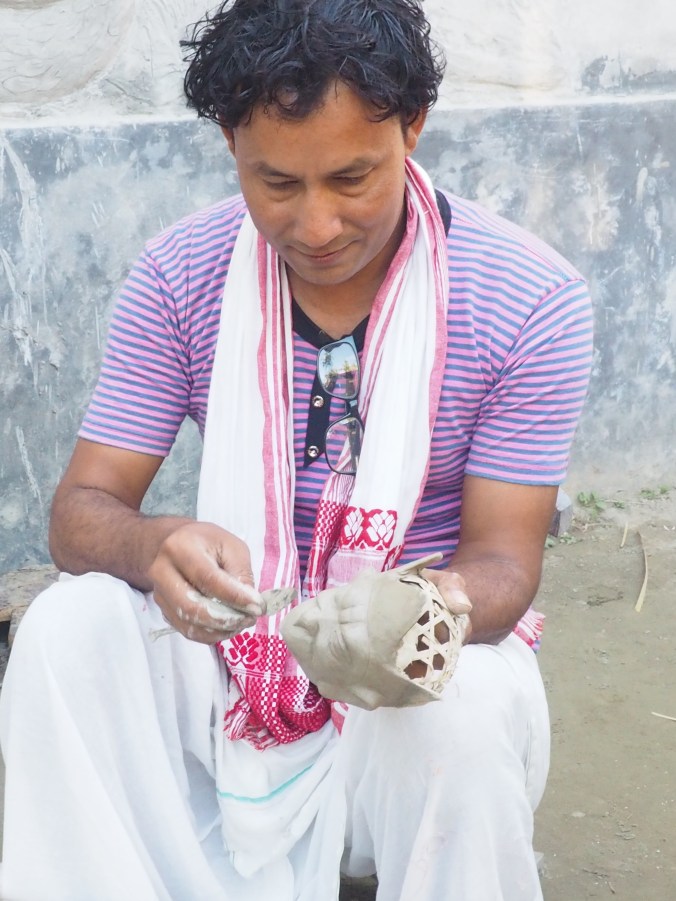
Yes this is a big island in the middle of the Brahmaputra river, if fact its the largest river island in the world.  There are rice fields and expanses of water bursting with water hyacinth blossom are everywhere.   The locals are laid-back as no where else in India (as of late).  We enjoyed a wonderful stay at a local guest cottage.  A signature dish of Assam is sour curry and we enjoyed it here every day.  The official report is that Majuli Island is disappearing and because of erosion, it will be gone in 20 years  Try telling that to the locals.  Everyday we rented bikes and tooled around the island visiting, pottery making castes and birding.  The mask makers on Manjuli are world famous and London theater companys order all the masks from Majuli when presenting stories from the Ramayana. Also there are 22 satras (Hindu Vaishnavite monasteries and centers for art).  The Maskmaking center is a satra.  Monks live in small rooms and there is a lot of offering ceremonies on a daily basis.

The Streets of Kolkata

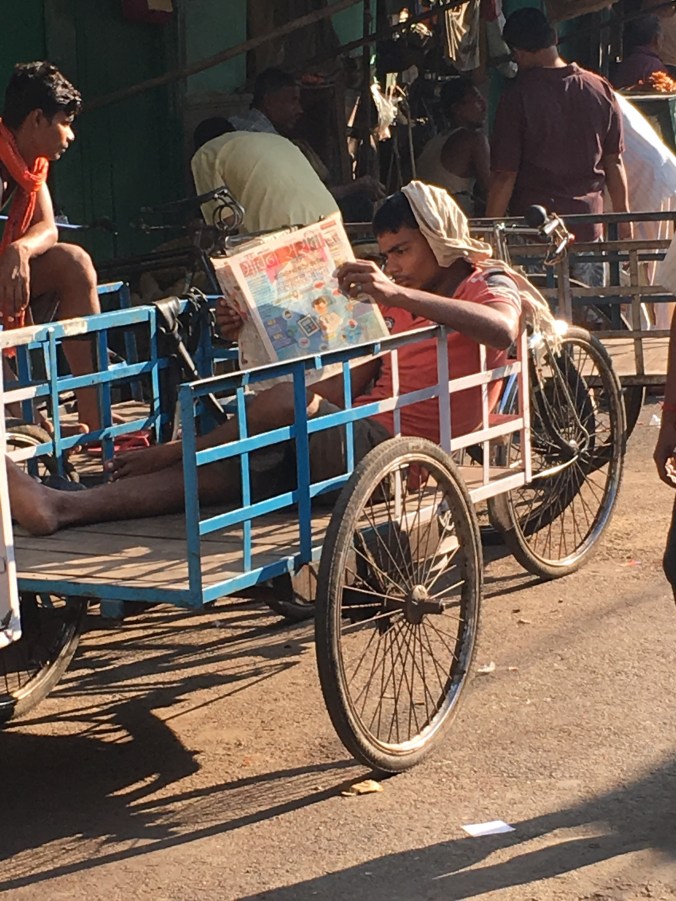
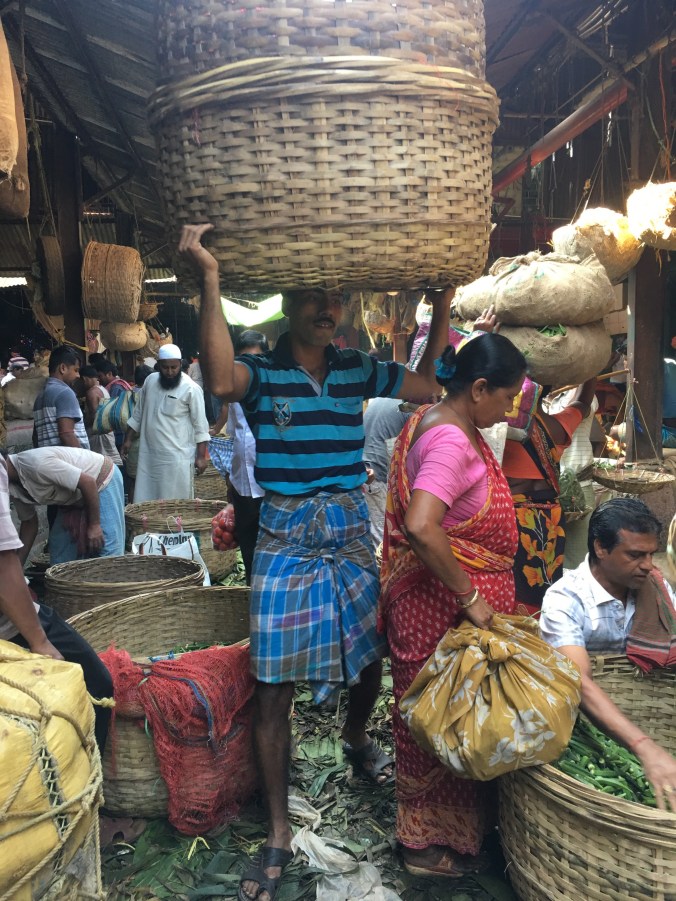
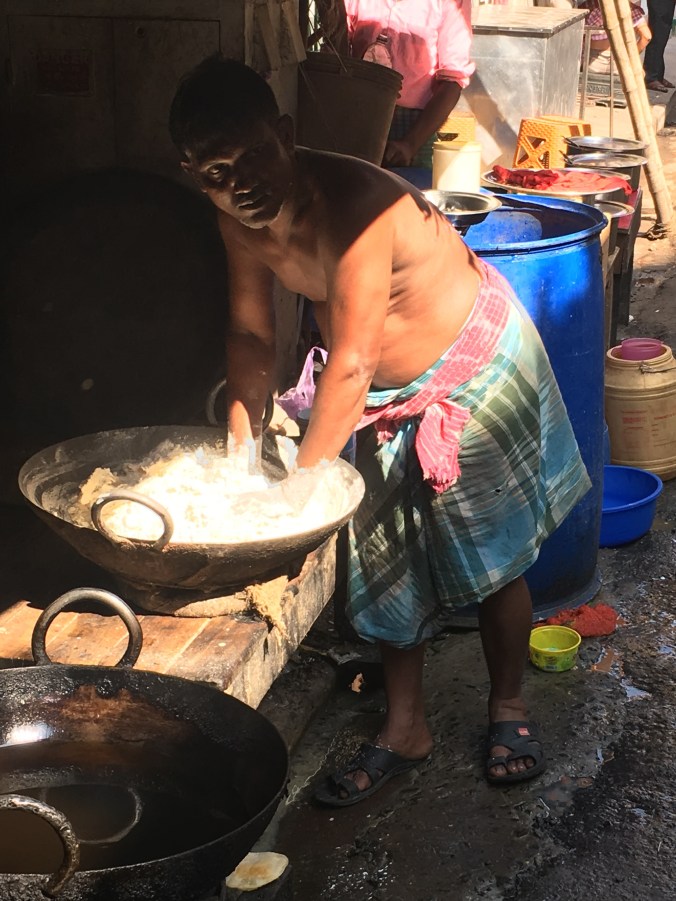
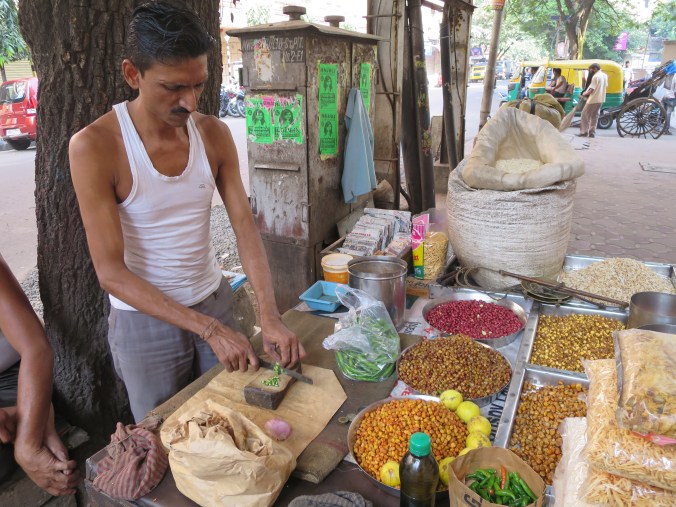
IMG_4898.jpgIMG_2061.jpgIMG_2117.jpgIMG_2152.jpg

India 2017-4

Custom made snackfood

India 2017-16

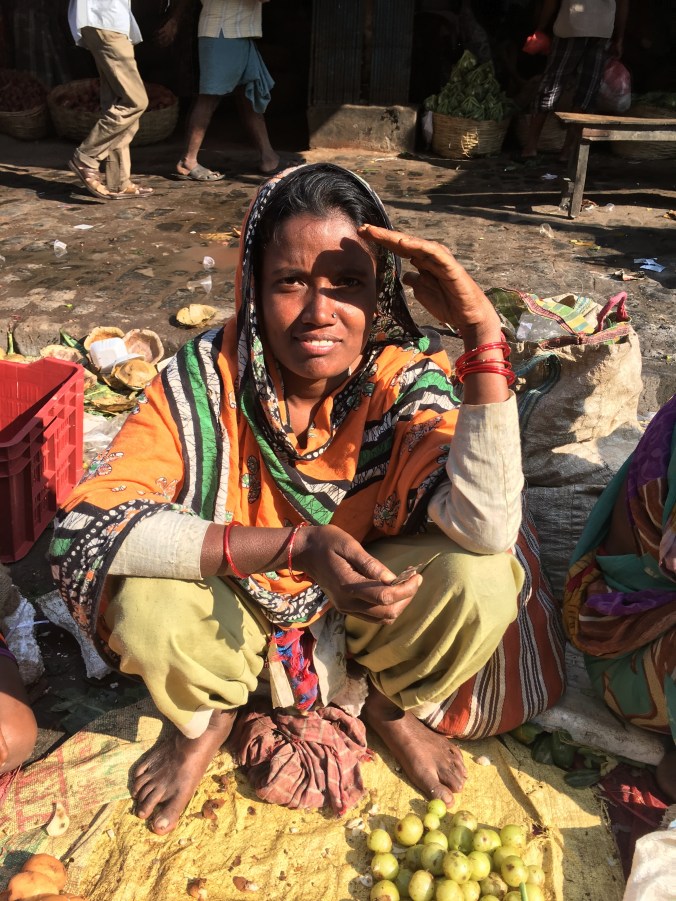
We flew into Kolkata in the middle of the night (2am)  at least there was no traffic to the Sunflower GH but our taxi driver couldn’t read the address so we stopped to talk to a few night watchmen to get the exact location. We did see people sleeping on the streets(of course its almost always hot here).   We had 4 days until we were headed N to Assam so we hit the streets, tea out of disposable unglazed clay cups, a breakfast paratha, wondering around taking in the street life.  And that is the thing here street life, so busy, horns honking, all sorts of vendors on the sidewalks, dodging taxis to cross streets.  But first we had to get sim cards.  We needed photos so we stopped at a sm photo shop  and the owner came out and started talking to us over some tea he sent out for. Turns out he was in Las Vegas last year and the highlight for him was shooting a machine gun at a range and a helicopter ride.  Funny what people remember.  After getting sim cards we headed over to buy some flight tickets and change money.  Of course getting involved in many conversations along the walk.  Bengali food is different and interesting.  They cook with mustard oil and use some veggies I wasn’t familiar with.  Plus so much river fish on the menu (being on a huge river)  Visiting the largest market (open 24/7) with a local photographer to photograph the fish and veggie market was a blast.  Because we had a guide he could translate our questions to the people at the market and of course they had lots of questions for us. I had a few tops made from a shirt I brought with me.  The linen here is fabulous.  So many pattern choices and colors.  After finding a “ladies tailor” the deal was sealed with a cup of masala chai ($7 for the sewing of 1 shirt) I had bought the fabric at a mens tailor shop.  Of course they couldn’t do it there because it was a ‘ladies shirt”.  We spent several more days in this manner walking around talking to people stopping for “the best coffee in Kolkata”, and eating.  The food was divine and just wandering the streets of Kolkata was so fun.  Kolkata is probably the center of culture in India, and it was the capital for many years.    There are bookshops on the streets and Oxford Books (an indoor bookshop) was a great place to hangout and chat with Indians.  We met 3 foreigners. A must visit city!!!
North East India: Assam

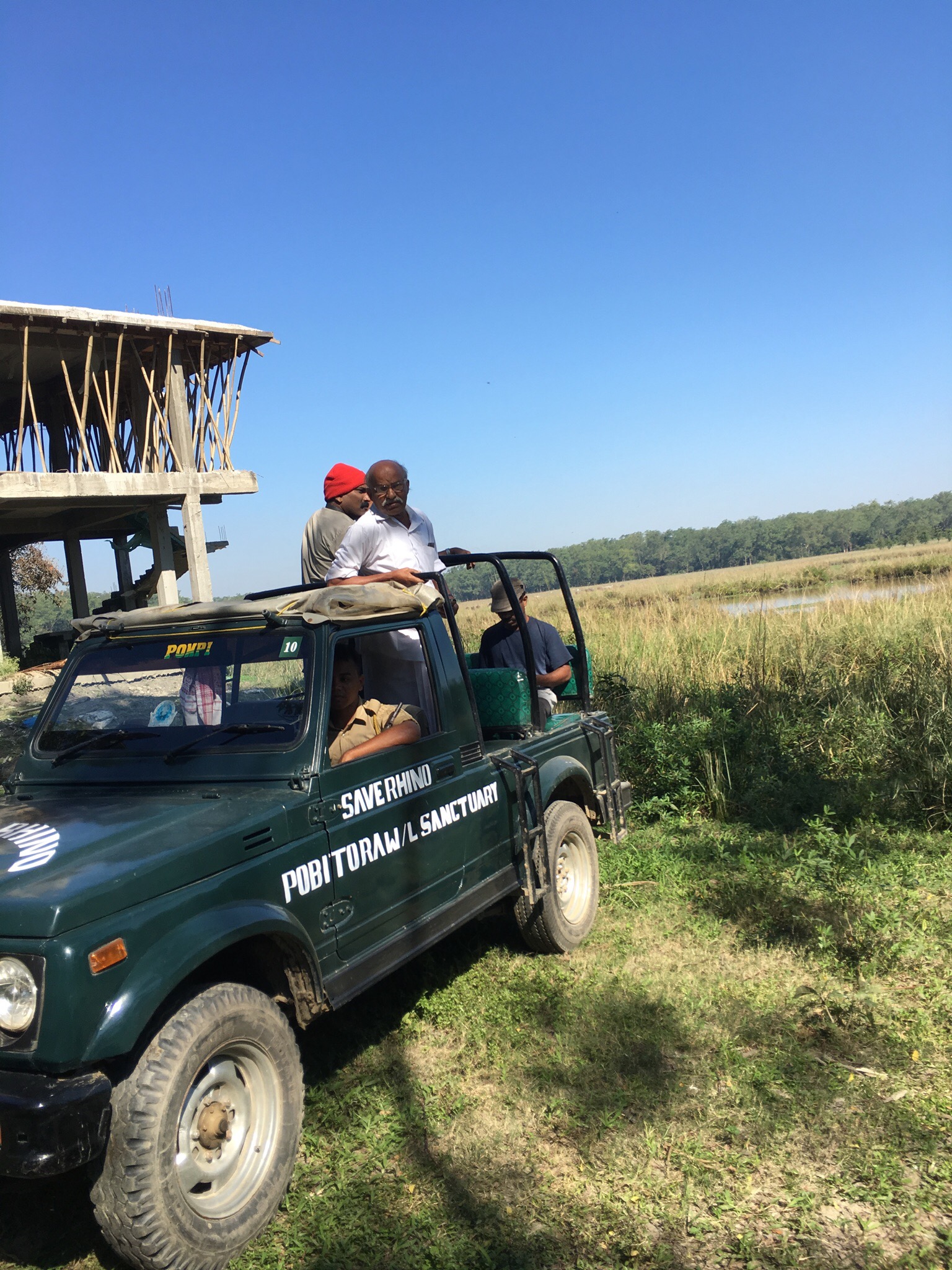
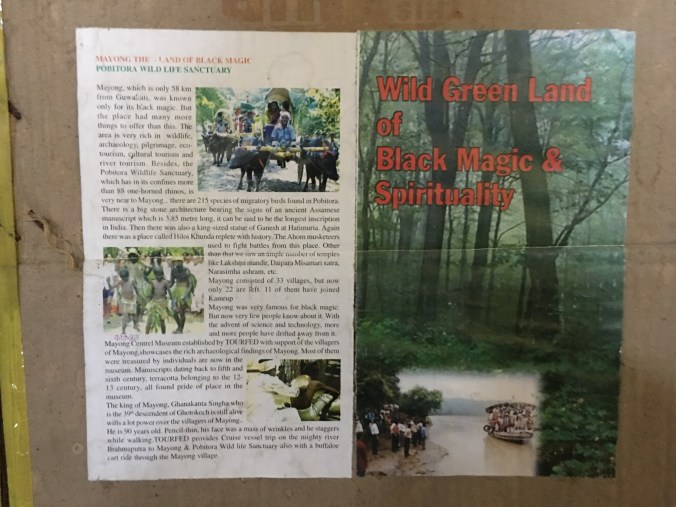
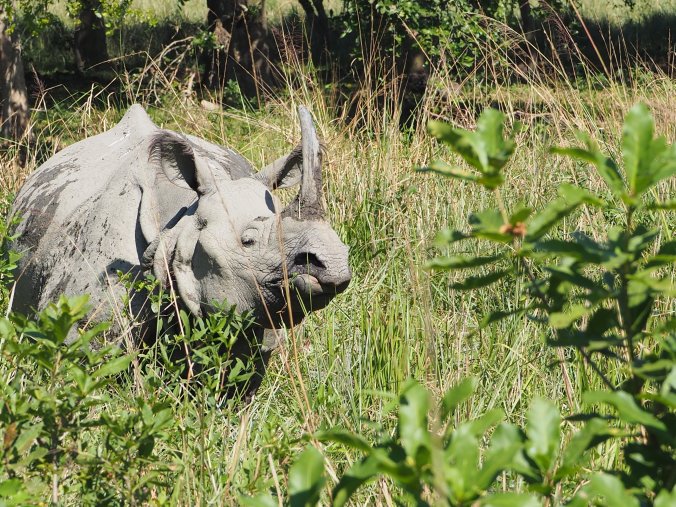
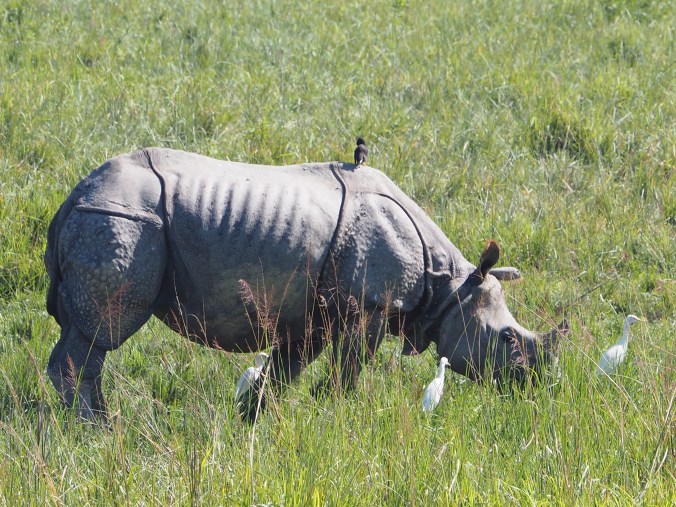
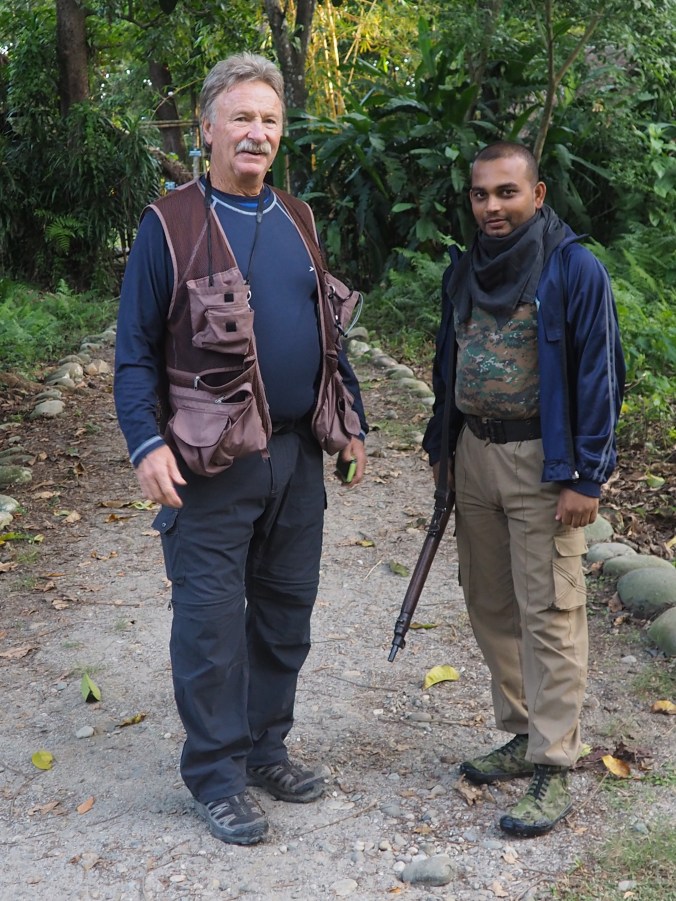
After a few days getting reacquainted with Kolkata we flew to the capital of Assam, Guwahati. We met a tour guide whom we stayed with (www.jungleideas.com). And with Arunav Bora we visited Pobitora National Park, this is a great park for water birds and the extremely rare one horned rhinoceros.   We spotted 6 of the rhinoceros in our 3 hr game drive by open Jeep, and 20 different species of birds.  Nemeri National Park  was our next stop across the Brahmaputra River in upper Assam.  We stayed at the Eco camp for 4 nights and we started bird watching in the very early mornings.  To get to the park involved a 20 minute walk on a trail and then a river crossing by a wooden row boat.  On the river banks were tracks of wild elephants, tigers and wild buffaloes.  Spotting 145 species of birds in pristine forests through varied terrain (log walking and forest trail with some leeches) was great fun. This was where I drew the first blood of the trip by a leech.  The guide was good and he did have a bird book. We had to have an armed guard with us as well because of possible tiger or elephant attack, and possible poachers.  The resort was lovely with great food and large safari tents as rooms. ($23/ night).  It was fun to think about the various wild animals coming down to drink just some hours ago.   We also visited a village that was known for having black magic practioners.  An interesting museum reported various exploits of black magic from the past with pictures of recent healing too.  After we left the area the newspaper reported several poachers killed by the forest guards and 1 rhino killed by the poachers

Nameri NP Assam India

An early model Evenrude outboard.

Pobitora NP Assam India

An urban legend of a majically disappearing army.

NAMERI NP ASSAM INDIA

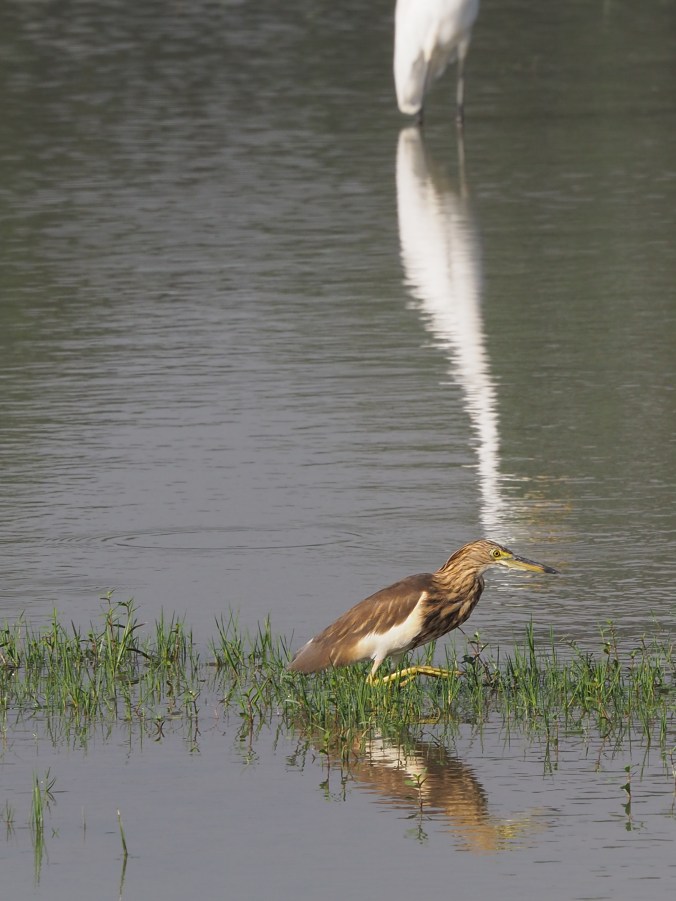
Indian Pond Heron

Nameri NP Assam India

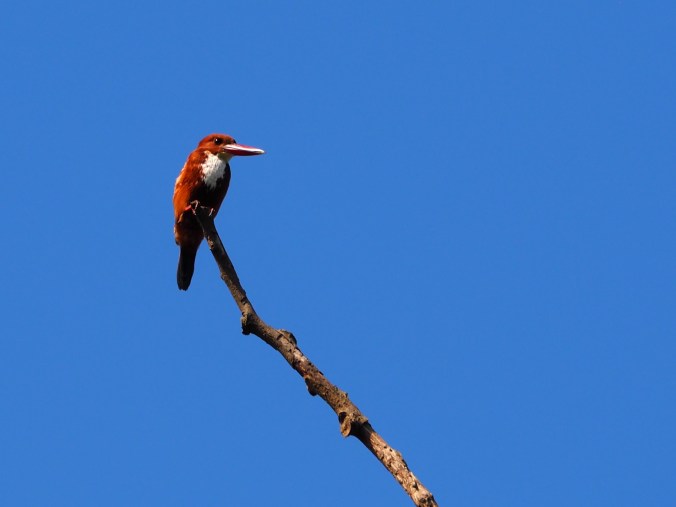
White-throated kingfisher

Nameri NP Assam India

Black Dorango

Nameri NP Assam India

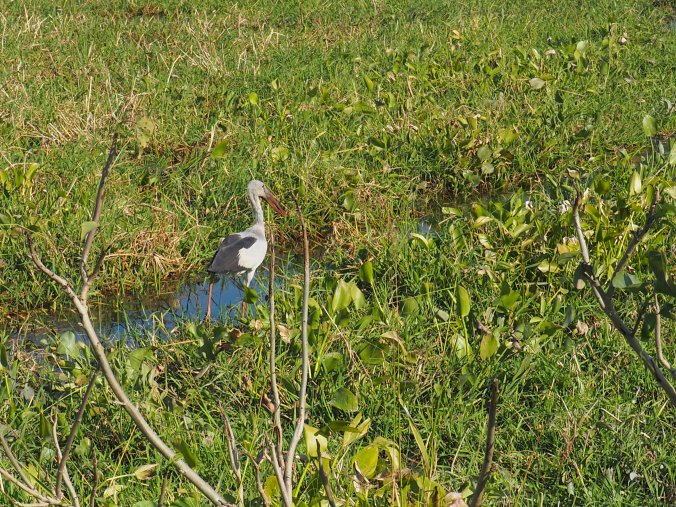
Open-billed stork

OLYMPUS DIGITAL CAMERA

Pobitora NP Assam India

Indian one-horned rhinoceros

Pobitora NP Assam India

Indian one-horned rhinoceros

Nameri NP Assam

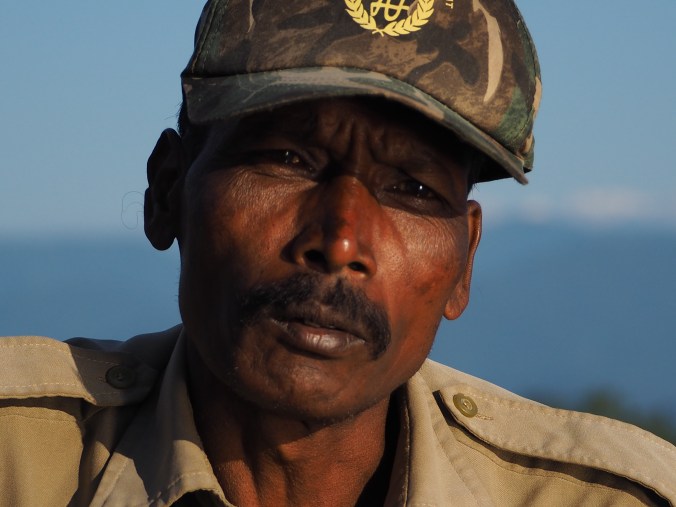
Pat and our forest guide

Nameri NP Assam India

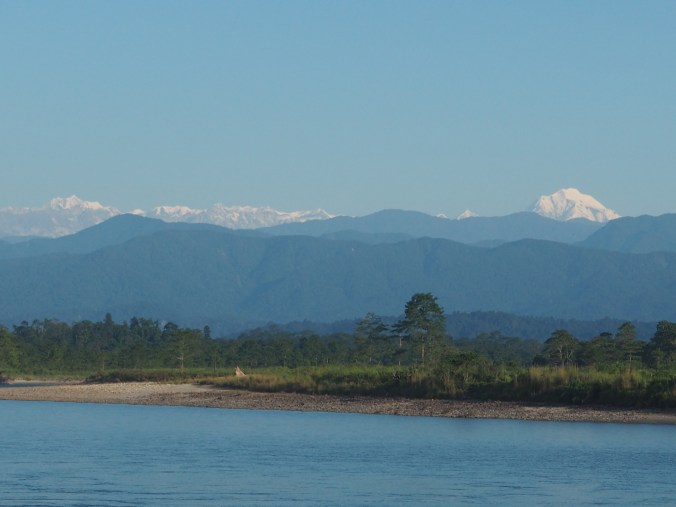
The snow covered Himalayas in the distance

Nameri NP Assam India

Show me your permit!

Nameri NP Assam India

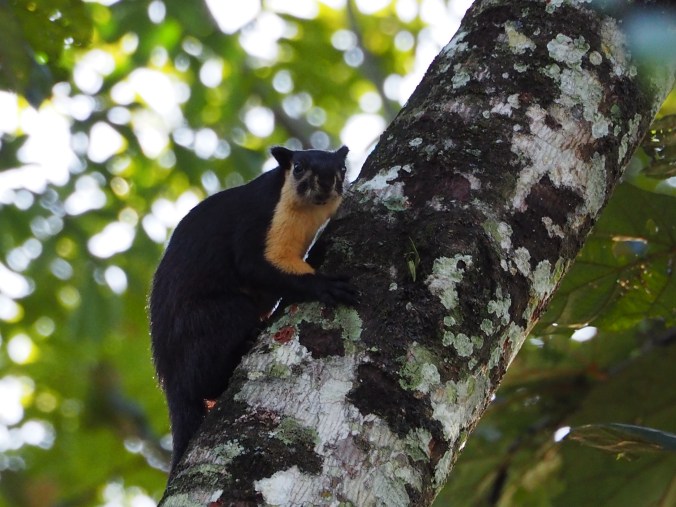
Giant squirrel

OLYMPUS DIGITAL CAMERA

Nameri NP Assam India

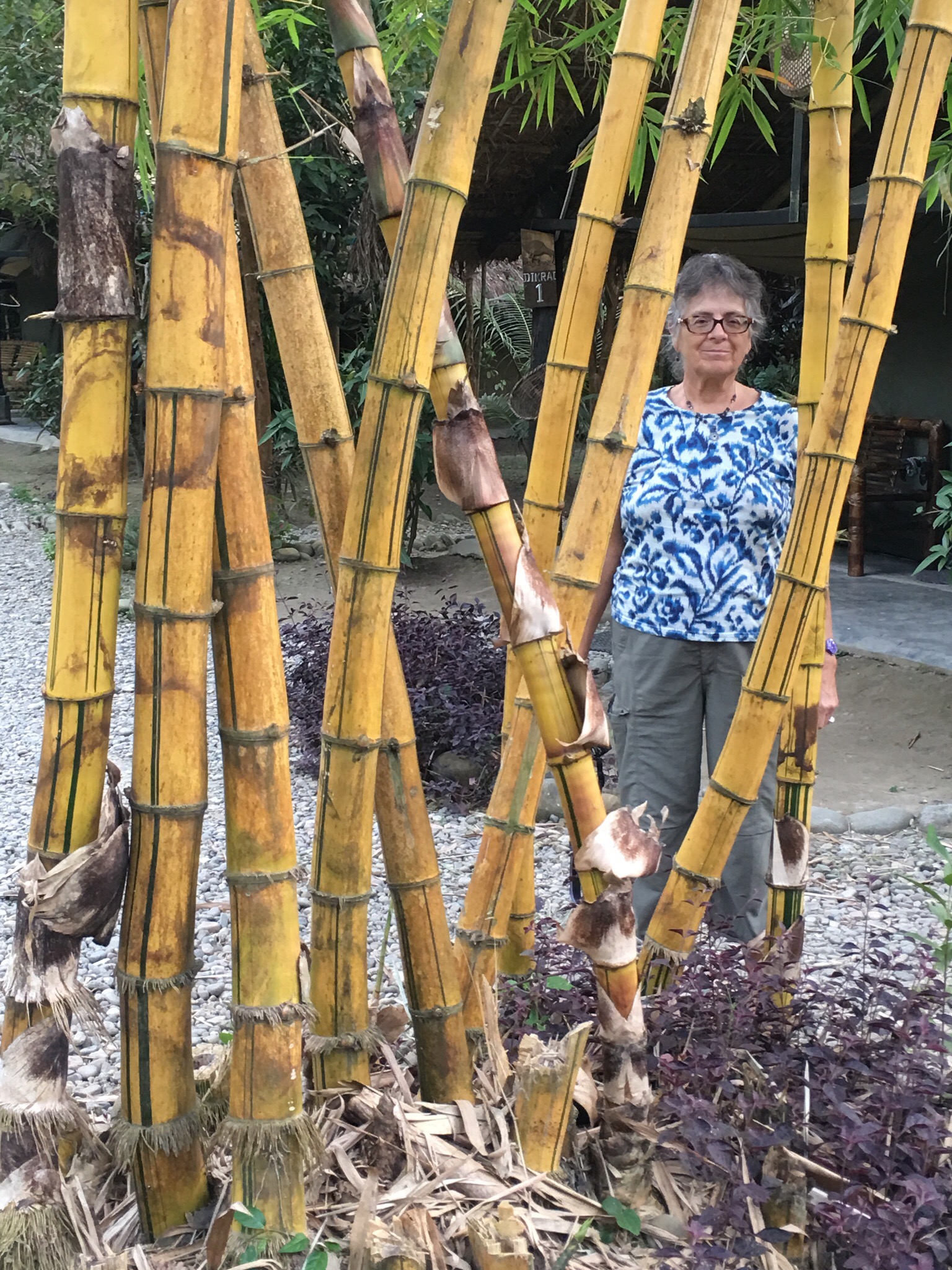
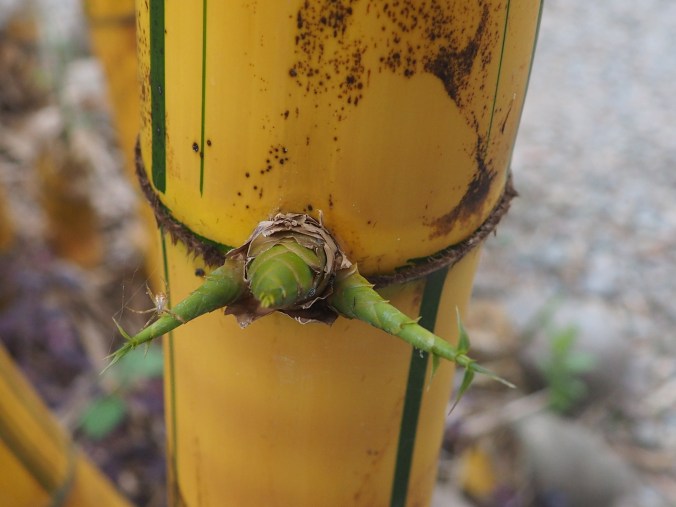
Giant Bamboo sprouting

Nameri NP Assam India

Tiger footprint

OLYMPUS DIGITAL CAMERA